Appendicitis and gallstones are two common causes of abdominal pain, and their symptoms can sometimes appear similar. However, they affect different organs, cause pain in different areas, and require different treatments.
Knowing the difference between appendicitis vs gallstones can help you recognize warning signs and understand when urgent medical attention may be necessary.
This guide explains the difference between appendicitis and gallstones, including their symptoms, causes, pain location, diagnosis, treatment options, and when surgery may be required.
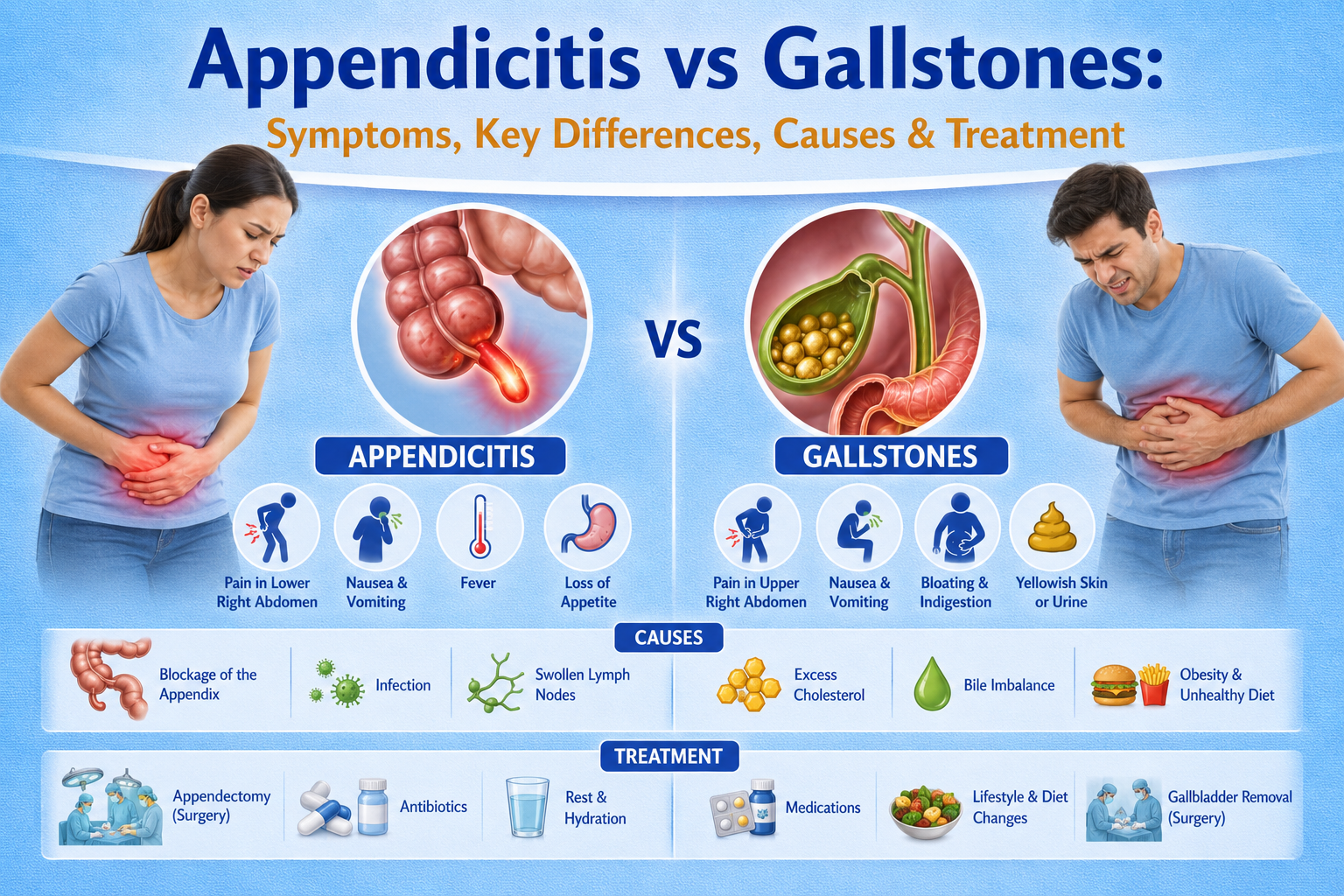
Appendicitis vs Gallstones: What’s the Difference?
The primary difference is the organ affected.
Appendicitis occurs when the appendix becomes inflamed, usually because its opening becomes blocked. If untreated, the appendix can rupture and cause a serious abdominal infection.
Gallstones are hardened deposits that form inside the gallbladder. They may cause symptoms when they block the flow of bile through the gallbladder or bile ducts.
| Feature | Appendicitis | Gallstones |
| Affected organ | Appendix | Gallbladder |
| Typical pain location | Right lower abdomen | Right upper abdomen |
| Common pain pattern | Often begins around the navel and moves downward | Often occurs in the upper-right abdomen |
| Fever | Common, particularly as inflammation progresses | May occur when complications such as inflammation or infection develop |
| Nausea/vomiting | Common | Can occur |
| Main treatment | Usually surgical removal of appendix | Observation for asymptomatic stones; surgery for symptomatic or complicated disease |
| Medical emergency | Can become an emergency | Can become an emergency when complications occur |
The symptoms aren’t always textbook, so abdominal pain that is severe, persistent, or worsening should be medically evaluated.
Appendicitis Symptoms and Warning Signs
Appendicitis occurs when the appendix becomes inflamed. Symptoms can develop relatively quickly and may worsen over several hours.
Common Appendicitis Symptoms
- Pain that may begin around the belly button
- Pain that moves toward the lower-right abdomen
- Increasing abdominal pain
- Loss of appetite
- Nausea or vomiting
- Fever
- Abdominal tenderness
- Constipation or diarrhea in some cases
One of the important features is progressively worsening pain, particularly when it becomes concentrated in the lower-right abdomen.
For a detailed overview of appendicitis symptoms and emergency signs, including when urgent medical attention may be necessary, read our comprehensive guide.
When Is Appendicitis an Emergency?
Seek urgent medical attention if abdominal pain becomes severe or rapidly worsens, especially when accompanied by fever, repeated vomiting, abdominal swelling, or marked tenderness.
Untreated appendicitis can lead to rupture of the appendix and infection within the abdomen.
Gallstones Symptoms and Warning Signs
Gallstones don’t always cause symptoms. Many people have gallstones without knowing they are present.
When a gallstone blocks a bile duct, it can cause a gallstone attack, also called biliary colic.
Common Gallstones Symptoms
- Sudden pain in the upper-right abdomen
- Pain in the upper middle abdomen
- Pain that may spread to the back or right shoulder
- Nausea
- Vomiting
- Pain after a meal, particularly a heavy or fatty meal
Unlike appendicitis, gallstone pain commonly occurs in the upper-right or upper-middle abdomen.
However, pain location alone isn’t enough to determine the cause.
Learn more about gallstone symptoms and treatment, including when gallstones may require surgery.
Appendicitis vs Gallstones: Pain Location
Pain location is one of the useful clues when comparing appendicitis and gallstones.
Appendicitis Pain
Appendicitis pain commonly starts around the belly button and may later move to the lower-right side of the abdomen.
The pain often becomes progressively more severe.
Gallstone Pain
Gallstone pain usually occurs in the upper-right abdomen or upper-middle abdomen. It may also radiate toward the back or right shoulder.
However, not every patient experiences pain in exactly the same location. Therefore, doctors use symptoms, physical examination, and diagnostic tests together.
Appendicitis vs Gallstones: Causes and Risk Factors
Understanding the causes can help distinguish the two conditions.
Causes of Appendicitis
Appendicitis usually develops when the opening of the appendix becomes blocked.
Possible causes include:
- Hardened stool
- Swollen lymphoid tissue
- Infections
- Other forms of blockage
The blockage can cause inflammation and bacterial growth inside the appendix.
Causes of Gallstones
Gallstones develop when substances in bile become imbalanced and form hardened deposits.
Factors associated with gallstones include:
- Being overweight or obese
- Rapid weight loss
- Pregnancy
- Increasing age
- Family history
- Certain medical conditions
- Some dietary and metabolic factors
Gallstones can be made primarily of cholesterol or other substances.
How Are Appendicitis and Gallstones Diagnosed?
Because abdominal pain can have many causes, doctors usually combine the patient’s symptoms with physical examination and diagnostic tests.
Diagnosis of Appendicitis
Doctors may use:
- Physical examination
- Blood tests
- Urine tests
- Ultrasound
- CT scan when appropriate
A CT scan can be particularly useful in adults when the diagnosis is uncertain.
Diagnosis of Gallstones
Gallstones are commonly detected using:
- Abdominal ultrasound
- Blood tests
- Liver function tests
- CT scan in selected situations
- Other imaging tests when necessary
An ultrasound is frequently used to identify gallstones and assess the gallbladder.
Appendicitis vs Gallstones: Treatment Options
The treatments are different because the conditions affect different organs.
Appendicitis Treatment
The standard treatment for acute appendicitis is usually appendectomy, which involves removing the appendix.
In selected cases, doctors may consider antibiotic treatment, but the appropriate approach depends on the patient’s individual condition.
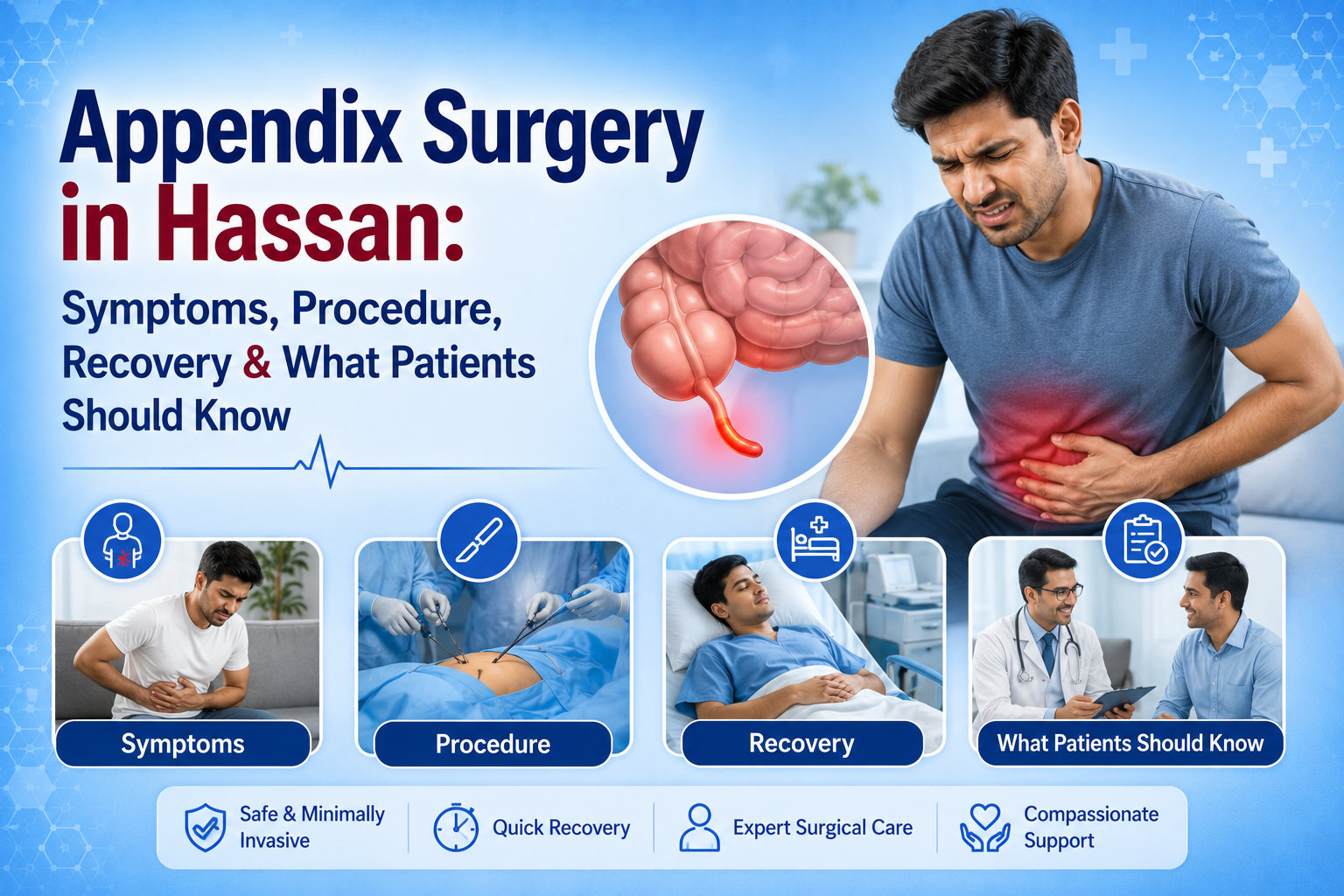
If appendicitis is confirmed, timely surgical treatment may be required. Learn more about appendix surgery in Hassan, including the procedure, recovery and important warning signs.
Laparoscopic Appendectomy
Many appendectomies are performed using minimally invasive laparoscopic surgery.
Benefits can include:
- Smaller incisions
- Less postoperative discomfort
- Shorter hospital stay
- Faster recovery compared with traditional open surgery in appropriate cases
Gallstone Treatment
Treatment depends on whether the gallstones are causing symptoms or complications.
Asymptomatic Gallstones
Gallstones that aren’t causing symptoms may not always require immediate surgery.
Symptomatic Gallstones
Repeated gallstone attacks or complications may lead doctors to recommend gallbladder removal surgery, also called cholecystectomy.
Laparoscopic cholecystectomy is commonly used for suitable patients.
read our detailed guide- gallbladder surgery in Hassan,.
Appendicitis vs Gallstones: When Is Surgery Needed?
Surgery is commonly recommended for acute appendicitis because untreated inflammation can progress to rupture and infection.
For gallstones, surgery is generally considered when stones cause recurrent symptoms or complications.
Appendicitis May Require Surgery When:
- The appendix is inflamed
- Symptoms are worsening
- There is a risk of rupture
- An abscess or perforation develops
Gallbladder Surgery May Be Recommended When:
- Gallstone attacks recur
- Gallbladder inflammation develops
- Gallstones cause bile duct obstruction
- Gallstone-related pancreatitis occurs
- Other complications develop
Patients researching gallbladder surgery cost in Hassan can learn more about the factors that influence treatment expenses.
Can Gallstones Be Mistaken for Appendicitis?
Yes. Both conditions can cause abdominal pain, nausea, and vomiting.
However, their typical pain patterns are different:
Appendicitis: Usually lower-right abdominal pain after potentially starting around the navel.
Gallstones: Usually upper-right or upper-middle abdominal pain, sometimes spreading toward the back or shoulder.
Because abdominal pain can also result from ulcers, pancreatitis, kidney stones, intestinal problems, and other conditions, self-diagnosis isn’t recommended.
Appendicitis or Gallstones: Which Is More Serious?
Neither condition should automatically be considered “more serious.” The severity depends on the individual case and whether complications develop.
Untreated appendicitis can result in appendix rupture and serious infection.
Untreated complicated gallstone disease can result in gallbladder infection, bile duct obstruction, or pancreatitis.
Severe or worsening abdominal pain requires prompt medical evaluation.
When Should You See a Doctor?
Seek medical attention if you experience:
- Severe or worsening abdominal pain
- Persistent vomiting
- Fever or chills
- Yellowing of the eyes or skin
- Abdominal swelling
- Blood in the stool or urine
- Difficulty eating or drinking
- Severe tenderness in the abdomen
Don’t rely solely on pain location to determine whether you have appendicitis or gallstones.
Related Kidney Stone Symptoms
Kidney stones can also cause severe abdominal, side, or back pain and are sometimes confused with other abdominal conditions.
If you want to understand the difference between urinary stones and gallbladder stones, read our guide on the difference between gallstones and kidney stones.
For patients experiencing suspected kidney stone symptoms, specialist evaluation is available through the urology hospital in Hassan.
Why Choose Karna Hospital for Abdominal and Surgical Care?
Accurate diagnosis is particularly important when symptoms overlap between different abdominal conditions.
At the best multispeciality hospital in Hassan, patients can access comprehensive diagnostic and surgical care under one roof.
Karna Hospital provides access to:
- Experienced surgical specialists
- Diagnostic investigations
- Laparoscopic surgical procedures
- Emergency medical support
- Postoperative monitoring
- Multispecialty consultation
The appropriate treatment is selected based on the patient’s symptoms, examination findings, diagnostic results, and overall health.
Conclusion
Understanding appendicitis vs gallstones can help you recognize important differences in symptoms and seek appropriate medical care.
Appendicitis generally causes progressively worsening pain that often moves toward the lower-right abdomen, while gallstones commonly cause pain in the upper-right or upper-middle abdomen, particularly during a gallstone attack.
Both conditions can cause nausea and vomiting, and complications can become serious if treatment is delayed. Because several abdominal conditions can produce similar symptoms, diagnosis should be made by a qualified healthcare professional rather than through self-diagnosis.
If you experience severe, persistent, or worsening abdominal pain, seek medical evaluation promptly.
Frequently Asked Questions
What is the difference between appendicitis and gallstones?
Appendicitis is inflammation of the appendix, while gallstones are hardened deposits that form in the gallbladder. Appendicitis commonly causes lower-right abdominal pain, whereas gallstones typically cause upper-right or upper-middle abdominal pain.
Can gallstones feel like appendicitis?
Gallstones can cause abdominal pain and nausea that may initially seem similar to appendicitis. However, gallstone pain is usually located in the upper-right or upper-middle abdomen.
How can you tell appendicitis from gallstones?
Pain location, symptom progression, physical examination, blood tests, ultrasound, and sometimes CT imaging help doctors distinguish between the two conditions.
Does appendicitis always require surgery?
Many cases of acute appendicitis are treated with appendectomy. In selected uncomplicated cases, antibiotics may be considered by the treating doctor.
Do gallstones always require surgery?
No. Gallstones that cause no symptoms may not require immediate treatment. Surgery is generally considered when gallstones cause repeated symptoms or complications.
When should I see a doctor for abdominal pain?
Seek prompt medical attention for severe or worsening abdominal pain, persistent vomiting, fever, jaundice, abdominal swelling, or significant tenderness.