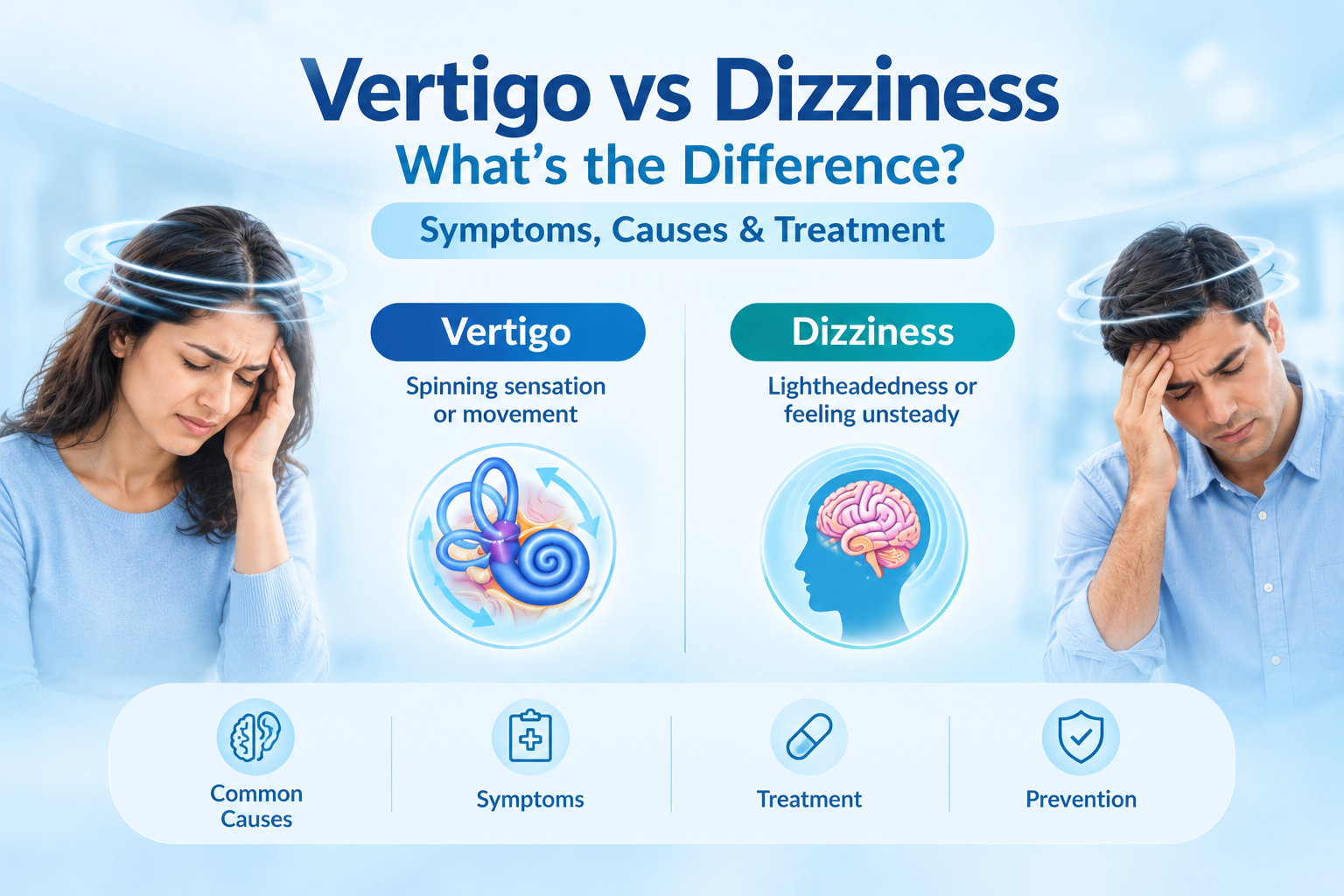
Feeling dizzy does not always mean you have vertigo. Although vertigo and dizziness are often used interchangeably, they describe different sensations. Vertigo usually involves a false feeling of movement, such as the room spinning or your body moving when you are actually still. Dizziness is a broader term that can describe lightheadedness, weakness, unsteadiness or feeling faint.
Understanding the difference between vertigo vs dizziness can help you recognize possible causes and know when medical evaluation may be needed.
If dizziness or a spinning sensation keeps returning, affects your balance, or occurs with other symptoms, an evaluation by an appropriate doctor, often an ENT specialist when an inner-ear cause is suspected, can help identify the underlying problem.
What Is Vertigo?
Vertigo is a specific type of sensation in which you feel that you or your surroundings are moving when they are not. Many people describe it as a spinning, tilting, swaying or rotating sensation.
Vertigo commonly occurs when there is a problem affecting the inner ear or vestibular system, which helps control balance and spatial orientation. However, certain neurological conditions and other health problems can also cause vertigo.
Common descriptions of vertigo include:
- Feeling that the room is spinning
- Feeling as though you are moving or being pulled
- Spinning when turning your head
- Loss of balance or unsteadiness
- Nausea or vomiting
- Difficulty walking during an episode
One common cause is benign paroxysmal positional vertigo (BPPV), which can cause brief episodes of spinning when changing the position of the head.
What Is Dizziness?
Dizziness is a general term used to describe several different sensations, rather than one specific condition.
A person experiencing dizziness may feel:
- Lightheaded
- Weak or faint
- Unsteady
- Off-balance
- Disoriented
- As though they might lose consciousness
For example, some people may feel dizzy after standing up quickly because of a temporary drop in blood pressure. Dehydration, medications, low blood sugar and other conditions can also contribute to dizziness.
Unlike vertigo, dizziness does not necessarily involve a spinning sensation.
Vertigo vs Dizziness: Key Differences
The easiest way to understand the difference between vertigo and dizziness is to consider what you actually feel.
| Feature | Vertigo | Dizziness |
| Main sensation | Spinning or movement | Lightheadedness, faintness or unsteadiness |
| Feeling of movement | Usually present | Not necessarily present |
| Common causes | BPPV, inner-ear disorders, vestibular problems | Dehydration, blood pressure changes, medications and other causes |
| Balance problems | Common | May occur |
| Nausea | Common in some cases | May occur |
| Head movement trigger | Common with positional vertigo | May or may not trigger symptoms |
In simple terms, vertigo is a specific form of dizziness involving an illusion of movement, while dizziness is a broader description of feeling abnormal, unsteady or lightheaded.
What Are the Symptoms of Vertigo?
Vertigo symptoms can vary depending on the underlying cause and may last from seconds to much longer periods.
Common symptoms include:
- Spinning sensation
- Room-spinning feeling
- Loss of balance
- Nausea
- Vomiting
- Unsteady walking
- Sweating
- Headache in some cases
- Ringing in the ears
- Hearing changes
Some people experience vertigo only when they turn over in bed, look upward, bend down or move their head quickly. This pattern can occur with BPPV.
Persistent or recurrent vertigo should not simply be ignored, particularly if it is affecting normal activities or increasing the risk of falls.
What Are the Symptoms of Dizziness?
Dizziness can feel different from person to person. Some people feel as though they may faint, while others feel unstable or have difficulty maintaining their balance.
Possible dizziness symptoms include:
- Lightheadedness
- Feeling faint
- Weakness
- Unsteadiness
- Difficulty maintaining balance
- Blurred or abnormal vision
- Nausea
- Confusion or difficulty concentrating
The cause of dizziness can range from relatively minor issues to conditions that require medical attention. Therefore, recurring or unexplained dizziness should be assessed rather than self-diagnosed.
What Causes Vertigo?
Several conditions can cause vertigo. Some of the common causes include:
BPPV
Benign paroxysmal positional vertigo (BPPV) is one of the common causes of positional vertigo. It can occur when tiny calcium crystals in the inner ear become displaced and interfere with the body’s balance signals.
Symptoms often occur when changing head position, such as getting out of bed, lying down or turning over.
Inner-Ear Disorders
Problems involving the vestibular system or inner ear can affect balance and cause vertigo. Conditions such as vestibular neuritis, labyrinthitis and Ménière’s disease may be associated with vertigo.
Migraine-Associated Vertigo
Some people experience vertigo or balance disturbances associated with migraine, sometimes even without a typical headache.
Other Causes
Less commonly, vertigo can be associated with neurological conditions, head injuries or certain medications. The cause should be determined through appropriate clinical assessment.
What Causes Dizziness?
Because dizziness is a broad symptom, it can have many possible causes.
Common causes include:
- Dehydration
- Low blood pressure
- Standing up suddenly
- Low blood sugar
- Medication side effects
- Anemia
- Anxiety or stress
- Inner-ear problems
- Heart or circulation-related problems
- Neurological conditions
The pattern of dizziness, duration, triggers and associated symptoms can provide important clues about its cause.
Is BPPV the Same as Dizziness?
BPPV is a specific condition that commonly causes vertigo, particularly when the head changes position.
A person with BPPV may describe their symptoms simply as “dizziness,” but the characteristic sensation is usually brief spinning or movement triggered by certain head positions.
Because different conditions can produce similar complaints, proper assessment is important before assuming that all dizziness is caused by BPPV.
How Are Vertigo and Dizziness Diagnosed?
Diagnosis begins with a detailed medical history. A doctor may ask:
- When did the symptoms begin?
- Does the room feel like it is spinning?
- How long does each episode last?
- Is it triggered by head movement?
- Do you have hearing changes or ringing in the ears?
- Have you experienced nausea or vomiting?
- Are there headaches or vision changes?
- Have you recently started any medication?
- Have you experienced fainting or falls?
Depending on the symptoms, evaluation may include an ear examination, hearing assessment, balance or vestibular testing, blood pressure measurement and other investigations.
If symptoms suggest an inner-ear or balance disorder, an ENT specialist may be involved in diagnosis and treatment.
Vertigo and Dizziness Treatment Options
Treatment depends on the underlying cause rather than simply treating the sensation of dizziness.
For example, positional vertigo such as BPPV may be treated with specific repositioning manoeuvres designed to move displaced inner-ear crystals back into their appropriate position.
Other treatment approaches may include:
- Vestibular rehabilitation
- Treating an underlying ear condition
- Managing migraine when relevant
- Reviewing medications that may contribute to symptoms
- Correcting dehydration or nutritional problems
- Treating blood pressure or other underlying conditions
Do not start medicines for vertigo or dizziness without appropriate medical advice, particularly if symptoms are recurrent or unexplained.
If dizziness occurs along with an ear-related condition, understanding the signs of an ear infection in adults may also be useful.
When Should You See a Doctor for Vertigo or Dizziness?
Occasional mild dizziness may resolve on its own, but medical evaluation is advisable when symptoms are frequent, persistent, severe or unexplained.
Seek urgent medical attention if dizziness or vertigo occurs suddenly with symptoms such as:
- Difficulty speaking
- Facial weakness
- Weakness or numbness on one side
- Severe difficulty walking
- Loss of consciousness
- Severe or unusual headache
- Chest pain
- Significant vision changes
These symptoms can sometimes indicate a serious underlying condition and should not be attributed automatically to a simple inner-ear problem.
For persistent ear-related symptoms, you can consult an ENT specialist in Hassan for appropriate evaluation.
Vertigo Treatment in Hassan
If you are experiencing recurrent spinning sensations, balance problems, dizziness or other vestibular symptoms, getting the correct diagnosis is an important first step.
Karna Hospital provides access to specialist medical care and evaluation for patients in Hassan. Depending on the symptoms and suspected cause, your doctor can determine whether further ENT, neurological or other medical assessment is appropriate.
You can learn more about Karna Hospital and its specialist healthcare services in Hassan.
Frequently Asked Questions
Is vertigo the same as dizziness?
No. Vertigo is a specific sensation of spinning or movement, while dizziness is a broader term that can include lightheadedness, faintness and unsteadiness.
How do I know if I have vertigo or dizziness?
If you feel that you or your surroundings are spinning or moving, you may be experiencing vertigo. If you mainly feel lightheaded, faint or generally unsteady without a spinning sensation, it may be dizziness. A doctor can determine the likely cause.
What is the most common cause of positional vertigo?
BPPV is a common cause of positional vertigo. It typically causes brief spinning episodes triggered by certain head movements.
Can vertigo go away on its own?
Some causes of vertigo may improve over time, but recurrent or severe symptoms should be evaluated to identify the underlying cause and determine whether treatment is needed.
When should I see an ENT specialist for vertigo?
Consider an ENT evaluation if vertigo is recurrent, associated with hearing changes or ear symptoms, triggered by head movements, or affecting your balance and daily activities.
Conclusion
Understanding vertigo vs dizziness is useful because the two terms describe different experiences. Vertigo generally involves a false sensation of spinning or movement, while dizziness can refer to lightheadedness, faintness or unsteadiness.
BPPV and other inner-ear conditions are important causes of vertigo, while dizziness can have many different causes, ranging from dehydration and blood pressure changes to medication effects and medical conditions.
If symptoms are persistent, recurrent, severe or associated with hearing or neurological symptoms, professional evaluation can help identify the cause and guide appropriate treatment.