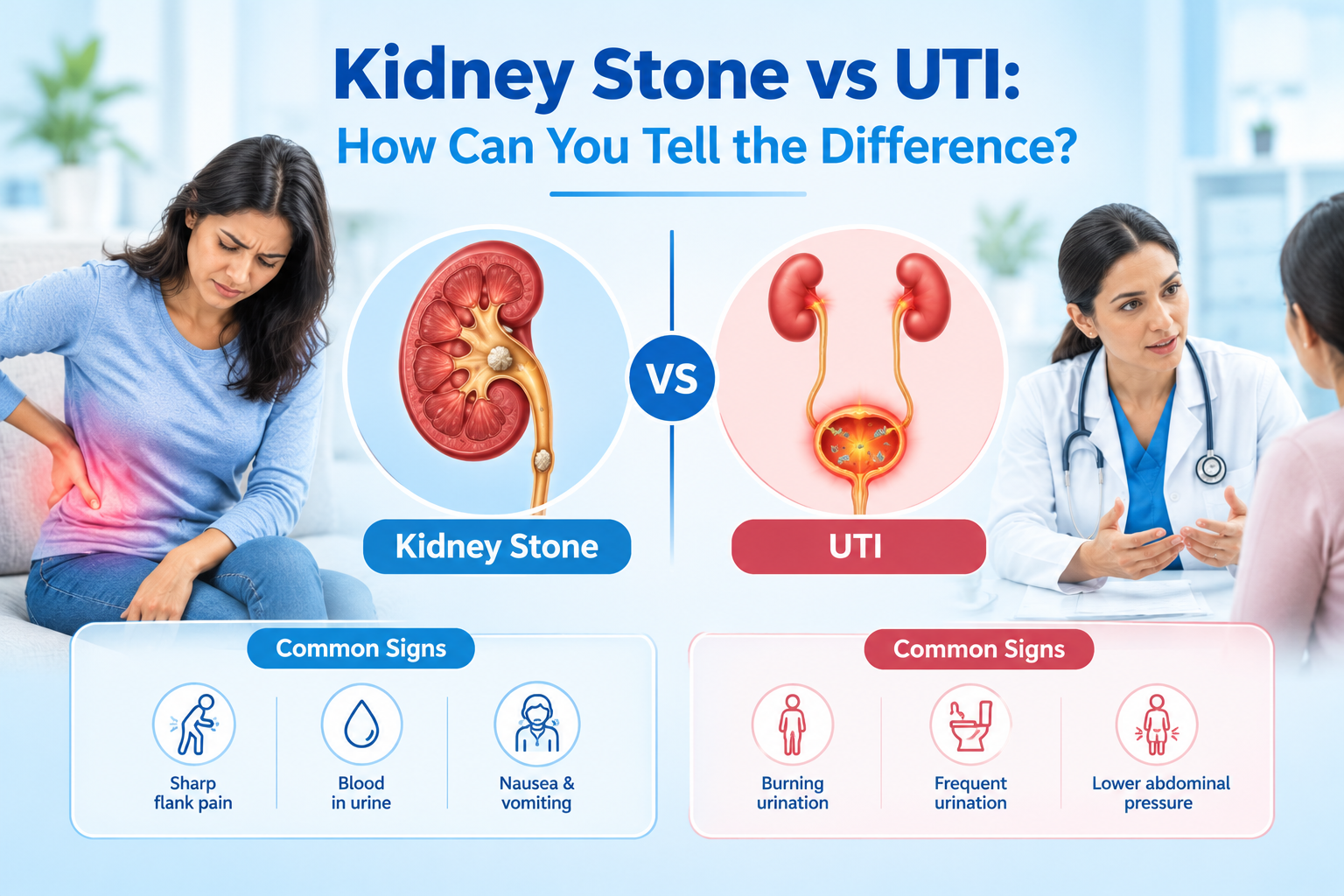
Kidney stones and urinary tract infections (UTIs) can cause similar urinary symptoms, but they are different conditions that require different treatments. Kidney stones commonly cause sharp pain in the back, side, lower abdomen or groin, while a UTI more often causes burning while urinating, frequent urination and lower abdominal discomfort. However, symptoms can overlap, and a medical evaluation may be needed to determine the exact cause.
Knowing the difference between a kidney stone vs UTI can help you understand your symptoms and know when to seek medical attention.
Kidney Stone vs UTI: What Is the Difference?
A kidney stone is a hard deposit made from minerals and salts that forms inside the kidneys. When a stone moves through the urinary tract, it can cause severe or intermittent pain, blood in the urine and difficulty urinating.
A UTI is an infection affecting part of the urinary tract. Bladder infections are the most common type of UTI and are usually caused by bacteria. Typical symptoms include burning during urination, frequent urges to urinate and discomfort in the lower abdomen.
Kidney Stone vs UTI Symptoms: Quick Comparison
| Symptom | Kidney Stone | UTI |
| Pain location | Back, side, lower abdomen or groin | Usually lower abdomen or pelvic area |
| Pain type | Often sharp and may come in waves | Usually burning or discomfort |
| Burning urination | Can occur | Very common |
| Frequent urination | Can occur | Very common |
| Blood in urine | Can occur | Can occur |
| Cloudy or strong-smelling urine | May occur | Common |
| Nausea or vomiting | Can occur, especially with severe pain | May occur with a more serious infection |
| Fever and chills | Can occur, particularly if infection is present | May indicate a more serious infection |
| Urinary blockage | Possible with larger stones | Not typical |
| Main diagnostic tests | Urine tests and imaging | Urinalysis and urine culture |
The symptoms can overlap, which is why kidney stone pain vs UTI pain cannot always be distinguished based only on symptoms.
Kidney Stone Symptoms
Kidney stone symptoms can vary depending on the stone’s size and location. Small stones may pass without noticeable symptoms, while a stone that becomes stuck can cause significant pain or urinary blockage.
Common kidney stone symptoms include:
- Sharp pain in the back or side
- Pain that moves toward the lower abdomen or groin
- Pain that comes and goes in waves
- Blood in the urine
- Pain while urinating
- A frequent urge to urinate
- Difficulty passing urine
- Cloudy or bad-smelling urine
- Nausea or vomiting
- Fever or chills in some cases
If you want to understand the characteristics of this pain in greater detail, read our guide on kidney stone pain symptoms, location and relief.
A kidney stone can sometimes block urine flow. Larger or obstructing stones may require medical treatment rather than simply waiting for them to pass.
UTI Symptoms
A UTI affecting the bladder commonly causes symptoms related to urination. These may include:
- Burning or pain while urinating
- Frequent need to urinate
- Strong or sudden urinary urgency
- Passing only a small amount of urine
- Lower abdominal discomfort
- Cloudy urine
- Bloody urine
- Strong-smelling urine
A bladder infection can spread to the kidneys if it is not appropriately treated. Fever, chills, nausea, vomiting, and pain in the back or side may indicate that the infection has progressed toward the kidneys and requires prompt medical attention.
For a more detailed explanation, read our guide on UTI causes, symptoms and when to see a urologist.
How Can You Tell If You Have a Kidney Stone or UTI?
One of the most common questions is: “How do I know if I have a kidney stone or UTI?”
The pattern of symptoms can provide clues, but it cannot reliably confirm the diagnosis.
Pain Pattern
A kidney stone commonly produces sharp pain in the back, side, lower abdomen or groin. The pain may come in waves as the stone moves through the urinary tract.
A UTI, particularly a bladder infection, more commonly causes burning during urination and discomfort in the lower abdomen.
Urination Symptoms
Frequent urination and a strong urge to urinate are particularly common with UTIs. Kidney stones can also cause these symptoms, especially when the stone is located close to the bladder.
Blood in Urine
Blood in the urine can occur with both kidney stones and UTIs. Therefore, blood in urine alone cannot tell you whether you have a kidney stone or UTI.
Fever
Fever and chills are important warning signs. They can occur with a kidney infection and may also occur when a kidney stone is associated with infection. A combination of urinary symptoms, fever and back or side pain should be medically assessed promptly.
Can Kidney Stones Cause UTI Symptoms?
Yes, kidney stones can cause symptoms that resemble a UTI. A stone may cause pain during urination, frequent urination or blood in the urine.
More importantly, kidney stones and UTIs can occur together. A stone that blocks urine flow can contribute to complications, including urinary tract infections.
This is why assuming that burning urination or urinary frequency is simply a UTI may sometimes delay appropriate diagnosis.
Can You Have a Kidney Stone and UTI at the Same Time?
Yes. A person can have both a kidney stone and a UTI at the same time.
This combination deserves particular attention when symptoms include severe flank or back pain together with fever, chills, vomiting or difficulty passing urine.
An infected and obstructed urinary tract can become a serious medical problem. If these symptoms occur together, seek medical attention rather than attempting to diagnose the condition at home.
How Are Kidney Stones and UTIs Diagnosed?
Doctors generally use your symptoms, medical history and physical examination as the starting point.
Diagnosis of a UTI
A urinalysis can identify blood and white blood cells in the urine. A urine culture can identify bacteria and help determine whether antibiotics may be appropriate.
Diagnosis of a Kidney Stone
Kidney stone diagnosis may involve urine and blood tests as well as imaging. Imaging can help determine the stone’s size and location and whether it is blocking the urinary tract. Depending on the situation, doctors may use ultrasound, X-ray or CT imaging.
This means a urine test alone may not always be enough to determine whether symptoms are caused by a kidney stone, UTI or both.
Kidney Stone vs UTI: Treatment Differences
The treatment depends on the diagnosis.
UTI Treatment
Bacterial UTIs are commonly treated with antibiotics prescribed by a healthcare professional. The choice of treatment may depend on the suspected or confirmed bacteria and the patient’s individual circumstances.
Kidney Stone Treatment
Treatment for kidney stones depends largely on their size, location and type. Small stones may pass naturally, while larger stones or stones causing significant pain or urinary blockage may require a procedure to remove or break the stone.
Patients looking for local care can learn more about kidney stone treatment in Hassan.
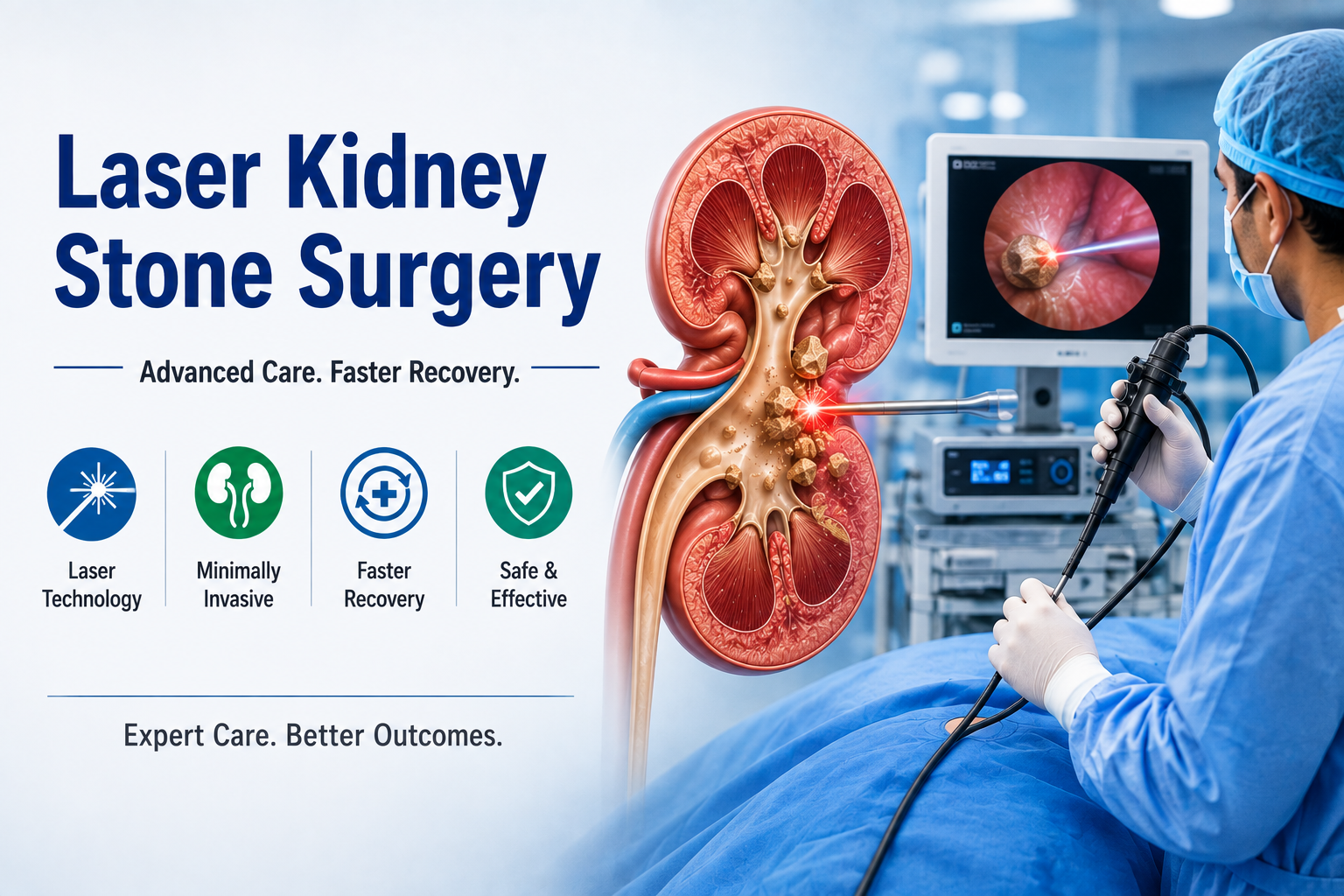
For patients who require a procedure, you can also learn more about kidney stone surgery in Hassan and laser kidney stone surgery in Hassan.
When Should You See a Urologist?
You should seek medical evaluation if you have persistent urinary symptoms, significant pain, blood in the urine, recurrent UTIs or symptoms that are getting worse.
Seek prompt medical attention if you experience:
- Severe or worsening flank or back pain
- Fever or chills
- Nausea or repeated vomiting
- Blood in the urine
- Difficulty or inability to urinate
- Severe abdominal or groin pain
- Urinary symptoms combined with significant pain
These symptoms can sometimes indicate a kidney stone, kidney infection, urinary obstruction or another condition requiring treatment.
Frequently Asked Questions
Which is more painful, a kidney stone or UTI?
Pain varies from person to person. Kidney stones can cause severe, sharp pain that may come in waves, particularly when a stone moves through the urinary tract. A UTI more commonly causes burning urination, urgency and lower abdominal discomfort.
Does a kidney stone cause burning when urinating?
Yes. A kidney stone can cause pain or burning during urination, particularly when the stone is moving through the urinary tract. However, burning urination is also a common UTI symptom.
Do kidney stones cause frequent urination?
They can. A stone located near the bladder may cause frequent or urgent urination. However, frequent urination is also a common symptom of a UTI.
Is blood in urine a sign of kidney stones or UTI?
Blood in urine can occur with both kidney stones and UTIs. Because several conditions can cause blood in the urine, it should be medically evaluated rather than used to self-diagnose.
Can a UTI cause back pain?
A bladder UTI typically causes lower abdominal discomfort, but back or side pain combined with fever or chills can indicate that the infection has reached the kidneys. Prompt medical evaluation is recommended.
Can you have a kidney stone and UTI at the same time?
Yes. Kidney stones and UTIs can occur together. A urinary blockage caused by a stone can increase the risk of complications, making timely medical assessment particularly important.
Final Takeaway
The main difference between a kidney stone vs UTI is the pattern of symptoms. Kidney stones more commonly cause sharp pain in the back, side, lower abdomen or groin, while UTIs more often cause burning urination, urinary urgency, frequent urination and lower abdominal discomfort.
However, symptoms can overlap, and both conditions can occur together. Severe pain, fever, chills, vomiting, blood in the urine or difficulty urinating should not be ignored.
If you are unsure whether your symptoms indicate a kidney stone or UTI, a urologist can use urine tests, blood tests and, when necessary, imaging to identify the underlying cause and recommend appropriate treatment.