Have you ever heard a ringing, buzzing, humming, hissing, or clicking sound in your ears when there is no external source making the noise? This may be tinnitus. It can affect one or both ears and may be temporary or persistent.
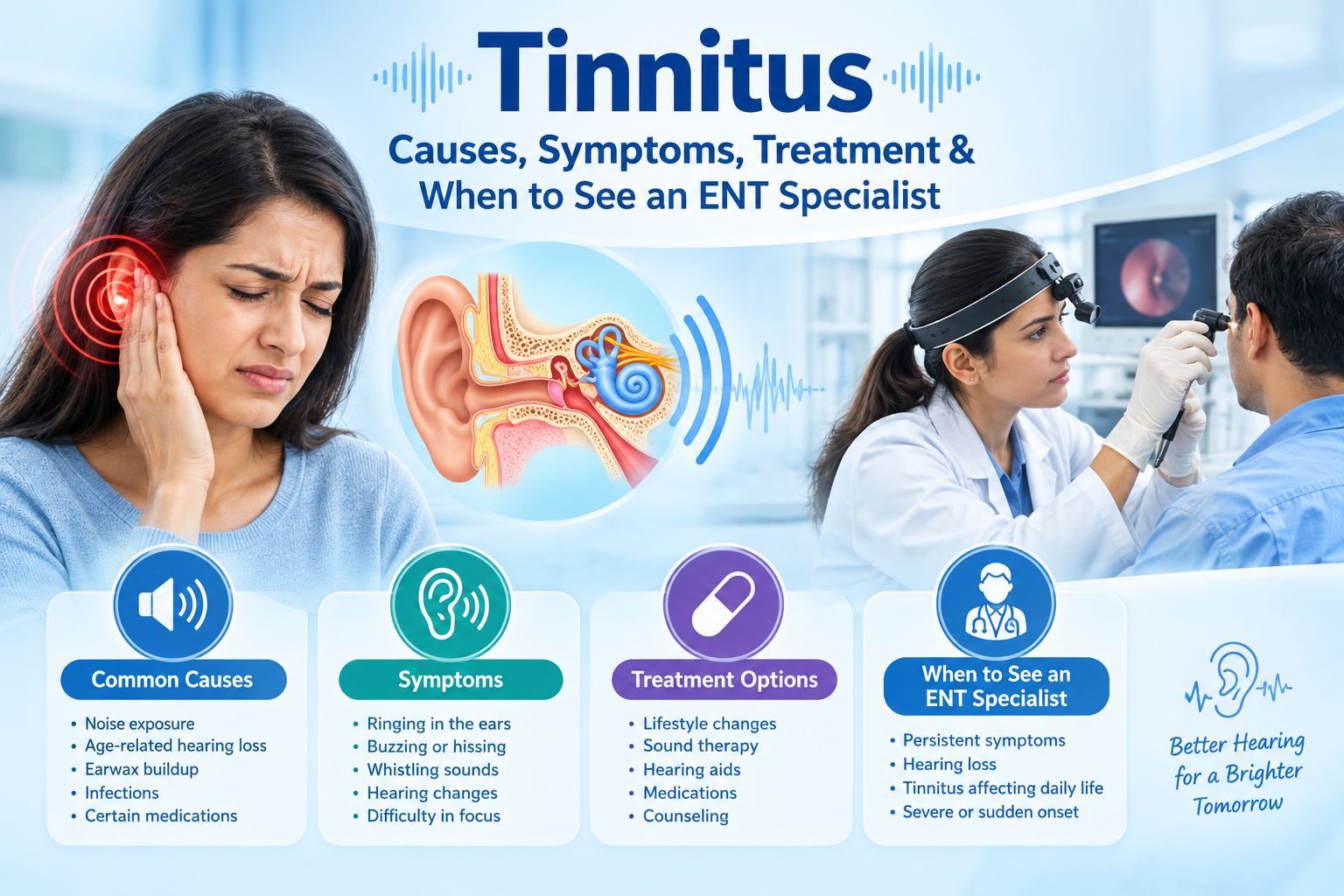
Tinnitus is not a disease itself but a symptom that can have several possible causes, including hearing loss, earwax buildup, ear infections, exposure to loud noise, certain medications, and other ear or health conditions. In some cases, tinnitus may occur along with hearing loss, dizziness, or ear pain.
Understanding the causes and symptoms of tinnitus can help you recognize when professional evaluation is needed. If ringing in your ears persists or is affecting your sleep, concentration, or daily activities, consulting an ENT specialist can help identify the underlying cause.
What Is Tinnitus?
Tinnitus is the perception of a sound in one or both ears when there is no external sound source. People may describe it as ringing, buzzing, humming, hissing, clicking, or roaring.
The sound may be occasional or continuous. Some people notice tinnitus mainly at night or in quiet surroundings, while others experience it throughout the day.
Tinnitus itself is usually a symptom rather than a standalone condition. Finding and addressing the underlying cause may help reduce the symptoms.
What Causes Tinnitus?
There are several possible tinnitus causes, ranging from relatively simple ear problems to conditions that require further medical evaluation.
1. Hearing Loss
Age-related hearing loss and noise-related hearing damage are common conditions associated with tinnitus. Damage to the structures involved in hearing can affect the way the brain processes sound.
2. Exposure to Loud Noise
Regular exposure to loud music, machinery, construction noise, or other high-volume sounds can damage sensitive structures in the inner ear. Repeated or prolonged exposure may increase the risk of tinnitus and hearing loss.
3. Earwax Buildup
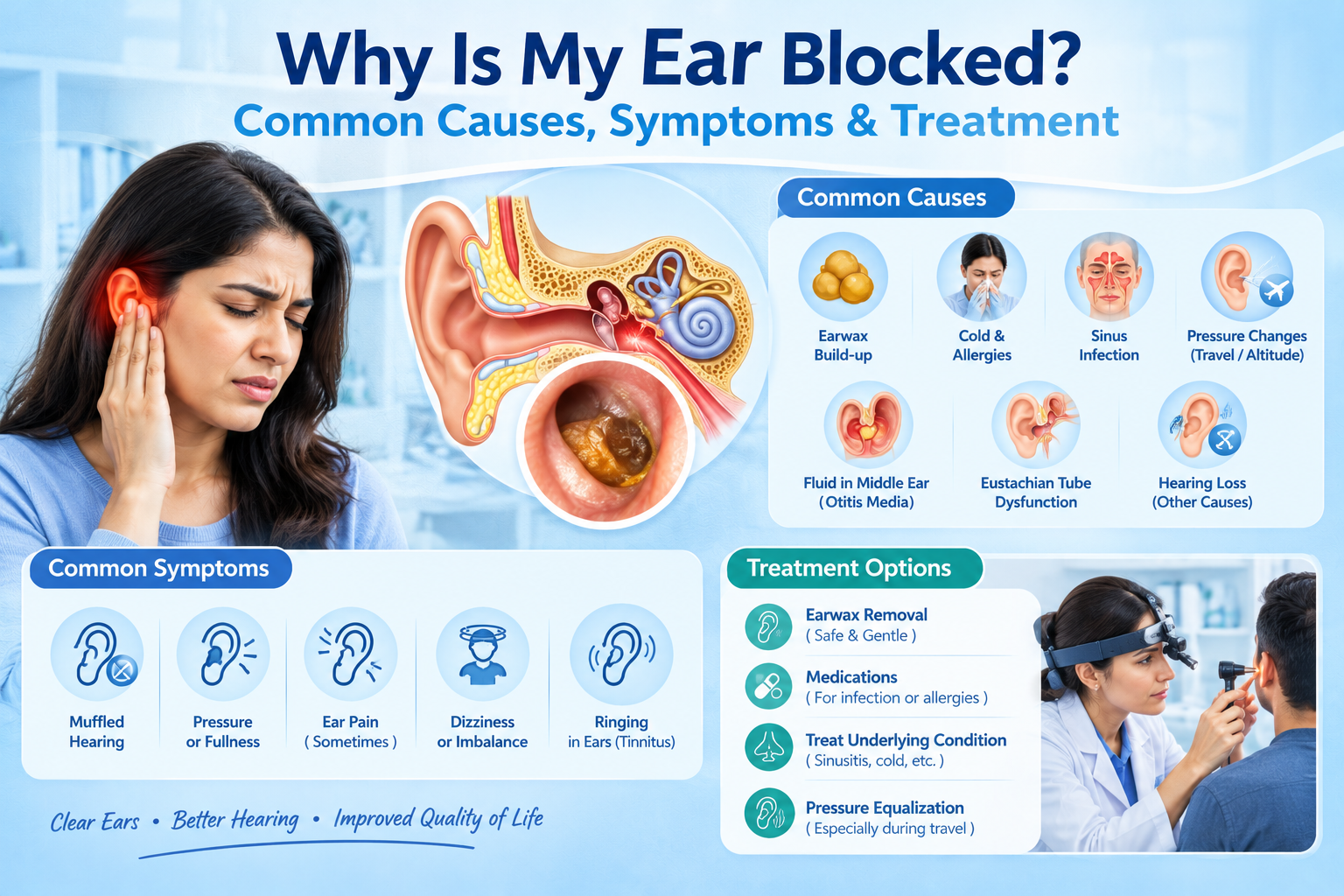
Excessive earwax can block the ear canal and sometimes contribute to ringing, reduced hearing, or a feeling of fullness in the ear.
4. Ear Infections
An ear infection can cause inflammation, pressure, pain, temporary hearing changes, and sometimes tinnitus. Treating the underlying ear problem may help resolve the associated symptoms.
If you are experiencing symptoms such as ear pain, discharge, reduced hearing, or ringing along with an infection, you can learn more about ear infection in adults and its symptoms and treatment options.
5. Certain Medications
Some medications can be associated with tinnitus as a side effect. If you notice new or worsening ringing after starting a medication, speak with your doctor rather than stopping the medicine on your own.
6. Age-Related Changes
Tinnitus becomes more common with increasing age, particularly when it occurs alongside age-related hearing loss.
7. Jaw or Neck Problems
In some people, problems involving the jaw joint or neck may influence tinnitus symptoms. A healthcare professional can help determine whether these factors may be contributing.
8. Other Medical Conditions
Certain vascular, neurological, or metabolic conditions can sometimes be associated with tinnitus. Persistent or unusual tinnitus should therefore be evaluated, particularly when it occurs with other symptoms.
What Does Tinnitus Sound Like?
Tinnitus does not sound the same for everyone. Common descriptions include:
- Ringing in the ears
- Buzzing in the ears
- Hissing
- Humming
- Clicking
- Roaring
- Whistling
- Pulsing or whooshing
The sound may occur in one ear, both ears, or seem to come from inside the head.
Some people notice it only occasionally, while others experience constant ringing in their ears.
Common Tinnitus Symptoms
The main symptom is hearing a sound without an external source. Depending on the underlying cause, tinnitus may occur with:
- Ringing in one or both ears
- Buzzing or humming
- Hissing or clicking sounds
- Hearing loss
- Ear fullness or pressure
- Ear pain
- Dizziness or balance problems
- Difficulty concentrating
- Sleep disturbances
The presence of other symptoms can help an ENT specialist determine whether additional evaluation is needed.
Is Tinnitus a Serious Problem?
Tinnitus is not always a sign of a serious medical problem. It can occur temporarily after exposure to loud noise or with conditions such as earwax buildup.
However, persistent, sudden, one-sided, or pulsating tinnitus should not be ignored. Tinnitus accompanied by sudden hearing loss, significant dizziness, neurological symptoms, or other concerning symptoms requires prompt medical evaluation.
The important step is to determine whether there is an underlying condition that needs treatment.
How Is Tinnitus Diagnosed?
There is no single test that diagnoses every case of tinnitus. An ENT specialist usually begins with a detailed medical and ear examination.
Depending on your symptoms, evaluation may include:
Medical and Hearing History
Your doctor may ask:
- When did the tinnitus begin?
- Is it in one ear or both?
- Is it constant or intermittent?
- What does the sound resemble?
- Have you been exposed to loud noise?
- Do you have hearing loss or ear pain?
- Are you experiencing dizziness?
- Have you recently started any medication?
Ear Examination
The ear canal and eardrum may be examined to identify problems such as earwax, infection, inflammation, or other abnormalities.
Hearing Tests
A hearing assessment can help determine whether tinnitus is associated with hearing loss. Depending on your symptoms, your ENT specialist may recommend hearing-related diagnostic tests as part of the evaluation.
How Is Tinnitus Treated?
There is no single treatment that works for every person with tinnitus. Tinnitus treatment depends on its underlying cause and whether an associated condition such as hearing loss is present.
Possible approaches include:
Treating the Underlying Ear Problem
If tinnitus is related to earwax buildup, an ear infection, or another treatable ear condition, addressing that problem may improve the symptoms.
Managing Hearing Loss
If hearing loss is contributing to tinnitus, a hearing assessment can help determine appropriate management. In some cases, hearing devices may make external sounds easier to hear and reduce the prominence of tinnitus.
Sound-Based Strategies
Background sound such as soft music, white noise, or other appropriate sound therapy may make tinnitus less noticeable, particularly in quiet environments or at bedtime.
Lifestyle and Stress Management
Stress and poor sleep can make tinnitus more difficult to cope with. Maintaining good sleep habits, managing stress, protecting your ears from excessive noise, and avoiding unnecessarily loud environments may help.
Treating Associated Conditions
If tinnitus is linked to another medical or ear-related condition, treatment will focus on the identified cause.
Your ENT specialist can recommend the most appropriate approach based on your symptoms and examination.
Can Tinnitus Be Cured Permanently?
Whether tinnitus can be completely eliminated depends on its cause.
When tinnitus results from a treatable condition, addressing that condition may reduce or resolve the symptoms. However, some forms of persistent tinnitus, particularly those associated with permanent hearing damage, may not have a single treatment that completely removes the sound.
The goal may instead be to identify and manage the underlying cause, reduce how noticeable the tinnitus is, improve sleep and concentration, and help you manage the condition effectively.
When Should You See an ENT Specialist for Tinnitus?
You should consider seeing an ENT specialist if:
- Ringing in your ears continues or repeatedly returns
- Tinnitus occurs mainly in one ear
- You also have hearing loss
- You experience dizziness or balance problems
- You have ear pain or discharge
- The tinnitus affects your sleep or concentration
- The sound is pulsating or seems synchronized with your heartbeat
- Tinnitus develops suddenly
- Your symptoms are becoming progressively worse
Sudden hearing loss accompanied by tinnitus should receive urgent medical assessment.
If you are looking for an ENT specialist in Hassan, an appropriate evaluation can help determine whether the tinnitus is related to an ear condition, hearing changes, infection, or another underlying cause.
Tinnitus and Other ENT Conditions
Tinnitus may sometimes occur alongside other ear, nose, and throat symptoms. For example, congestion and infections affecting the upper respiratory tract can be associated with ear pressure or discomfort.
If you are experiencing persistent nasal congestion, facial pressure, or other symptoms along with ear-related complaints, understanding sinus infection symptoms may help you distinguish sinus-related symptoms from an underlying ear condition.
Similarly, people with persistent sinus problems may want to understand available sinusitis treatment options and when specialist evaluation may be appropriate.
Tinnitus Treatment in Hassan
If you are experiencing persistent ringing, buzzing, or other unexplained sounds in your ears, professional evaluation can help identify possible causes.
Karna Hospital provides ENT care in Hassan for a range of ear, nose, and throat conditions. If tinnitus is affecting your hearing, sleep, concentration, or daily activities, an ENT evaluation can help determine the appropriate next steps.
For an appointment or further information, visit the Karna Hospital contact page.
Take the First Step Toward Better Ear Health
Persistent tinnitus should not simply be ignored, particularly when it occurs with hearing loss, dizziness, ear pain, or other unusual symptoms. Identifying the possible cause is an important first step toward appropriate management.
If you are experiencing ringing in the ears or other tinnitus symptoms in Hassan, consult an ENT specialist for an appropriate evaluation and treatment plan.
Frequently Asked Questions About Tinnitus
What is tinnitus?
Tinnitus is the perception of ringing, buzzing, humming, hissing, clicking, or other sounds without an external sound source. It may affect one or both ears and can be temporary or persistent.
What are the main causes of tinnitus?
Common causes and associated factors include hearing loss, exposure to loud noise, earwax buildup, ear infections, age-related hearing changes, certain medications, and some other medical conditions.
Can tinnitus go away on its own?
Temporary tinnitus may improve when the underlying trigger is removed or treated. Persistent or recurrent tinnitus should be evaluated by a healthcare professional to determine the possible cause.
Can tinnitus be cured permanently?
There is no single cure for every type of tinnitus. If an underlying treatable condition is responsible, treating it may improve or resolve the tinnitus. For persistent tinnitus associated with permanent hearing changes, treatment focuses on management and reducing its impact.
What doctor should I see for tinnitus?
An ENT specialist is an appropriate doctor for evaluating tinnitus, particularly when it is persistent or occurs with hearing loss, ear pain, dizziness, or other ear-related symptoms.
When should I see an ENT specialist for ringing in my ears?
See an ENT specialist if the ringing persists, repeatedly returns, affects one ear, is accompanied by hearing loss or dizziness, or interferes with sleep and daily activities. Sudden hearing loss with tinnitus requires prompt medical evaluation.
Can earwax cause tinnitus?
Yes. Excessive earwax can block the ear canal and may contribute to ringing, reduced hearing, or ear fullness. An examination can determine whether earwax is contributing to the symptoms.
Can an ear infection cause tinnitus?
An ear infection can cause inflammation, pressure, pain, and temporary hearing changes that may be associated with tinnitus. Treating the infection and underlying ear problem may help.
Can stress cause ringing in the ears?
Stress may make tinnitus more noticeable or difficult to manage, although it is not necessarily the underlying cause. Persistent tinnitus should still be evaluated to identify possible contributing factors.
Is tinnitus the same as hearing loss?
No. Tinnitus is the perception of sound without an external source, whereas hearing loss is reduced ability to hear external sounds. They can occur together, but one does not necessarily mean the other is present.