Ovarian cysts are fluid-filled sacs that develop in or on an ovary. They are common, especially during the reproductive years, and many ovarian cysts cause no symptoms and disappear without treatment. However, some cysts can cause pelvic pain, menstrual changes, discomfort during intercourse, or complications such as rupture or ovarian torsion.
Understanding ovarian cyst symptoms, causes, types, diagnosis, and treatment options can help women know when monitoring is enough and when medical evaluation is necessary.
What Are Ovarian Cysts?
An ovarian cyst is a sac that develops in an ovary and may contain fluid, blood, or other tissue depending on its type. Many cysts develop as part of the normal menstrual cycle and are known as functional ovarian cysts.
Most ovarian cysts are benign, meaning they are not cancerous. Some disappear on their own within a few weeks or months. Others may persist, become larger, or have features that require closer evaluation.
The appropriate approach depends on factors such as the woman’s age, symptoms, cyst size, appearance on ultrasound, and whether the cyst changes over time.
What Are the Symptoms of Ovarian Cysts?
Many ovarian cysts do not cause noticeable symptoms. When symptoms occur, they can vary depending on the size and type of cyst.
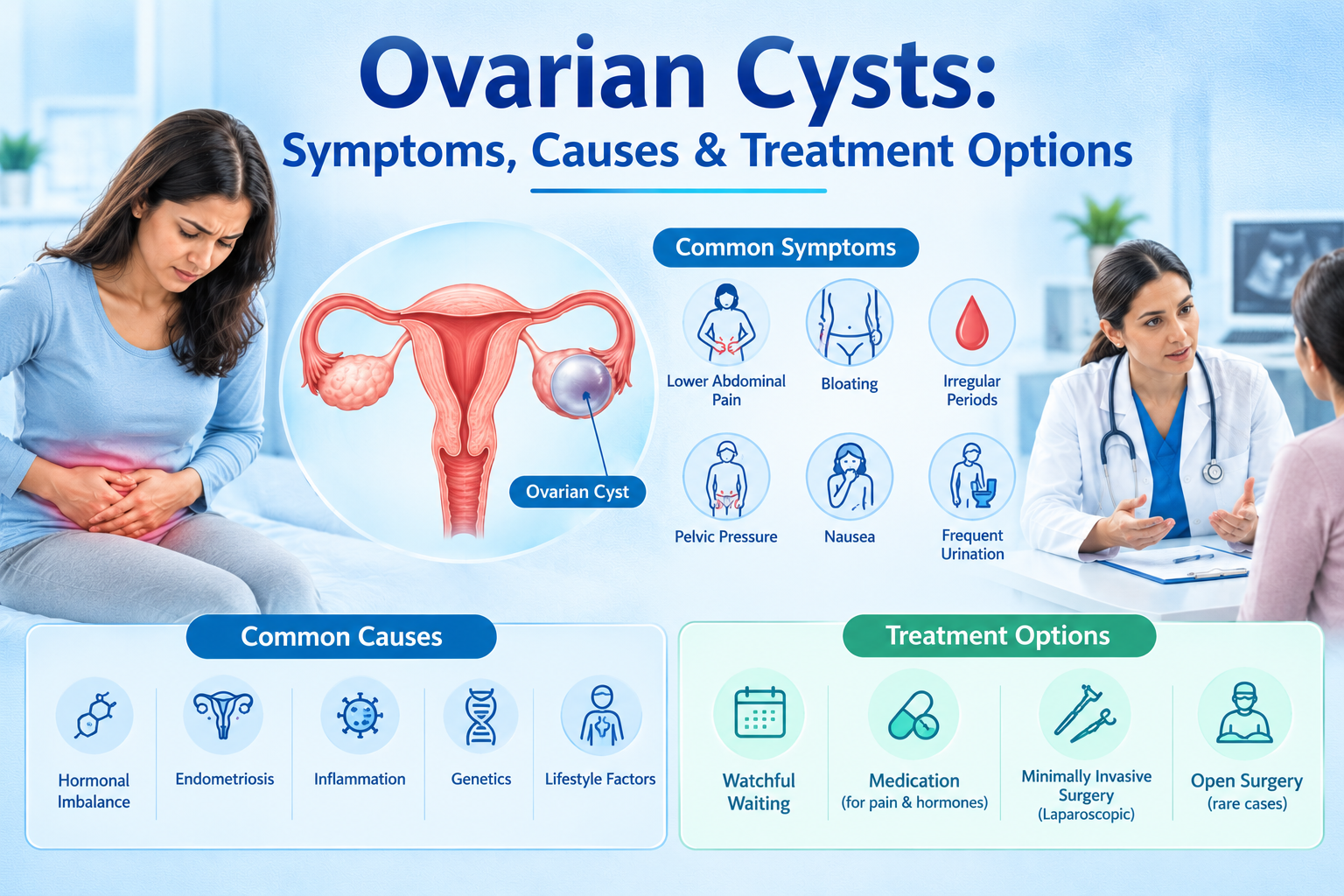
Common ovarian cyst symptoms include:
- Pelvic or lower abdominal pain
- A feeling of fullness or pressure in the abdomen
- Abdominal bloating
- Pain during sexual intercourse
- Irregular or unusually heavy periods
- Changes in the menstrual cycle
- Frequent urination if a large cyst presses on the bladder
- Difficulty emptying the bowel if the cyst puts pressure on surrounding structures
- Lower back or thigh discomfort in some cases
Sudden, severe pelvic or abdominal pain, particularly when accompanied by vomiting, dizziness, weakness, fever, or heavy bleeding, requires prompt medical assessment.
What Causes Ovarian Cysts?
The causes of ovarian cysts depend on the type of cyst.
1. Functional ovarian cysts
Functional cysts are associated with the normal menstrual cycle. They can occur when a follicle does not release an egg or when the follicle does not shrink normally after releasing an egg.
These cysts are usually harmless and often resolve without treatment.
2. Endometriosis
Endometriosis can cause cysts known as endometriomas. These cysts develop when endometrial-like tissue grows on the ovary and may contain old blood.
Women with endometriosis may also experience painful periods, pelvic pain, or pain during intercourse.
3. Polycystic ovary syndrome
Polycystic ovary syndrome (PCOS) is a hormonal condition associated with irregular ovulation and multiple small follicles in the ovaries. Despite the name, these small follicles are not the same as a typical ovarian cyst.
Women experiencing menstrual irregularities or fertility concerns may benefit from understanding the difference between PCOS and ovarian cysts.
PCOS symptoms and fertility treatment
4. Other ovarian growths
Some ovarian cyst-like masses may develop because of abnormal tissue growth. These may be benign or, less commonly, malignant. This is why persistent, complex, or unusual ovarian masses need appropriate medical evaluation.
Types of Ovarian Cysts
There are several types of ovarian cysts. Some are related to ovulation, while others develop because of conditions affecting the reproductive system.
Common types include:
- Follicular cysts: Develop when a follicle does not release an egg.
- Corpus luteum cysts: Form when the follicle changes after ovulation.
- Endometriomas: Associated with endometriosis.
- Dermoid cysts: Develop from cells that can produce different types of tissue.
- Cystadenomas: Develop from ovarian surface cells and can sometimes become large.
- Other complex cysts: May contain solid areas, septations, blood, or other features that require evaluation.
The appearance of an ovarian cyst on an ultrasound helps the gynecologist determine whether it is likely to be simple and functional or whether further assessment is required.
How Are Ovarian Cysts Diagnosed?
Diagnosis usually begins with a medical history and pelvic examination when appropriate. The doctor may ask about pelvic pain, menstrual patterns, pregnancy possibility, previous gynecological conditions, and other symptoms.
Ultrasound
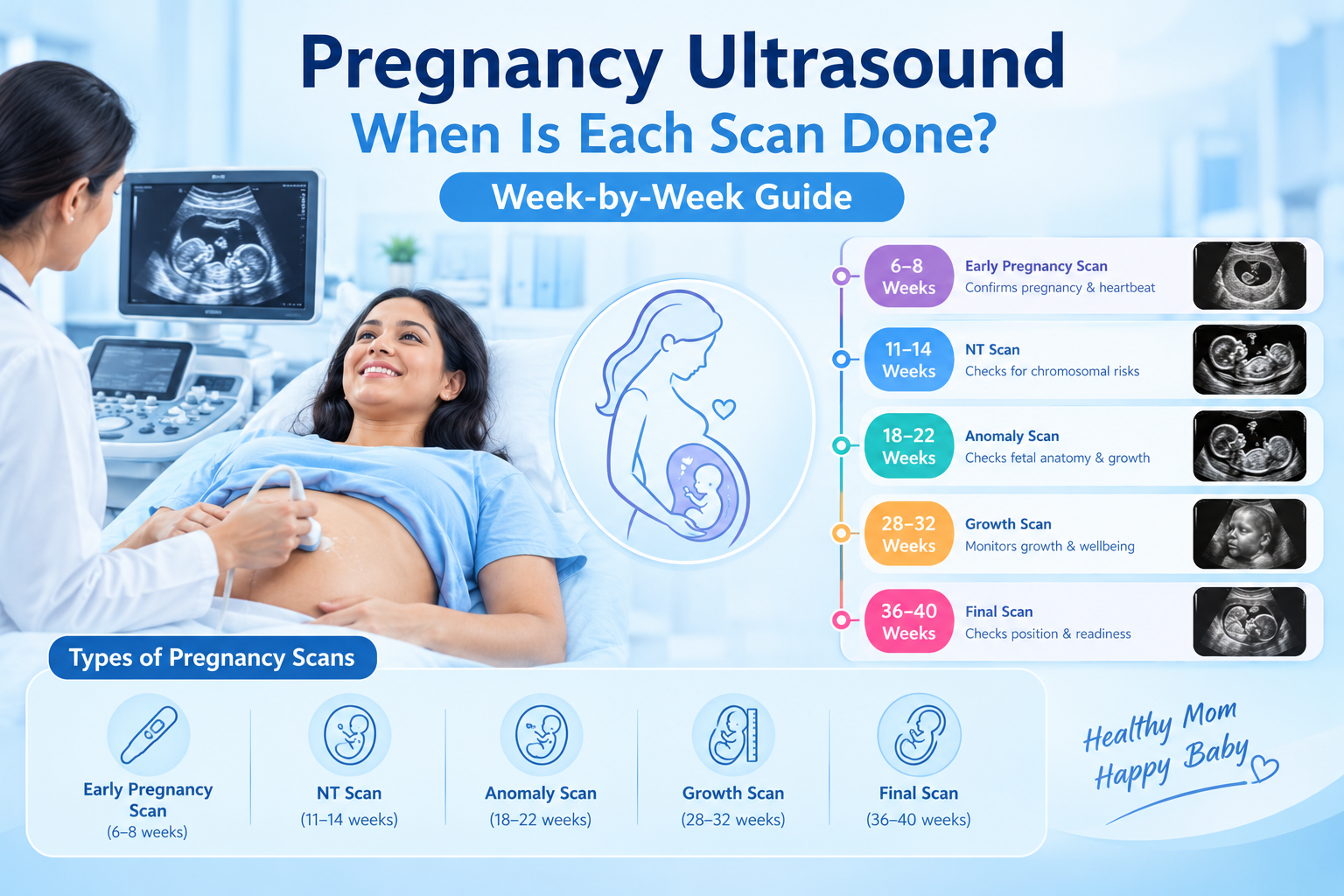
A pelvic ultrasound is one of the most commonly used tests for evaluating an ovarian cyst. It can provide information about:
- The cyst’s size
- Location
- Shape
- Whether it is fluid-filled or contains solid components
- Internal septations or other features
- Changes over time
Depending on the situation, the doctor may recommend additional blood tests or imaging investigations.
Not every ovarian cyst requires extensive testing. The choice of investigation depends on the individual woman’s symptoms and the ultrasound findings.
Ovarian Cyst Treatment Options
Treatment for ovarian cysts depends on the cyst’s characteristics, symptoms, and the woman’s age and reproductive plans.
1. Watchful waiting
If an ovarian cyst is small, appears benign, and does not cause significant symptoms, the doctor may recommend observation.
A repeat ultrasound may be advised after a specific period to determine whether the cyst has disappeared, remained stable, or changed.
2. Medicines
Medicines may sometimes be used to manage symptoms such as pain. Hormonal contraceptives may be recommended in selected women to reduce the formation of some new functional cysts, although they do not necessarily make an existing cyst disappear.
Medication should be selected by a healthcare professional based on the woman’s medical history and needs.
3. Surgery
Ovarian cyst surgery may be considered when a cyst:
- Causes persistent or significant symptoms
- Is large or continues to grow
- Does not resolve as expected
- Has complex or concerning features
- Causes complications
- Requires further evaluation because of its appearance or the woman’s age and clinical circumstances
When surgery is appropriate, the procedure may involve removing only the cyst while preserving the ovary when possible. In other situations, removal of part or all of an ovary may be necessary.
Laparoscopic surgery, often called keyhole surgery, may be an option for selected patients. The choice between laparoscopy and open surgery depends on the cyst’s size, appearance, suspected diagnosis, and other clinical factors.
Can Ovarian Cysts Go Away on Their Own?
Yes. Many functional ovarian cysts can disappear without treatment within one or more menstrual cycles.
However, not every ovarian cyst should simply be ignored. A cyst that persists, grows, causes significant symptoms, or has unusual features may require further evaluation.
The best approach is to follow the monitoring plan recommended by your gynecologist rather than assuming that every cyst will resolve naturally.
Can Ovarian Cysts Affect Fertility?
Some ovarian cysts do not affect fertility at all. However, certain conditions associated with ovarian cysts, such as endometriosis, may affect fertility.
Large cysts or ovarian conditions that interfere with normal ovulation can also sometimes contribute to fertility difficulties.
Treatment should therefore take future pregnancy plans into account. When possible, doctors aim to treat the underlying problem while preserving healthy ovarian tissue.
Women planning pregnancy or experiencing difficulty conceiving may benefit from discussing their menstrual history, ovulation, ovarian health, and other fertility factors with a gynecologist.
When Does an Ovarian Cyst Need Surgery?
An ovarian cyst does not automatically require surgery simply because it exists.
Surgery may be recommended when the cyst is persistent, large, symptomatic, complex, or associated with complications. The decision is based on the overall clinical picture rather than size alone.
Your gynecologist may consider:
- Your age and menopausal status
- Symptoms
- Cyst size
- Ultrasound appearance
- Whether the cyst is changing
- Risk of complications
- Pregnancy or fertility plans
- Other medical conditions
Seeking specialist evaluation is especially important when symptoms are persistent or worsening.
What Happens If an Ovarian Cyst Ruptures?
Some ovarian cysts can rupture and release their contents into the pelvis. A ruptured cyst may cause sudden pelvic or abdominal pain.
In some cases, the pain settles with observation and appropriate medical care. However, significant internal bleeding or other complications can require urgent treatment.
Seek immediate medical attention for sudden severe abdominal or pelvic pain, fainting, marked weakness, heavy vaginal bleeding, fever, or persistent vomiting.
These symptoms should not be assumed to be caused by a simple ovarian cyst because other urgent abdominal and gynecological conditions can cause similar symptoms.
When Should You See a Gynecologist?
Consult a best gynecologist in Hassan if you experience:
- Persistent pelvic pain
- Repeated abdominal bloating or pressure
- Unexplained menstrual changes
- Pain during intercourse
- A known ovarian cyst that is not resolving
- Increasing abdominal or pelvic discomfort
- Symptoms that interfere with daily activities
Emergency assessment is important when severe, sudden pelvic pain occurs, particularly with vomiting, dizziness, fainting, fever, or heavy bleeding.
Ovarian Cyst Treatment in Hassan
If you are looking for ovarian cyst treatment in Hassan, evaluation by a qualified gynecologist can help determine whether monitoring, medication, further investigations, or surgery is appropriate.
A multispeciality hospital can be particularly useful when a patient needs diagnostic imaging, laboratory investigations, specialist consultation, or surgical care in the same healthcare setting.
Karna Hospital provides multispeciality healthcare services in Hassan, including women’s healthcare and specialist medical care.
Frequently Asked Questions About Ovarian Cysts
Are ovarian cysts dangerous?
Most ovarian cysts are benign and do not cause serious problems. However, some can rupture, twist the ovary, persist, or have features that require further evaluation.
What size ovarian cyst requires surgery?
There is no single cyst size that automatically means surgery is necessary. Doctors consider size together with symptoms, ultrasound appearance, age, persistence, and other clinical factors.
Can ovarian cysts disappear naturally?
Yes. Many functional ovarian cysts disappear on their own over time. Persistent or complex cysts may need follow-up or treatment.
Can ovarian cysts cause irregular periods?
Some ovarian cysts and the hormonal changes associated with ovulation can cause menstrual changes. However, irregular periods have many possible causes and should be evaluated if persistent.
Can ovarian cysts cause infertility?
Most ovarian cysts do not directly cause infertility. However, conditions such as endometriosis and some ovarian disorders associated with cysts may affect fertility.
Do all ovarian cysts require surgery?
No. Many ovarian cysts are monitored without surgery. Surgery is considered when symptoms, size, persistence, complications, or imaging findings make intervention appropriate.
Conclusion
Ovarian cysts are common and often harmless, but their symptoms and treatment can vary considerably. Many functional cysts resolve naturally, while persistent, large, symptomatic, or complex cysts may require closer monitoring or treatment.
If you have ongoing pelvic pain, menstrual changes, abdominal pressure, or a diagnosed ovarian cyst, consult a gynecologist for an appropriate evaluation. Early assessment can help identify the type of cyst and determine whether observation, medication, or ovarian cyst surgery is appropriate.
Medical disclaimer: This article is for general educational purposes and should not replace a consultation, examination, ultrasound, or individualized medical advice from a qualified healthcare professional.