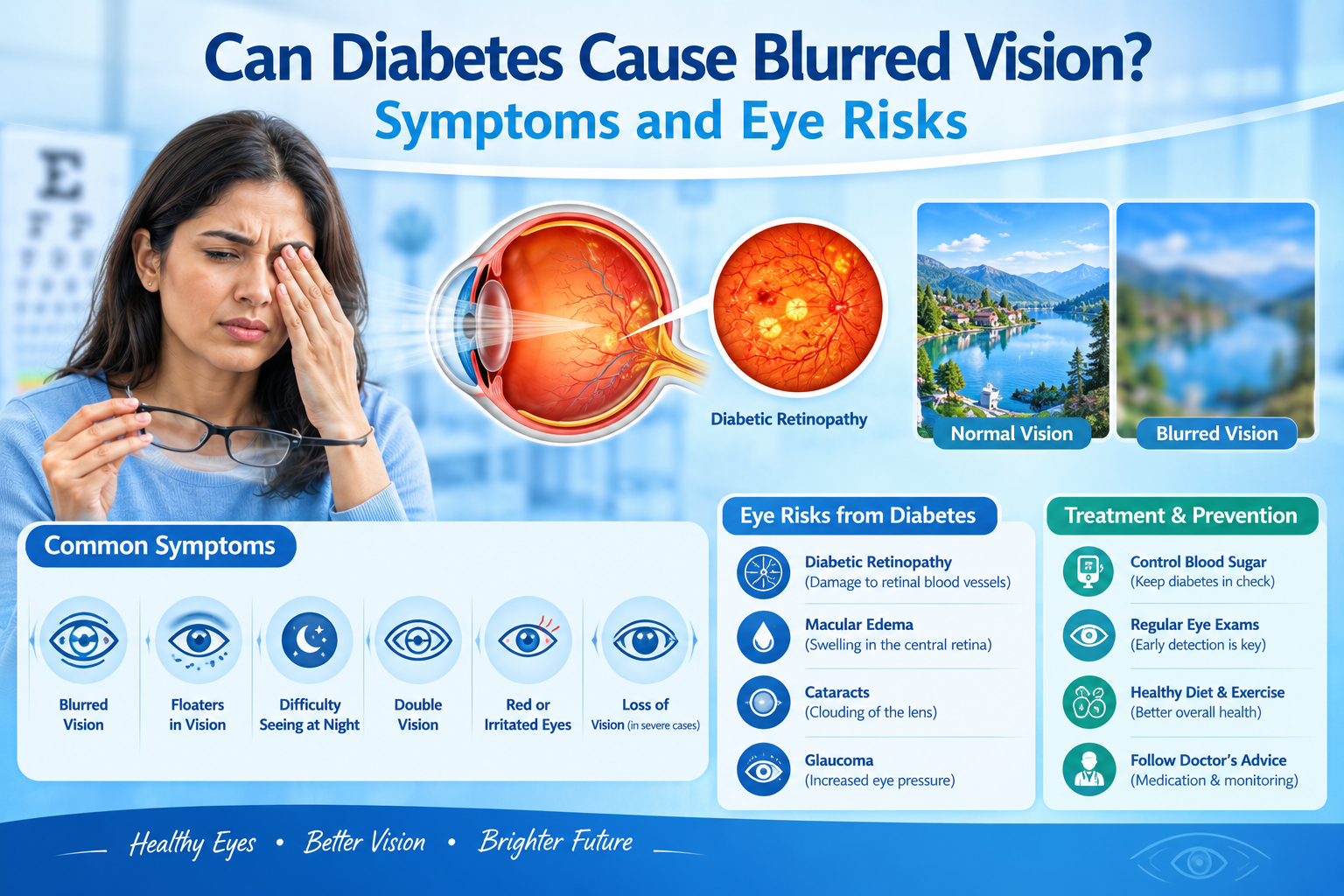
Yes, diabetes can cause blurred vision. High blood sugar levels can temporarily change the shape and focusing ability of the eye’s lens, making your vision appear blurry. Over time, poorly controlled diabetes can also damage the small blood vessels in the retina, leading to diabetic retinopathy and other serious eye complications.
Blurred vision does not always mean you have diabetes, but persistent or unexplained vision changes should not be ignored. Understanding the connection between diabetes and eyesight can help you recognize warning signs, manage blood sugar levels and seek appropriate eye care.
Why Does Diabetes Cause Blurred Vision?
Diabetes affects how the body regulates glucose in the blood. When blood sugar levels remain high, excess glucose can affect different parts of the body, including the eyes.
There are two important ways diabetes can cause blurry vision.
1. Temporary Vision Changes Due to High Blood Sugar
High blood sugar can alter the fluid balance in the eye’s lens. This may change the lens’s focusing ability, causing blurred or fluctuating vision.
You may notice that your eyesight becomes blurry when your blood glucose levels rise or fluctuate significantly. Vision may improve when blood sugar levels stabilize, although the timing varies from person to person.
Do not change prescribed diabetes medication simply to correct blurred vision. Consult your healthcare professional to assess your blood sugar and determine the appropriate next steps.
2. Diabetic Retinopathy
Diabetic retinopathy is an eye condition caused by damage to the small blood vessels in the retina, the light-sensitive tissue at the back of the eye.
Over time, elevated blood glucose can weaken these blood vessels, causing leakage, bleeding or abnormal blood vessel growth. In advanced cases, this can lead to serious vision loss.
Diabetic retinopathy may develop without noticeable symptoms in its early stages. This is why regular diabetic eye examinations are important even when your eyesight seems normal.
What Are the Symptoms of Diabetes-Related Eye Problems?
The symptoms of diabetes-related vision problems can vary depending on the cause and severity.
Common symptoms include:
- Blurred or fluctuating vision
- Difficulty focusing on nearby or distant objects
- Floaters or dark spots in your field of vision
- Difficulty seeing clearly at night
- Changes in visual sharpness
- Distorted vision
- Gradual deterioration of eyesight
These symptoms can also occur with conditions unrelated to diabetes. A comprehensive eye examination is needed to identify the cause.
Seek urgent medical attention if you experience sudden vision loss, a sudden increase in floaters, flashes of light, a dark curtain across your vision or severe eye pain. Do not assume these symptoms are simply due to high blood sugar.
What Eye Problems Can Diabetes Cause?
Diabetes can increase the risk of several eye conditions, particularly when blood sugar remains poorly controlled over time.
Diabetic Retinopathy
Diabetic retinopathy affects the retina’s blood vessels. Early stages may have no symptoms, while advanced disease can cause blurred vision, floaters and vision loss.
Diabetic Macular Edema
The macula is the central part of the retina responsible for detailed vision. If fluid leaks into this area due to diabetic retinopathy, swelling can develop. This condition, called diabetic macular edema, may cause blurred or distorted central vision.
Cataracts
Cataracts cause clouding of the eye’s natural lens. People with diabetes are at increased risk of developing cataracts, sometimes at a younger age than people without diabetes.
Common symptoms include cloudy vision, glare, difficulty seeing at night and faded colours.
Glaucoma
Glaucoma damages the optic nerve and can lead to permanent vision loss. Diabetes is associated with an increased risk of certain forms of glaucoma.
Because early glaucoma may not cause obvious symptoms, appropriate eye examinations are important.
Can Blurred Vision From Diabetes Go Away?
Sometimes, yes. If blurred vision is caused by temporary changes in the lens due to fluctuating blood sugar, it may improve when glucose levels become more stable.
However, blurred vision caused by diabetic retinopathy, macular edema, cataracts or other eye conditions may require specific treatment. Some damage may be permanent if it is not identified and managed promptly.
If you have recently started diabetes treatment or experienced substantial changes in blood sugar, tell your doctor about any vision changes. Your healthcare professional can advise whether you need a blood sugar review, an eye examination or both.
Do not assume that improved vision means diabetes-related eye damage has been ruled out.
How Are Diabetes-Related Eye Problems Diagnosed?
An eye specialist may recommend a comprehensive examination based on your symptoms, diabetes history and previous screening results.
Tests may include:
- Visual acuity test: Checks how clearly you can see.
- Dilated eye examination: Allows the specialist to examine the retina and look for signs of diabetic retinopathy.
- Retinal photography: Captures images of the retina to help detect and monitor changes.
- Optical coherence tomography (OCT): Produces detailed images of retinal layers and can help identify macular swelling.
- Additional investigations: May be recommended if the specialist suspects another eye condition.
People with diabetes should follow an appropriate eye screening schedule even if they have no blurred vision or other symptoms.
How Can You Prevent Diabetes-Related Eye Problems?
Although not every complication can be prevented, managing diabetes and attending recommended eye examinations can reduce the risk of serious damage.
Keep Blood Sugar Under Control
Follow your prescribed diabetes treatment plan and monitor glucose levels as advised by your healthcare professional. Avoid making medication changes without medical guidance.
Monitor Blood Pressure and Cholesterol
High blood pressure and abnormal cholesterol levels can contribute to cardiovascular and vascular complications. Managing these risk factors is an important part of diabetes care.
Attend Regular Diabetic Eye Screenings
Do not wait for symptoms before getting your eyes checked. Diabetic retinopathy can progress without noticeable vision changes.
Follow Healthy Lifestyle Habits
A balanced diet, regular physical activity, adequate sleep and avoiding smoking can support overall metabolic and vascular health.
Report Vision Changes Promptly
Arrange an eye assessment if you develop persistent blurred vision, floaters, distorted vision or other unexplained changes. Sudden or severe symptoms require urgent evaluation.
When Should You See a Doctor for Blurred Vision?
If you have diabetes and experience new or persistent blurred vision, contact your healthcare professional and arrange an appropriate eye assessment.
You should seek urgent medical care for sudden vision loss, new flashes or numerous floaters, a shadow or curtain across your vision, or severe eye pain.
If you do not have a diabetes diagnosis but notice persistent blurred vision, consult a healthcare professional. They can assess whether blood glucose testing or other investigations are appropriate.
Blurred vision alone cannot confirm diabetes. Diagnosis requires suitable medical assessment and testing.
Diabetes Care and Health Evaluation in Hassan
People looking for diabetes-related health evaluation in Hassan should seek medical advice for persistent high blood sugar, unexplained vision changes or other possible diabetes symptoms.
Karna Hospital provides multispeciality healthcare services in Hassan. Patients can discuss their general health concerns and the need for further medical evaluation with an appropriate healthcare professional.
Diabetes management may involve blood glucose monitoring, assessment of related health risks and referral for specialist eye care when necessary. Confirm the availability of specific diagnostic and eye services directly with the hospital.
Patients can also learn about the facilities available at a modern hospital in Hassan when considering where to seek medical evaluation.
Frequently Asked Questions
1. Can diabetes cause blurred vision?
Yes. High blood sugar can temporarily affect the eye’s focusing ability. Long-term diabetes can also damage retinal blood vessels and cause diabetic retinopathy, which may threaten vision.
2. Is blurred vision a sign of high blood sugar?
It can be. High blood sugar may cause temporary blurred or fluctuating vision, but many other conditions can produce the same symptom. Blood glucose testing and medical assessment can help determine the cause.
3. How long does blurry vision from high blood sugar last?
The duration varies depending on the cause and how quickly blood glucose levels stabilize. If blurred vision persists, worsens or occurs suddenly, seek medical advice rather than waiting for it to resolve.
4. Can diabetes cause permanent vision loss?
Yes. Advanced diabetic retinopathy and other diabetes-related eye complications can cause permanent vision loss. Early detection, appropriate treatment and regular screening can help reduce this risk.
5. How often should people with diabetes get their eyes checked?
Screening frequency depends on the type of diabetes, pregnancy status, previous eye findings and individual risk. Follow your eye specialist’s advice and the screening schedule recommended by your healthcare team.
6. Can controlling blood sugar improve eyesight?
Stabilizing blood sugar may help temporary vision changes caused by glucose fluctuations. However, it cannot be relied on to reverse established retinal damage. An eye examination is important if your vision changes.
Conclusion
Diabetes can cause blurred vision through temporary changes in the eye’s lens or through longer-term complications such as diabetic retinopathy and macular edema. While some vision changes may improve when blood sugar stabilizes, others require specialist treatment.
The best approach is to manage blood glucose, blood pressure and cholesterol, attend regular diabetic eye screenings, and seek prompt care for new vision changes. Early evaluation can help identify problems before they lead to more serious complications.
Medical disclaimer: This article is for educational purposes only and does not replace professional medical advice, diagnosis or treatment.