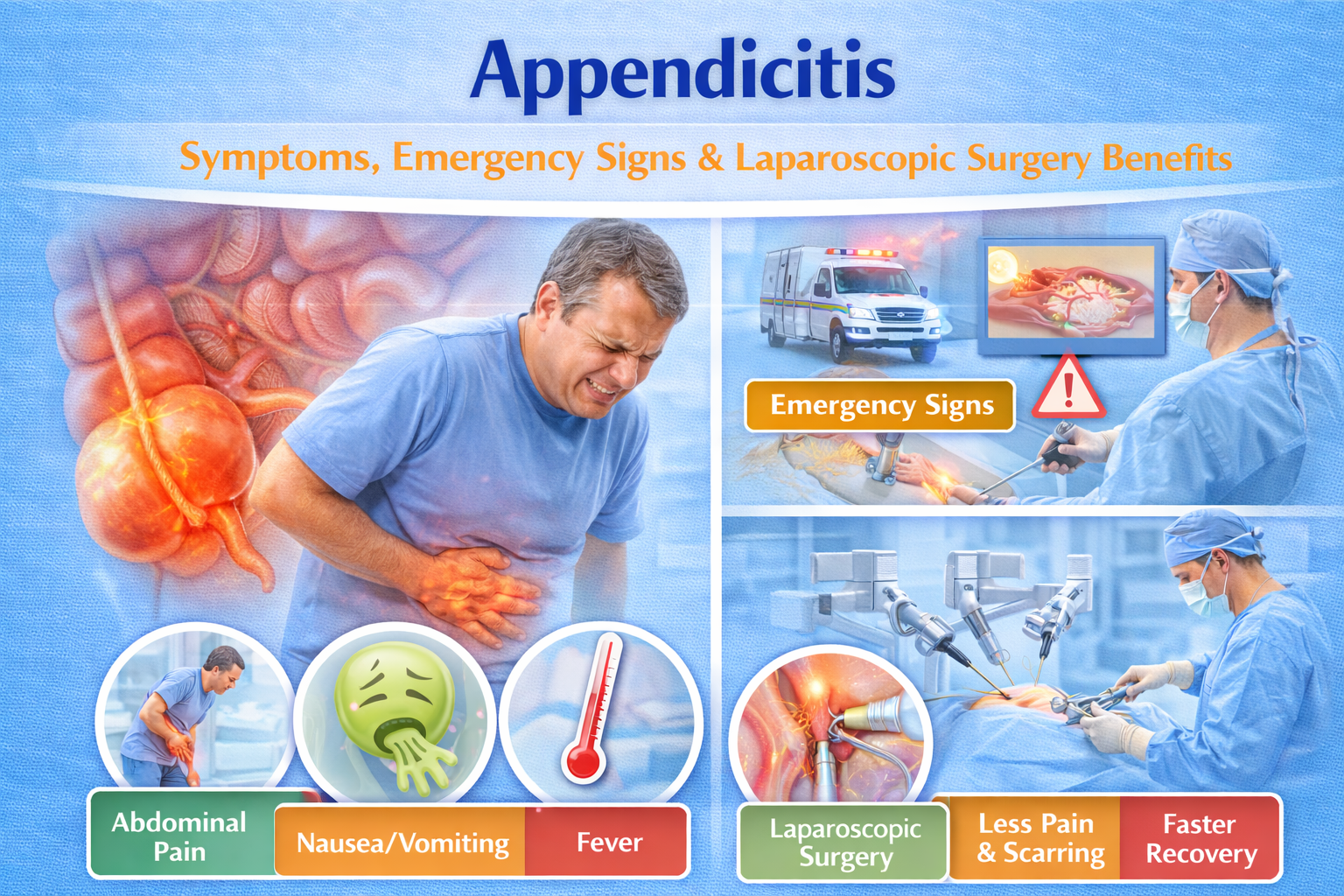
Appendicitis is a common yet potentially life-threatening condition that requires immediate medical attention. It occurs when the appendix—a small, finger-shaped pouch attached to the large intestine—becomes inflamed or infected.
If not treated promptly, appendicitis can lead to rupture, causing severe complications. Understanding the symptoms, emergency warning signs, and treatment options for appendicitis, especially laparoscopic surgery, can help ensure timely care and better recovery outcomes.
What Is Appendicitis?
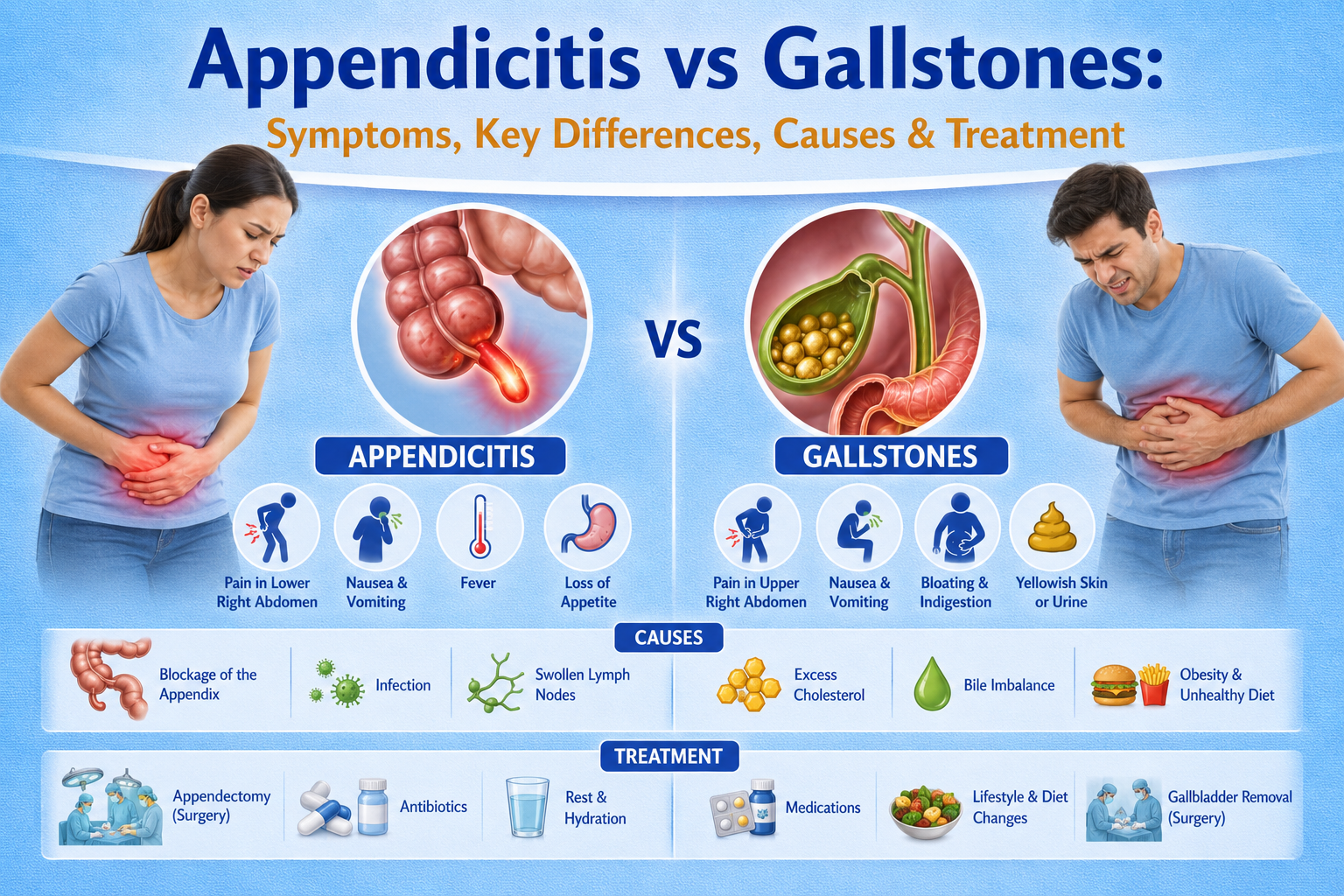
Appendicitis is the inflammation of the appendix, usually caused by a blockage. This blockage may occur due to stool, infection, swollen lymphoid tissue, or rarely, tumors.
When the appendix becomes blocked, bacteria multiply rapidly, leading to swelling, pain, and infection. If untreated, the appendix can burst, spreading infection throughout the abdomen—a condition known as peritonitis, which is a medical emergency.
Common Symptoms of Appendicitis
Recognizing the early signs of appendicitis is crucial for preventing complications. Symptoms often begin suddenly and worsen over time.
Early Symptoms
- Pain near the navel that gradually shifts to the lower right abdomen
- Loss of appetite
- Nausea and vomiting
- Mild fever
- Bloating or gas
Progressive Symptoms
- Sharp pain in the lower right abdomen
- Pain that worsens with movement, coughing, or walking
- Increased fever
- Constipation or diarrhea
- Difficulty passing gas
The pain associated with appendicitis typically intensifies within 24–48 hours, making early diagnosis essential.
Emergency Signs of Appendicitis
Certain symptoms indicate that appendicitis has progressed to a critical stage and requires immediate medical attention.
Seek emergency care if you experience:
- Sudden, severe abdominal pain
- High fever
- Persistent vomiting
- Abdominal swelling or tenderness
- Inability to pass gas
- Extreme weakness
A ruptured appendix can lead to widespread infection, which can be life-threatening if not treated urgently.
Causes and Risk Factors
Appendicitis can affect people of all ages, but it is most common in individuals between 10 and 30 years old.
Common Causes
- Blockage due to stool or foreign objects
- Bacterial infections
- Enlarged lymphoid follicles
- Digestive tract infections
Risk Factors
- Family history
- Low-fiber diet
- Gastrointestinal infections
- Younger age group
Digestive issues such as gallstones and digestive disorders can also cause abdominal pain and may sometimes be confused with appendicitis, making accurate diagnosis important.
How Is Appendicitis Diagnosed?
Early and accurate diagnosis is key to preventing complications.
Physical Examination
Doctors check for tenderness in the lower right abdomen.
Blood Tests
Blood tests help detect infection.
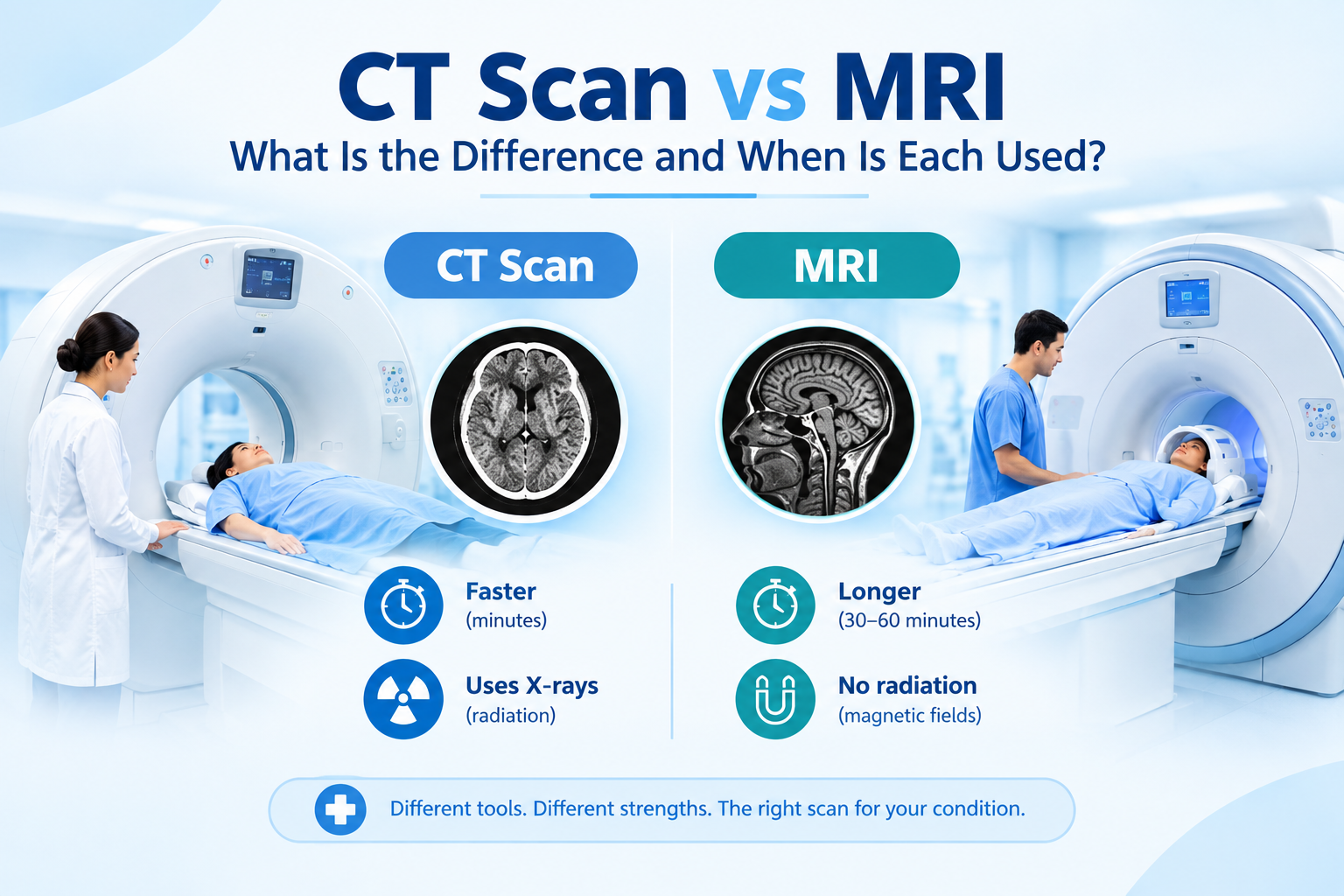
Imaging Tests
- Ultrasound
- CT Scan
- MRI
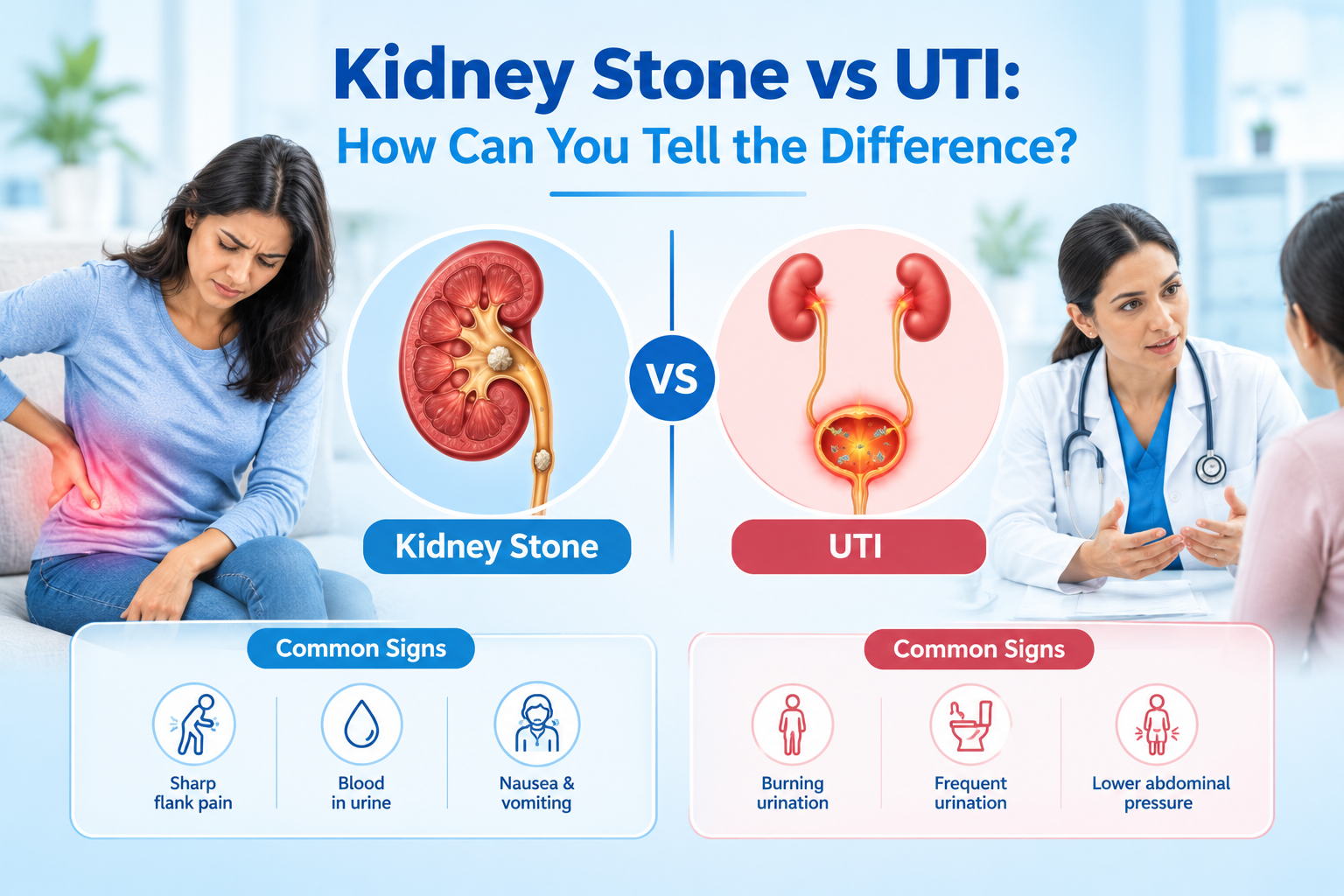
Conditions like appendicitis and kidney stone treatment are common causes of severe abdominal pain that require proper medical evaluation.
Treatment Options for Appendicitis
The most effective treatment for appendicitis is surgical removal of the appendix (appendectomy).
There are two main surgical approaches:
Laparoscopic Appendectomy (Minimally Invasive Surgery)
Laparoscopic surgery is the most preferred method today.
How It Works
Small incisions are made, and a camera is used to guide the surgery.
Benefits of Laparoscopic Surgery
- Minimal pain
- Smaller incisions
- Faster recovery
- Reduced risk of infection
- Short hospital stay
Laparoscopic appendectomy is similar to other laparoscopic surgery procedures that offer quicker healing and better outcomes.
Modern procedures are performed in advanced modular OT setups, ensuring safety and precision.
Open Appendectomy
Open surgery may be required in complicated cases.
When It Is Needed
- Ruptured appendix
- Severe infection
- Complex abdominal conditions
Limitations
- Larger incision
- Longer recovery
- Higher infection risk
Advanced surgical care also includes procedures like laparoscopic hernia surgery, which follow similar minimally invasive techniques.
What Happens If Appendicitis Is Not Treated?
Ignoring appendicitis symptoms can lead to serious complications:
- Ruptured appendix
- Peritonitis
- Abscess formation
These conditions require emergency medical intervention and can be life-threatening.
Recovery After Appendicitis Surgery
After Laparoscopic Surgery
- Hospital stay: 1–2 days
- Return to normal activities: 1–2 weeks
After Open Surgery
- Hospital stay: 3–5 days
- Recovery time: 3–4 weeks
Post-Surgery Care
- Follow medical advice
- Avoid heavy lifting
- Maintain hygiene
- Eat light, healthy food
Most patients recover completely with proper care.
Can Appendicitis Be Prevented?
Although appendicitis cannot always be prevented, maintaining a healthy lifestyle may reduce the risk.
Preventive Tips
- Eat a fiber-rich diet
- Stay hydrated
- Maintain digestive health
- Avoid excessive processed foods
When Should You See a Doctor?
Seek medical attention immediately if you experience:
- Persistent abdominal pain
- Fever with pain
- Vomiting
- Sudden worsening of symptoms
Early diagnosis can prevent complications and ensure safe treatment.
Conclusion
Appendicitis is a medical emergency that should never be ignored. Recognizing symptoms early and seeking prompt treatment can prevent life-threatening complications.
Laparoscopic appendectomy offers a safe, minimally invasive solution with faster recovery and better outcomes.
At Karna Hospital, advanced laparoscopic procedures are performed in a state-of-the-art modular OT setup, ensuring high standards of safety, precision, and patient care.
Contact Karna Hospital
For immediate consultation or emergency support, contact Karna Hospital:
📞 Mobile: +91 63603 22779
📍 Address: Shankar Mutt Road, KR Puram, Hassan – 573201
🌐 Website: https://karnahospital.in/