
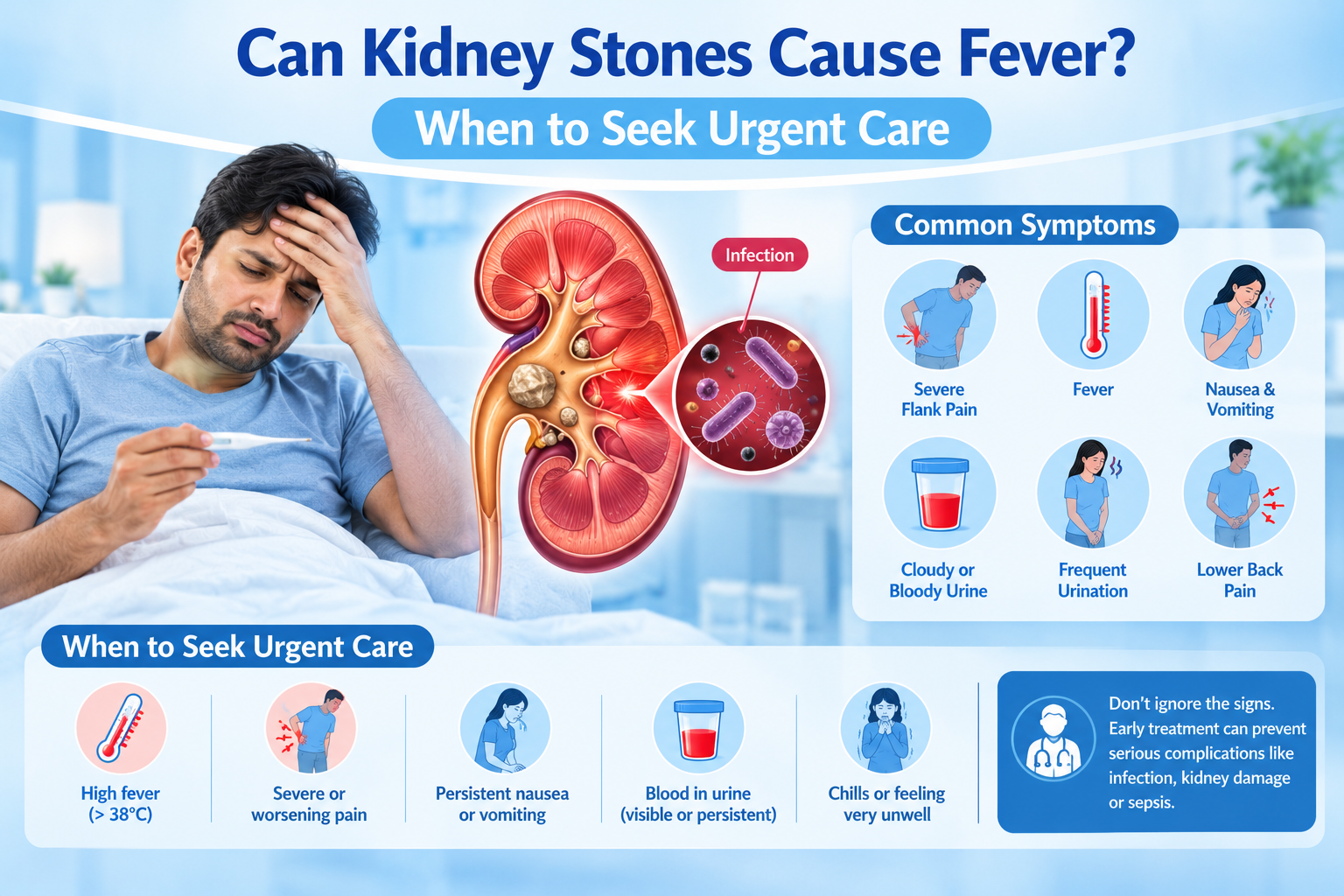
Can kidney stones cause fever? Yes, fever can occur in people with kidney stones, particularly when a urinary tract infection or kidney infection develops. A kidney stone that blocks urine flow can make an infection more dangerous. If you have kidney stone pain accompanied by fever, chills, or difficulty urinating, seek urgent medical evaluation rather than waiting for the symptoms to improve.
Kidney stones are hard mineral deposits that form in the kidneys and can cause sharp pain in the back, side, lower abdomen, or groin. While some small stones pass without significant symptoms, larger stones can obstruct the urinary tract and require medical treatment.
Understanding the connection between kidney stones and fever can help you recognise warning signs, seek timely treatment, and reduce the risk of serious complications.
Can Kidney Stones Cause Fever and Chills?
Yes, kidney stones can be associated with fever and chills, especially when an infection is present. Fever is a warning sign that should not be ignored in someone with suspected or confirmed kidney stones.
Kidney stones do not always cause an infection. However, when a stone blocks the ureter—the tube that carries urine from the kidney to the bladder—urine may become trapped, creating conditions that allow bacteria to multiply.
An infection involving an obstructed urinary tract can become serious and may lead to sepsis if not treated promptly.
Common symptoms associated with kidney stones and a possible infection include:
- Fever or a high body temperature
- Chills, shivering, or sweating
- Sharp pain in the back or side
- Pain or burning while urinating
- Cloudy or foul-smelling urine
- Nausea and vomiting
- Frequent or urgent urination
- Difficulty passing urine or passing only small amounts
These symptoms do not confirm an infected kidney stone on their own. A medical assessment is necessary to determine the cause.
Why Do Kidney Stones Cause Fever?
Fever associated with kidney stones may indicate an infection or another complication. Three important possibilities are explained below.
1. Kidney Infection
A kidney infection, also known as pyelonephritis, occurs when bacteria infect one or both kidneys. It can cause fever, chills, back or side pain, nausea, and painful urination.
Kidney stones may increase the risk of complications when they obstruct urine flow. An infected, obstructed kidney requires urgent medical treatment.
2. Urinary Tract Infection (UTI)
A urinary tract infection occurs when bacteria enter and multiply within the urinary system. Depending on the location of the infection, symptoms may include burning during urination, frequent urination, lower abdominal discomfort, and cloudy urine.
When a UTI occurs alongside a kidney stone, doctors need to determine whether the stone is blocking urine flow and whether the infection has spread to the kidneys.
Read more about urinary tract infection symptoms to understand the common signs of a urinary infection.
3. Urinary Tract Obstruction
A kidney stone can become lodged in the ureter and prevent urine from draining normally. Obstruction may cause severe pain and can impair kidney function.
If infection develops behind the blockage, the situation can become an emergency. Treatment may require antibiotics and an urgent procedure to drain the infected urinary system. Definitive stone removal may be performed later, depending on the patient’s condition.
Kidney Stone Infection Symptoms You Should Not Ignore
Recognising kidney stone infection symptoms is important because an infection can progress quickly, particularly when urine flow is blocked.
Seek urgent medical assessment if you experience any of the following:
- Fever with kidney stone pain
- Fever accompanied by chills or shaking
- Severe or worsening pain in the back or side
- Persistent vomiting or inability to keep fluids down
- Difficulty passing urine or a significant reduction in urine output
- Painful urination accompanied by fever
- Marked weakness or feeling unusually unwell
Confusion, fainting, breathing difficulty, or extreme drowsiness may indicate a severe illness and require emergency assistance.
Do not wait for a fever to become higher or for the pain to worsen before seeking care. If you suspect a kidney stone and have a fever or chills, get urgent medical attention.
When Should You Seek Urgent Care for Kidney Stones?
You should seek urgent medical care if kidney stone symptoms occur with fever, chills, severe pain, persistent vomiting, or difficulty urinating.
Go to an emergency department immediately if you have fever with suspected kidney stones and feel seriously unwell, or if you cannot pass urine. A potentially infected urinary obstruction must be assessed and treated promptly.
Even without fever, severe pain, repeated vomiting, visible blood in the urine, or difficulty urinating warrants prompt medical evaluation.
Do not rely on home remedies, leftover antibiotics, or painkillers alone when an infection or obstruction is possible. These measures cannot reliably resolve an infected blockage.
Patients seeking specialist evaluation can learn more about kidney stone treatment in Hassan and the available treatment options at Karna Hospital.
How Are Kidney Stones With Fever Diagnosed?
Doctors assess the symptoms, examine the patient, and perform investigations to determine whether a kidney stone, infection, or urinary obstruction is present.
Depending on the clinical situation, diagnostic tests may include:
Urine Tests
A urine examination can identify blood, white blood cells, and other findings that may indicate infection. A urine culture may be performed to identify bacteria and help guide antibiotic treatment.
Blood Tests
Blood tests can help assess kidney function and look for evidence of infection or other complications.
Imaging Tests
Ultrasound or CT imaging may be recommended to identify the stone’s size and location, assess whether urine flow is blocked, and evaluate the urinary system.
The choice of tests depends on the patient’s symptoms, medical history, and clinical condition. Urgent treatment should not be delayed when a serious infection or obstruction is suspected.
How Are Infected Kidney Stones Treated?
Treatment depends on whether the patient has an infection, urinary obstruction, severe symptoms, or impaired kidney function.
1. Antibiotics
If a bacterial infection is present, doctors prescribe appropriate antibiotics. The choice of medication depends on the suspected infection, test results, severity, and the patient’s overall health.
Antibiotics should only be taken under medical supervision.
2. Urgent Drainage of an Obstructed Kidney
When a kidney stone causes an obstruction alongside an infection, antibiotics alone may not be sufficient. Urgent drainage may be required using a ureteral stent or a nephrostomy tube.
Once the infection is controlled and the patient is stable, doctors can determine the appropriate timing for definitive stone treatment.
3. Kidney Stone Removal
Depending on the size, location, and complexity of the stone, treatment may involve ureteroscopy with laser fragmentation, shock wave lithotripsy, or percutaneous nephrolithotomy (PCNL).
The correct procedure depends on individual clinical findings. Patients can learn more about kidney stone surgery in Hassan and the factors that influence treatment decisions.
For additional information, read kidney stone sizes and treatment options.
Can Kidney Stones Cause Fever Without Pain?
Fever can occur even when typical kidney stone pain is absent or less noticeable. However, fever without pain is not specific to kidney stones and may be caused by a kidney infection or another medical condition.
Some people may have an obstructing stone without experiencing the severe pain commonly associated with kidney stones. Therefore, the absence of pain does not rule out a serious problem.
If you have a fever and suspect a kidney stone, or have a known history of kidney stones, seek medical assessment promptly—especially if you also experience chills, urinary changes, or weakness.
How Can You Reduce the Risk of Kidney Stone Complications?
Although kidney stones cannot always be prevented, certain measures may help reduce recurrence and support urinary health.
- Drink an appropriate amount of water unless your doctor has advised fluid restriction.
- Follow dietary recommendations based on your kidney stone type.
- Attend follow-up appointments if a stone has been diagnosed.
- Complete prescribed treatment and follow medical advice.
- Seek prompt care for fever, chills, or new urinary symptoms.
- Discuss recurrent stones with a urologist to identify possible underlying causes.
For more preventive advice, read how to prevent kidney stones naturally.
Remember that hydration and lifestyle changes are preventive measures, not substitutes for urgent treatment when fever and a possible urinary obstruction occur.
Conclusion
Kidney stones can be associated with fever when a urinary tract or kidney infection develops. The combination of kidney stone pain and fever, chills, vomiting, or difficulty urinating should be treated as a warning sign requiring urgent medical evaluation.
An infected kidney stone that blocks urine flow can cause serious complications, including sepsis and kidney damage. Early diagnosis allows doctors to identify the infection, relieve any obstruction, and determine the safest treatment.
If you suspect kidney stones and develop a fever, do not delay seeking care. For information about specialist services, visit urology department in Hassan.
Frequently Asked Questions About Kidney Stones and Fever
Is fever normal with kidney stones?
Fever is not a symptom to dismiss when kidney stones are suspected. It may indicate a urinary tract or kidney infection, particularly if a stone blocks urine flow. Urgent medical evaluation is recommended.
Can kidney stones cause fever and chills?
Yes. Fever and chills can occur when a kidney stone is associated with an infection. These symptoms require urgent assessment because an infected obstruction can become life-threatening.
Can kidney stones cause a kidney infection?
Yes. A stone that obstructs the ureter can interfere with urine drainage and contribute to a kidney infection. Prompt diagnosis and treatment are important.
Can kidney stones cause sepsis?
An infected kidney stone, particularly one associated with urinary obstruction, can lead to sepsis. Sepsis is a life-threatening response to infection that requires emergency medical treatment.
Should I go to the hospital for kidney stone pain and fever?
Yes. Kidney stone pain accompanied by fever or chills warrants urgent medical attention. Seek emergency care immediately if you are unable to urinate, have persistent vomiting, or feel seriously unwell.
How are infected kidney stones treated?
Treatment may involve antibiotics, urgent drainage if the urinary system is obstructed, and definitive stone removal when the patient is stable. The treatment plan depends on the severity of the infection and the characteristics of the stone.