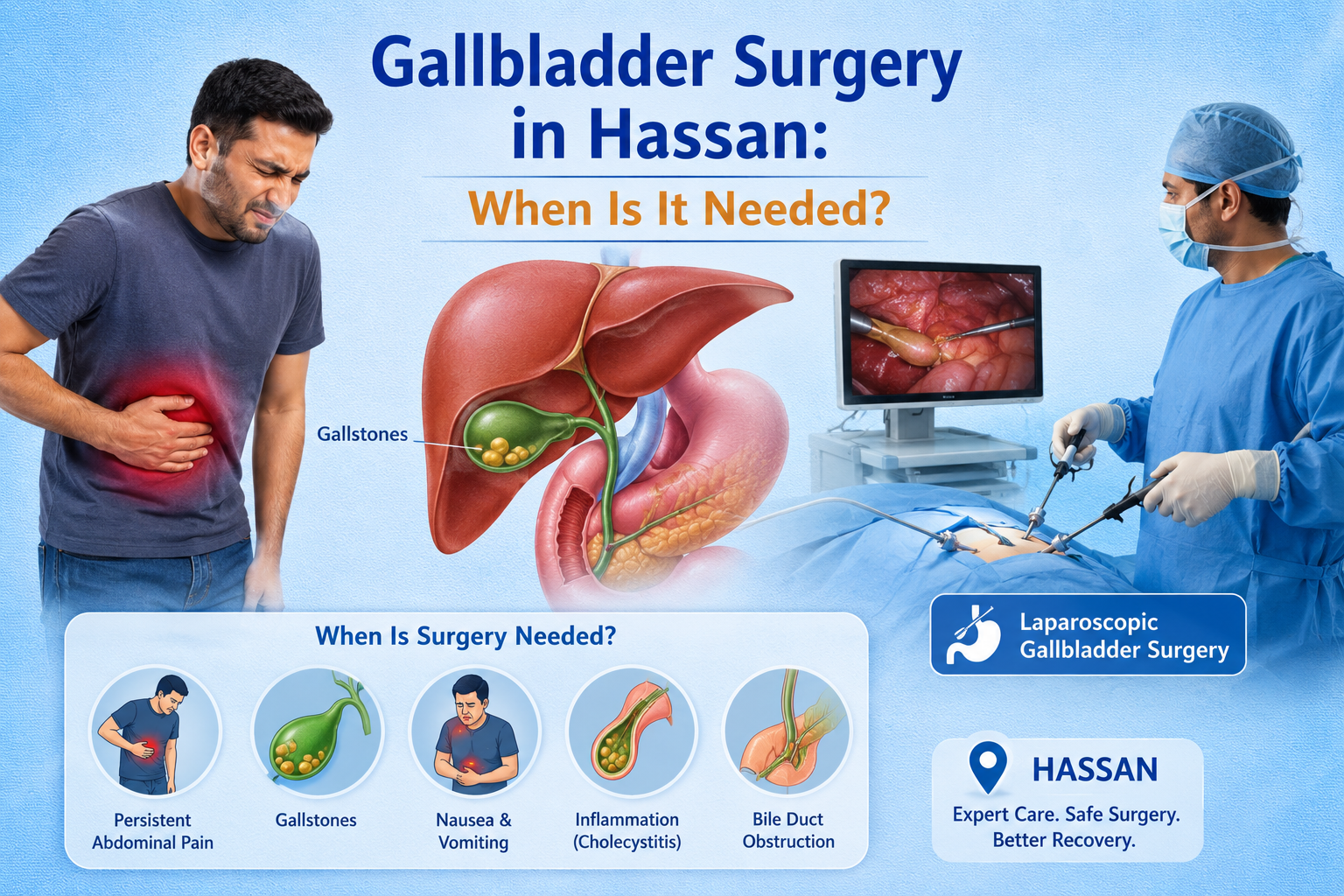
Gallbladder problems are among the most common digestive disorders affecting adults today. While some people with gallstones may never experience symptoms, others can develop severe pain, infection, or complications that require immediate medical attention. In many cases, gallbladder surgery in Hassan is the most effective treatment to prevent recurring symptoms and improve quality of life.
Modern surgical techniques, especially laparoscopic gallbladder surgery, have made treatment safer, less invasive, and associated with faster recovery times. If you have been diagnosed with gallstones or are experiencing persistent abdominal pain, understanding when surgery is needed can help you make informed healthcare decisions.
In this guide, we explain gallbladder disease, symptoms, indications for surgery, treatment options, recovery, and how to choose the right hospital for gallbladder treatment in Hassan.
What Is the Gallbladder?
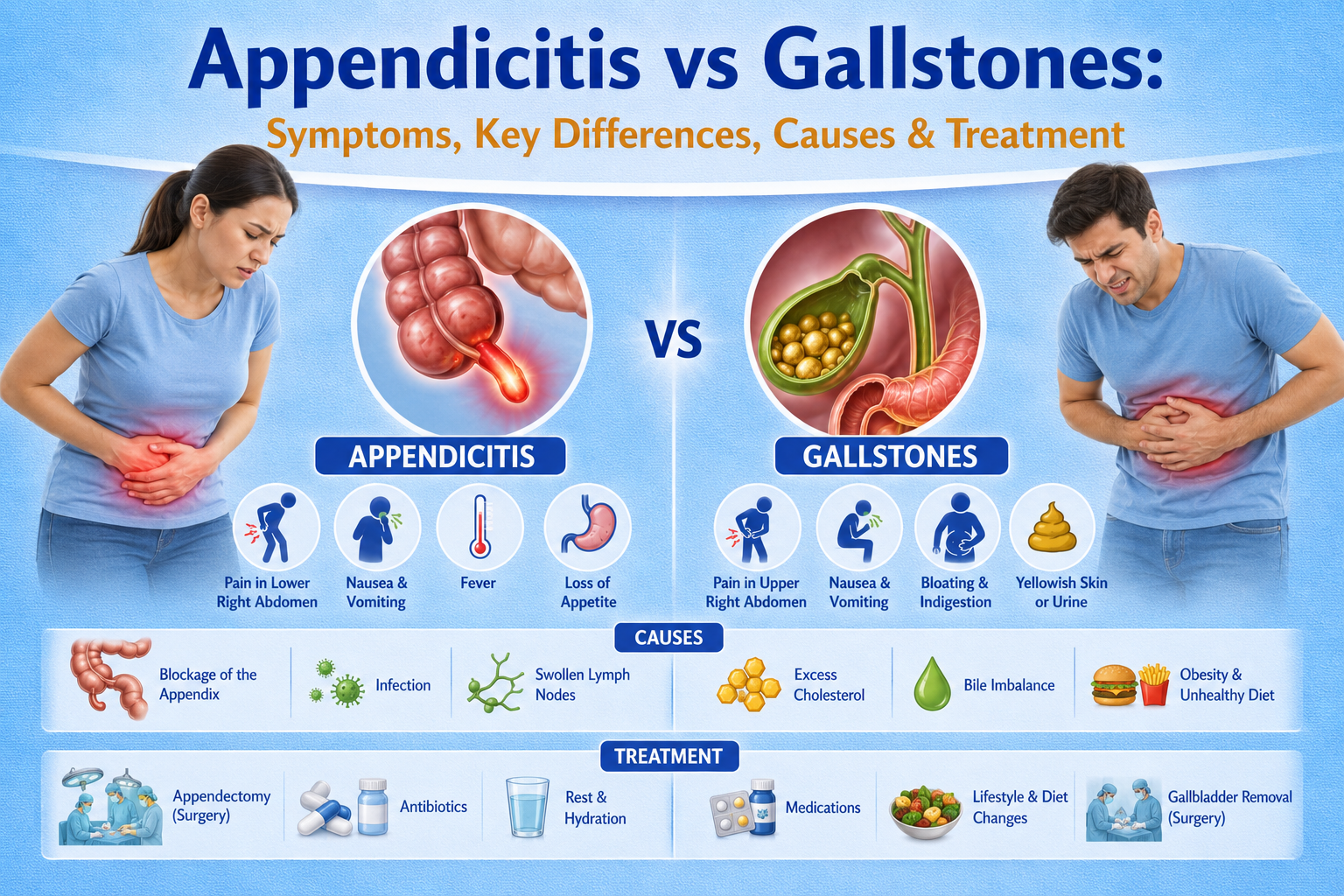
The gallbladder is a small pear-shaped organ located beneath the liver. Its primary function is to store and release bile, a digestive fluid that helps break down fats.
Sometimes, substances in bile can harden and form gallstones, which may block the flow of bile and lead to pain or infection.
Learn more about gallstone symptoms and treatment and how early diagnosis can prevent complications.
What Causes Gallstones?
Gallstones develop when bile contains excessive cholesterol, bilirubin, or other substances that crystallize.
Common Risk Factors for Gallstones
- Obesity
- High-fat diet
- Diabetes
- Family history of gallstones
- Rapid weight loss
- Pregnancy
- Women over 40 years of age
Although many gallstones remain silent, symptomatic stones often require medical treatment.
Symptoms of Gallstones
Many people discover gallstones during routine scans. However, when symptoms occur, they can significantly affect daily life.
Common Gallstone Symptoms
Severe Abdominal Pain
Pain usually occurs in the upper right abdomen and may spread to the back or shoulder.
Nausea and Vomiting
Digestive disturbances often accompany gallbladder attacks.
Bloating and Indigestion
Many patients report discomfort after eating fatty foods.
Fever and Chills
These may indicate infection and require urgent medical care.
Jaundice
Yellowing of the skin or eyes can occur if gallstones block the bile ducts.
If you experience severe pain lasting several hours, seek immediate medical attention.
When Is Gallbladder Surgery Needed?
Not every gallstone requires surgery. However, doctors recommend gallbladder removal surgery when stones begin causing symptoms or complications.
Gallbladder Surgery Is Usually Recommended When:
1. Recurrent Gallstone Attacks
Repeated episodes of abdominal pain often indicate ongoing gallbladder disease.
2. Gallbladder Inflammation (Cholecystitis)
Inflammation can cause severe pain, fever, and infection.
3. Blocked Bile Ducts
Gallstones may obstruct bile flow and lead to jaundice or pancreatitis.
4. Gallstone-Related Pancreatitis
Gallstones can trigger inflammation of the pancreas, which may become serious.
5. Large or Multiple Gallstones
Certain gallstones increase the risk of future complications.
What Happens If Gallstones Are Left Untreated?
Many patients delay treatment because symptoms initially come and go. However, untreated gallstones can lead to:
- Recurrent severe pain
- Gallbladder infection
- Pancreatitis
- Bile duct obstruction
- Digestive complications
- Emergency surgery
Early intervention helps avoid these risks and improves outcomes.
Types of Gallbladder Surgery
The standard treatment for symptomatic gallstones is cholecystectomy, which means removal of the gallbladder.
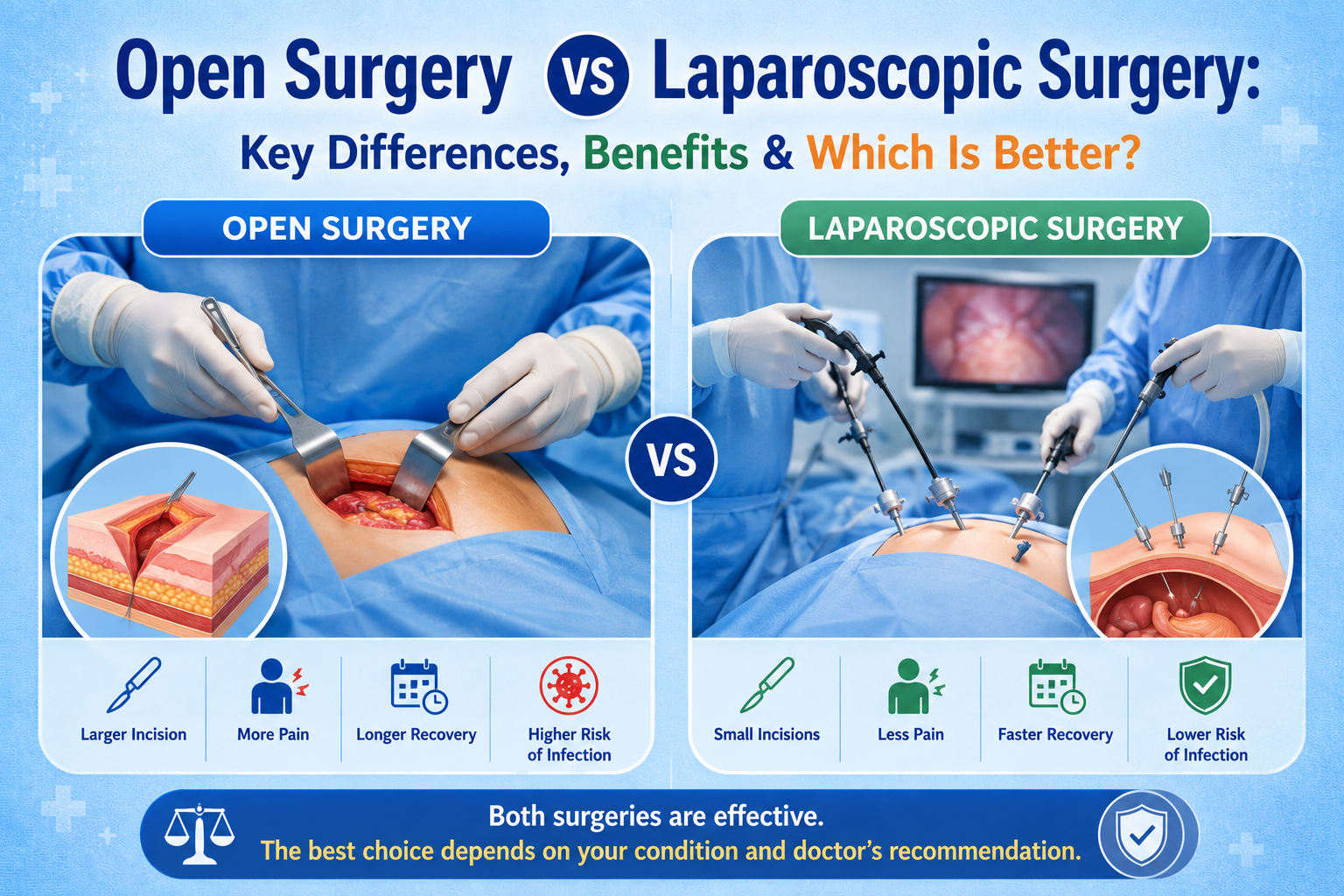
Laparoscopic Gallbladder Surgery
Today, most patients undergo laparoscopic gallbladder surgery, a minimally invasive procedure performed through small incisions.
Benefits of Laparoscopic Gallbladder Surgery
- Smaller incisions
- Less postoperative pain
- Minimal scarring
- Faster recovery
- Shorter hospital stay
- Lower risk of complications
Learn more about laparoscopic gallbladder surgery and its advantages over traditional surgery.
Open Gallbladder Surgery
Open surgery may be necessary in rare situations, such as:
- Severe infection
- Extensive scar tissue
- Complex gallbladder disease
- Unexpected surgical findings
Although recovery takes longer, open surgery remains a safe and effective option when required.
How Is Gallbladder Surgery Performed?
Before Surgery
Patients undergo:
- Medical evaluation
- Blood tests
- Ultrasound scans
- Anesthesia assessment
Your surgeon will explain the procedure and answer any concerns.
During Surgery
The procedure is performed under general anesthesia.
For laparoscopic surgery:
- Small incisions are made in the abdomen.
- A camera and specialized instruments are inserted.
- The gallbladder is removed safely.
- Incisions are closed with sutures.
The surgery typically takes between 45 minutes and 1 hour.
After Surgery
Most patients:
- Walk within a few hours
- Resume light activities within a few days
- Return home within 24–48 hours
Recovery is generally smooth with proper postoperative care.
Recovery After Gallbladder Surgery
One of the biggest advantages of modern gallbladder surgery in Hassan is the relatively quick recovery.
Recovery Timeline
First Week
- Mild soreness around incision sites
- Light walking encouraged
- Avoid heavy lifting
Two to Four Weeks
- Gradual return to routine activities
- Improved digestion and comfort
Four to Six Weeks
- Most patients resume normal activities completely
Following your surgeon’s instructions helps ensure optimal healing.
Life After Gallbladder Removal
A common concern is whether life changes significantly after gallbladder removal.
The good news is that most people live completely normal lives without a gallbladder.
Helpful Tips After Surgery
- Eat smaller meals initially
- Limit very fatty foods during recovery
- Stay hydrated
- Follow dietary advice provided by your doctor
Over time, most patients return to their regular diet.
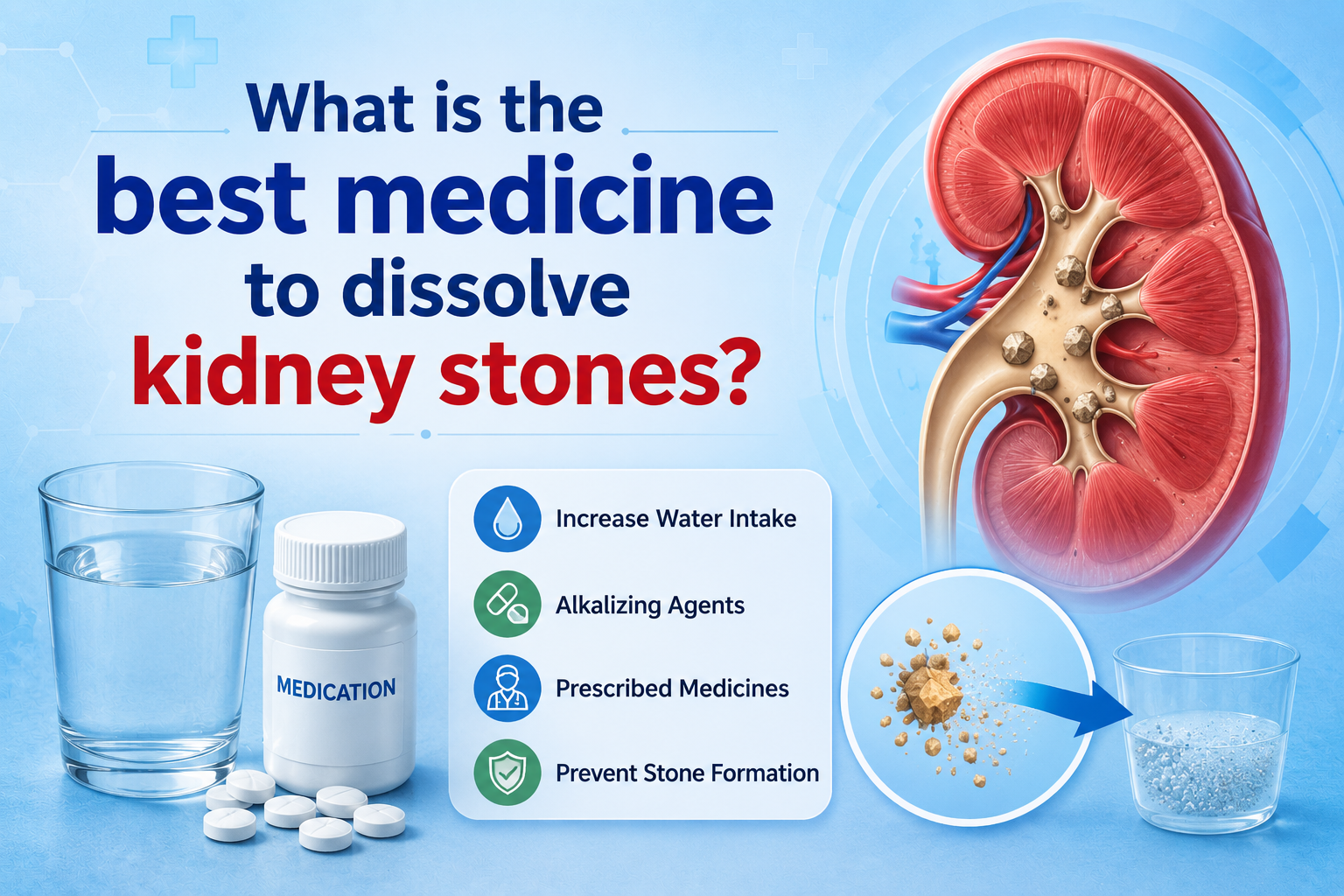
Gallstones vs Kidney Stones: Understanding the Difference
Many patients confuse gallstones with kidney stones because both can cause severe pain.
However, these conditions affect different organs and require different treatments.
Read difference between gallstones and kidney stones to better understand their symptoms, causes, and treatment options.
Why Choose Laparoscopic Surgery?
Minimally invasive procedures have transformed surgical care.
Key Advantages
- Reduced pain
- Faster recovery
- Smaller scars
- Lower infection risk
- Shorter hospital stay
Choosing the Right Hospital for Gallbladder Surgery in Hassan
Selecting an experienced surgical center is essential for safety and successful outcomes.
Look For:
- Experienced general surgeons
- Advanced laparoscopic facilities
- Modern operation theatres
- Comprehensive diagnostic services
- Postoperative care support
- Emergency surgical services
Why Choose Karna Hospital for Gallbladder Surgery?
At the best multispeciality hospital in Hassan, patients receive comprehensive care from diagnosis to recovery.
Advantages of Choosing Karna Hospital
- Experienced general surgeons
- Advanced laparoscopic surgery facilities
- Modern diagnostic imaging
- Personalized patient care
- Comprehensive surgical support
- Multispecialty expertise under one roof
The hospital focuses on delivering safe, effective, and patient-centered surgical care for gallbladder disorders and other digestive conditions.
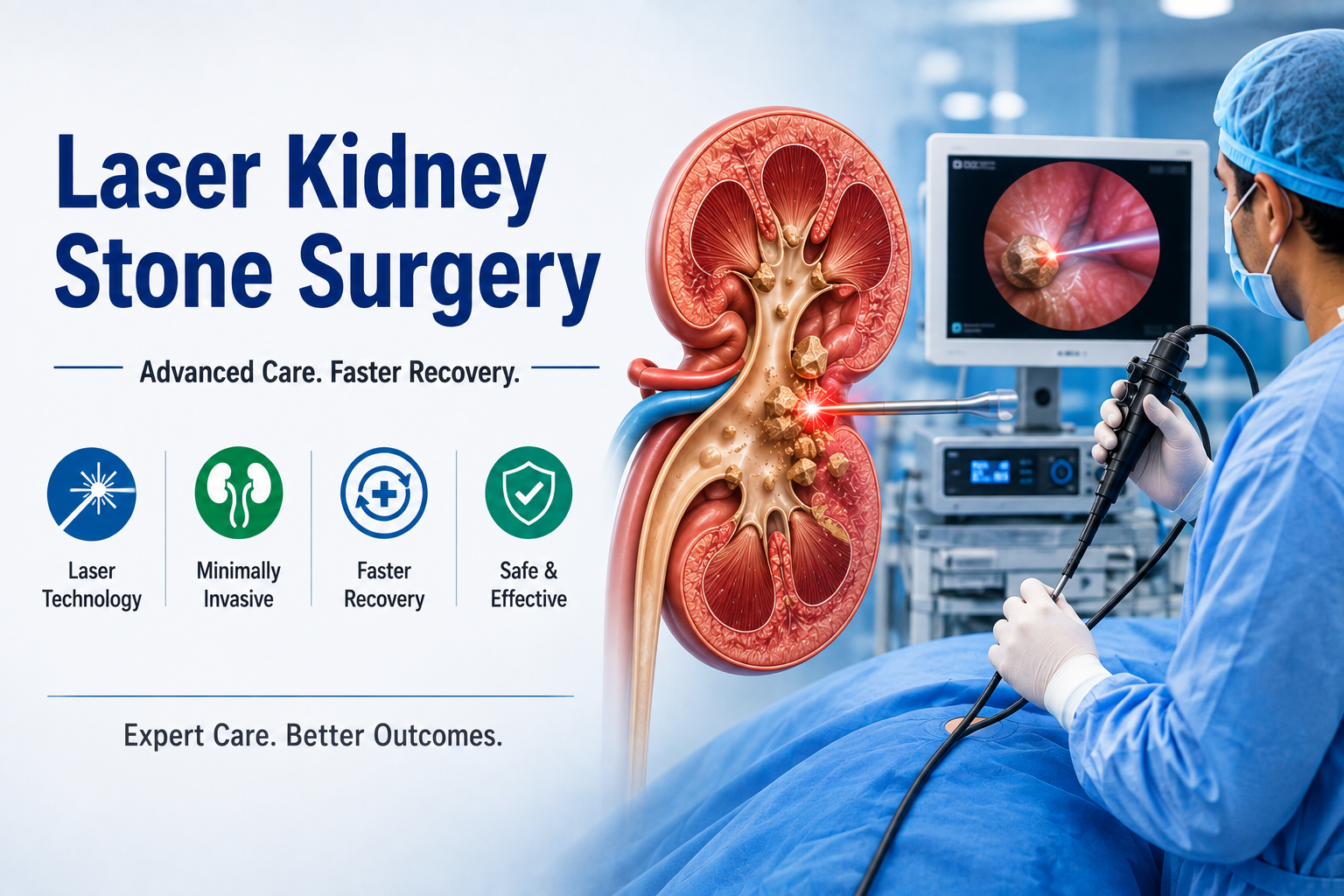
Comprehensive Surgical and Urology Care Under One Roof
Many patients who seek treatment for gallstones may also experience other urinary or abdominal health concerns. At Karna Hospital, patients have access to multidisciplinary care, including advanced general surgery and specialized urology services. The experienced team at the Urology Hospital Hassan provides comprehensive treatment for kidney stones, urinary tract disorders, prostate conditions, and other urological problems using modern diagnostic and minimally invasive techniques.
Conclusion
Gallstones can range from a minor inconvenience to a serious medical condition requiring surgical treatment. If you experience recurring abdominal pain, digestive issues, or complications related to gallstones, timely evaluation is essential.
Modern gallbladder surgery in Hassan, particularly laparoscopic cholecystectomy, offers a safe and highly effective solution with faster recovery and excellent outcomes.
At Karna Hospital, expert surgeons and advanced surgical facilities ensure that patients receive the highest standard of care, helping them return to a healthy and comfortable life.
Contact Karna Hospital
For immediate consultation or emergency support, contact Karna Hospital:
Mobile: +91 63603 22779
Address: Shankar Mutt Road, KR Puram, Hassan – 573201
Website: https://karnahospital.in/
Frequently Asked Questions (FAQ)
When is gallbladder surgery necessary?
Gallbladder surgery is usually recommended when gallstones cause pain, infection, inflammation, or blockage of bile ducts.
Can gallstones be treated without surgery?
Asymptomatic gallstones may not require treatment. However, symptomatic gallstones often require gallbladder removal surgery.
Is laparoscopic gallbladder surgery safe?
Yes. Laparoscopic surgery is considered safe and is the preferred treatment for most gallbladder conditions.
How long does gallbladder surgery take?
Most laparoscopic gallbladder surgeries take approximately 45–60 minutes.
How long is recovery after gallbladder removal?
Most patients return to normal daily activities within 2–4 weeks, depending on their overall health and recovery progress.