Back pain and leg pain are common health problems affecting people of all ages. Two conditions that are often confused are slip disc and sciatica. While both can cause severe discomfort and affect daily life, they are not the same condition.
Understanding the difference between slip disc and sciatica is important for accurate diagnosis, proper treatment, and faster recovery.
This guide explains the causes, symptoms, diagnosis, and treatment options for both conditions in a simple and easy-to-understand way.
What Is a Slip Disc?
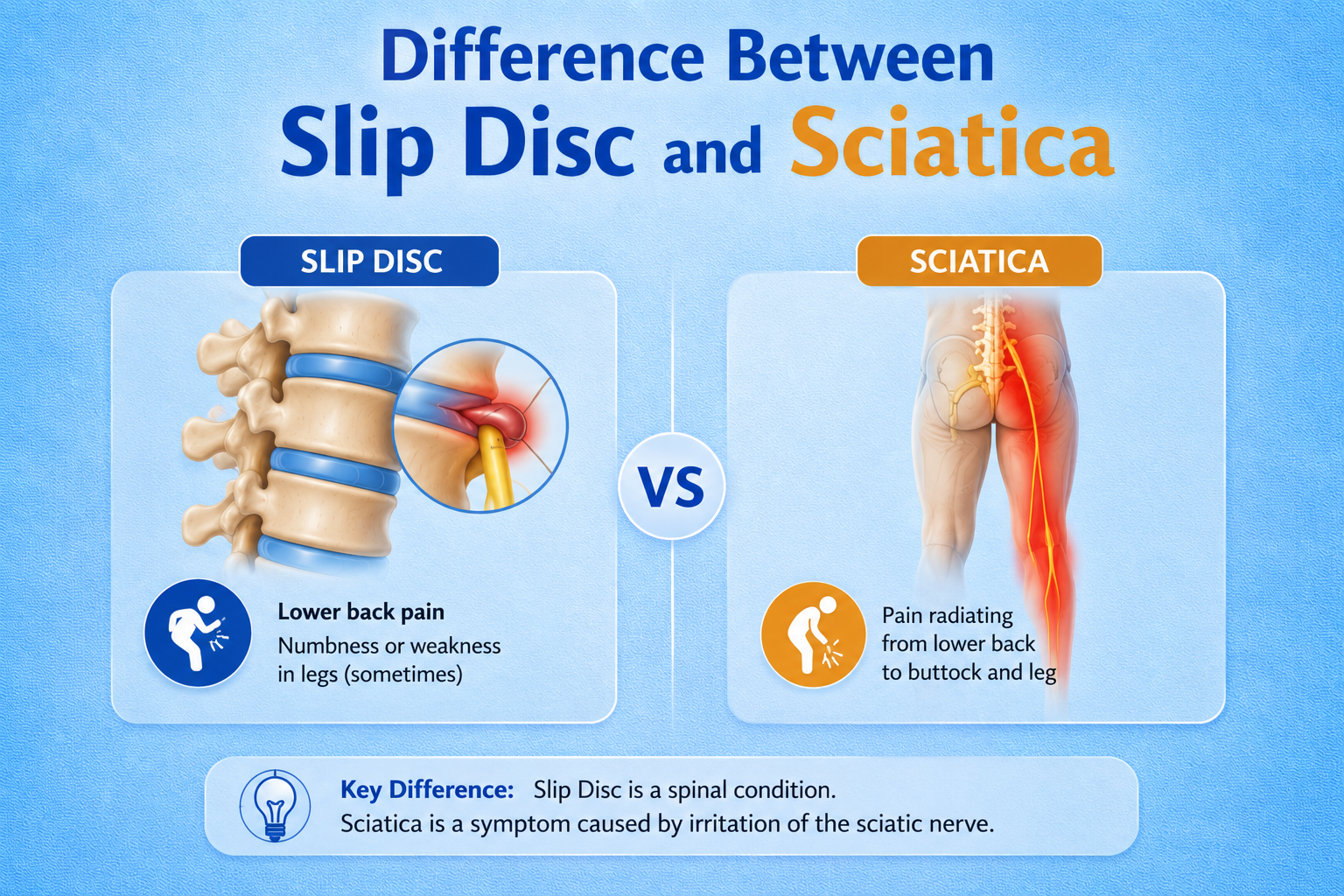
A slip disc, also called a herniated disc or prolapsed disc, occurs when the soft inner portion of a spinal disc pushes out through a tear in the outer layer.
The spine contains cushioning discs between vertebrae that absorb shock and allow flexibility. When a disc bulges or ruptures, it can press on nearby nerves.
Related article: Slipped Disc Treatment
What Is Sciatica?
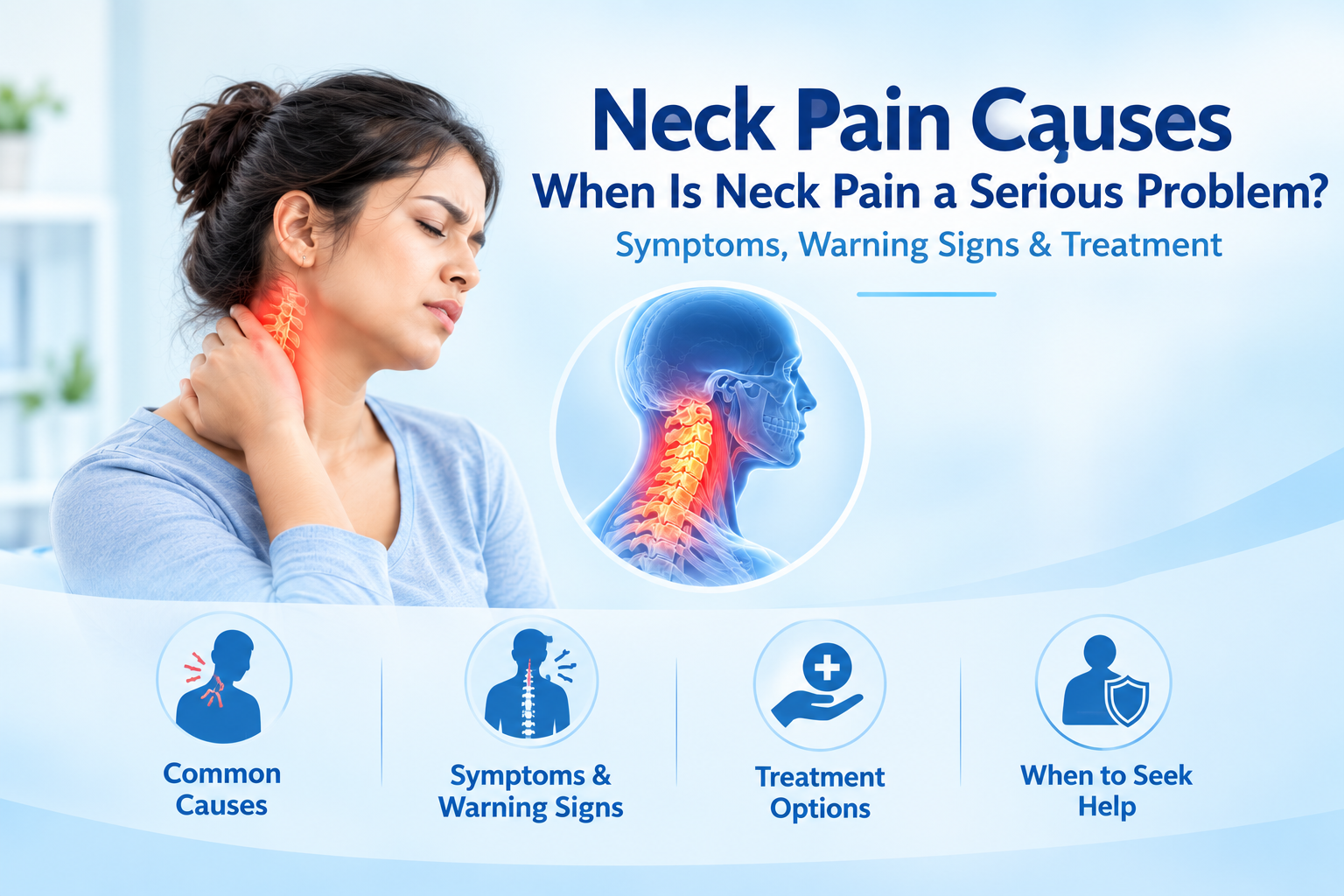
Sciatica is not a disease itself. It is a symptom caused by irritation or compression of the sciatic nerve, the largest nerve in the body.
The sciatic nerve runs from the lower back through the hips and down each leg.
When this nerve becomes compressed, it causes pain that radiates from the lower back to the legs.
Slip Disc vs Sciatica: Key Difference
Many people think slip disc and sciatica are the same, but they are different.
Important Difference
- Slip Disc → A structural spine problem
- Sciatica → A nerve pain symptom caused by nerve compression
A slipped disc is actually one of the most common causes of sciatica.
Slip Disc vs Sciatica Comparison Table
| Feature | Slip Disc | Sciatica |
| Definition | Damage or bulging of spinal disc | Pain caused by sciatic nerve compression |
| Main Problem | Spine disc issue | Nerve irritation |
| Pain Location | Lower back, neck | Lower back to leg |
| Leg Pain | Sometimes | Common |
| Numbness/Tingling | Possible | Very common |
| Cause | Disc degeneration or injury | Nerve compression |
| Treatment | Physiotherapy, medication, surgery | Pain relief, nerve treatment |
Causes of Slip Disc
Several factors can increase the risk of a herniated disc.
Common Causes
- Aging and disc degeneration
- Heavy lifting
- Poor posture
- Sudden twisting movements
- Obesity
- Sedentary lifestyle
Causes of Sciatica
Sciatica occurs when the sciatic nerve becomes irritated or compressed.
Common Causes
- Slipped disc
- Spinal stenosis
- Bone spurs
- Spine injuries
- Muscle inflammation
Chronic spinal strain can worsen symptoms. Read: What Causes Chronic Back Pain?
Symptoms of Slip Disc
Symptoms vary depending on which spinal nerve is affected.
Common Slip Disc Symptoms
- Lower back pain
- Neck pain
- Muscle weakness
- Numbness in arms or legs
- Difficulty bending or moving
Severe cases may affect mobility significantly.
Symptoms of Sciatica
Sciatica symptoms mainly affect one side of the body.
Common Sciatica Symptoms
- Sharp shooting pain down the leg
- Burning sensation
- Tingling or numbness
- Pain while sitting
- Weakness in the leg or foot
Severe numbness or loss of bladder control requires immediate medical attention.
Can a Slip Disc Cause Sciatica?
Yes.
A slipped disc is one of the most common causes of sciatica.
When the disc presses against the sciatic nerve roots in the lower spine, pain radiates down the leg.
This is why many patients experience both conditions together.
How Are Slip Disc and Sciatica Diagnosed?
Doctors perform detailed evaluations to identify the exact cause of symptoms.
Diagnostic Methods
- Physical examination
- Neurological assessment
- X-rays
- MRI scans
- CT scans
MRI is especially useful for detecting slipped discs and nerve compression.
Treatment for Slip Disc and Sciatica
Treatment depends on symptom severity and the underlying cause.
1. Conservative Treatment
Most patients improve without surgery.
Common Non-Surgical Treatments
- Pain medications
- Physiotherapy
- Rest and posture correction
- Hot or cold therapy
- Lifestyle changes
Benefits of Physiotherapy
- Strengthens spinal muscles
- Improves flexibility
- Reduces nerve pressure
2. Advanced Spine Treatment
If symptoms persist or worsen, advanced procedures may be needed.
Epidural Injections
Used to reduce inflammation around compressed nerves.
Minimally Invasive Spine Surgery
Surgery may be recommended if:
- Severe nerve compression occurs
- Pain does not improve
- Weakness worsens
- Mobility becomes difficult
Related orthopedic care: Knee Pain Treatment in Hassan
When Is Spine Surgery Required?
Spine surgery is generally considered when:
- Conservative treatment fails
- Severe leg weakness develops
- Nerve damage progresses
- Daily life becomes difficult
Modern minimally invasive spine surgery allows:
- Smaller incisions
- Faster recovery
- Reduced pain
Recovery and Prevention Tips
Recovery Tips
- Avoid heavy lifting
- Maintain proper posture
- Follow physiotherapy exercises
- Stay physically active
Prevention Tips
- Exercise regularly
- Strengthen core muscles
- Maintain healthy weight
- Avoid prolonged sitting
When Should You See a Doctor?
Consult a specialist if you experience:
- Persistent back pain
- Pain radiating to the legs
- Numbness or tingling
- Difficulty walking
- Muscle weakness
Early treatment prevents long-term nerve damage.
Choosing the Right Orthopedic and Spine Care
Advanced diagnosis and expert spine care improve treatment outcomes.
Look for:
- Experienced orthopedic/spine specialists
- Advanced MRI and imaging facilities
- Minimally invasive treatment options
- Rehabilitation support
Why Choose Karna Hospital for Spine Care?
At best multispeciality hospital in Hassan, patients receive:
- Advanced orthopedic and spine care
- Experienced specialists
- Modern diagnostic imaging
- Minimally invasive spine treatment
- Comprehensive rehabilitation support
The hospital focuses on restoring mobility, reducing pain, and improving long-term spinal health.
Conclusion
Understanding the difference between slip disc and sciatica helps patients seek the right treatment at the right time. A slipped disc is a spinal condition, while sciatica is nerve pain caused by compression of the sciatic nerve.
Both conditions can significantly affect mobility and quality of life, but early diagnosis and proper treatment can provide lasting relief.
At Karna Hospital, expert orthopedic and spine specialists offer advanced diagnosis and personalized treatment plans for effective recovery.
Contact Karna Hospital
📞 Mobile: +91 63603 22779
📍 Address: Shankar Mutt Road, KR Puram, Hassan – 573201
🌐 Website: https://karnahospital.in/
FAQ Section
Is sciatica the same as slip disc?
No, sciatica is nerve pain, while a slip disc is a spinal disc problem.
Can a slipped disc cause sciatica?
Yes, a slipped disc is one of the most common causes of sciatica.
What are the symptoms of slip disc?
Back pain, numbness, muscle weakness, and mobility issues are common symptoms.
Which is more painful: slip disc or sciatica?
Both can be painful, but sciatica often causes sharp radiating leg pain.
How do doctors diagnose sciatica?
Doctors use physical examination and imaging tests such as MRI scans.