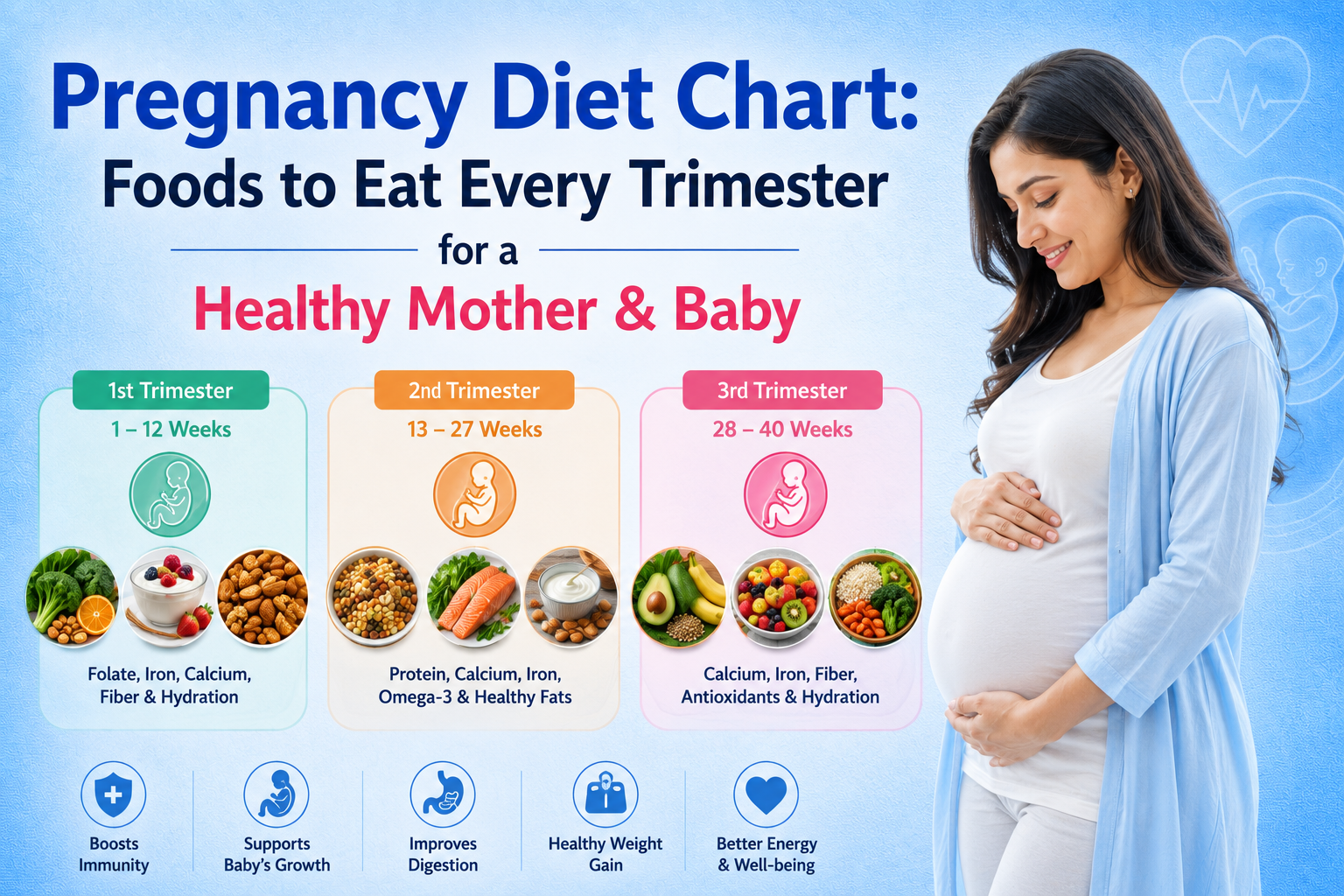
A healthy pregnancy begins with proper nutrition. What you eat during pregnancy not only supports your own health but also plays a crucial role in your baby’s growth, brain development, and overall well-being. A balanced pregnancy diet chart ensures that both mother and baby receive essential nutrients at every stage of pregnancy.
As your pregnancy progresses, your nutritional requirements change. During the first trimester, your baby needs nutrients that support organ formation. In the second trimester, growth accelerates, requiring more protein, calcium, and iron. By the third trimester, your baby’s bones, brain, and immune system continue to develop, making nutrient-rich foods even more important.
This trimester-wise pregnancy diet chart explains the best foods to eat, key nutrients, foods to avoid, and practical tips for maintaining a healthy pregnancy.
Why Is a Pregnancy Diet Important?
A healthy pregnancy diet provides the nutrients needed for your baby’s development while helping you stay healthy throughout pregnancy.
Proper nutrition can help:
- Support healthy fetal growth
- Reduce the risk of nutritional deficiencies
- Lower the chances of anemia
- Promote healthy birth weight
- Improve maternal energy levels
- Support brain and bone development
- Reduce pregnancy-related complications
Following a well-balanced diet, along with regular prenatal check-ups, contributes to a healthier pregnancy journey.
Learn more in our month-by-month pregnancy care guide.
Essential Nutrients During Pregnancy
Before looking at the trimester-wise diet, it’s important to understand the nutrients every pregnant woman needs.
Folic Acid
Folic acid helps prevent neural tube defects and supports early brain and spinal cord development.
Food sources:
- Spinach
- Broccoli
- Lentils
- Fortified cereals
- Citrus fruits
Iron
Iron helps produce healthy red blood cells and reduces the risk of anemia.
Iron-rich foods include:
- Lean meat
- Green leafy vegetables
- Beans
- Dates
- Beetroot
Calcium
Calcium supports your baby’s bones and teeth while maintaining your own bone health.
Good sources include:
- Milk
- Yogurt
- Cheese
- Ragi
- Almonds
Protein
Protein supports the growth of your baby’s organs, muscles, and tissues.
Protein-rich foods:
- Eggs
- Fish
- Chicken
- Paneer
- Lentils
- Soy products
Omega-3 Fatty Acids
These healthy fats contribute to your baby’s brain and eye development.
Sources include:
- Salmon
- Walnuts
- Flaxseeds
- Chia seeds
Pregnancy Diet Chart by Trimester
Nutritional needs vary throughout pregnancy. Here’s a trimester-wise guide.
First Trimester Pregnancy Diet (Weeks 1–12)
The first trimester is when your baby’s organs begin to develop. Many women experience nausea, vomiting, and food aversions during this stage.
Foods to Eat
- Whole grains
- Fresh fruits
- Green leafy vegetables
- Eggs
- Milk and dairy products
- Lentils and beans
- Dry fruits
- Citrus fruits rich in Vitamin C
Healthy Snacks
- Fruit with yogurt
- Handful of nuts
- Sprouts
- Whole-grain crackers
Sample Meal Plan
Breakfast
- Vegetable upma with milk
Mid-Morning
- Banana or apple
Lunch
- Brown rice, dal, vegetables, curd
Evening Snack
- Roasted chana or nuts
Dinner
- Chapati, paneer curry, salad
Read our first trimester pregnancy care guide for additional tips.
Second Trimester Pregnancy Diet (Weeks 13–27)
During this stage, your baby’s bones, muscles, and organs grow rapidly. Protein, calcium, and iron become especially important.
Foods to Eat
- Paneer
- Chicken
- Fish (low-mercury varieties)
- Whole grains
- Green vegetables
- Milk
- Yogurt
- Seasonal fruits
Increase protein intake while maintaining a balanced diet rich in vitamins and minerals.
Third Trimester Pregnancy Diet (Weeks 28–40)
Your baby’s brain, lungs, and immune system continue developing during the final trimester.
Focus on foods that provide sustained energy and essential nutrients.
Recommended Foods
- Oats
- Whole grains
- Lean proteins
- Dairy products
- Nuts and seeds
- Fresh vegetables
- Fruits
- Plenty of water
Smaller, more frequent meals may help reduce heartburn and improve digestion.
Pregnancy Diet Chart (Sample Daily Meal Plan)
| Meal | Recommended Foods |
| Early Morning | Warm water, soaked almonds |
| Breakfast | Oats, eggs, milk, fruit |
| Mid-Morning | Coconut water, seasonal fruit |
| Lunch | Brown rice, dal, vegetables, curd, salad |
| Evening Snack | Nuts, sprouts, yogurt |
| Dinner | Chapati, paneer/chicken, vegetables |
| Bedtime | Warm milk |
This sample meal plan provides balanced nutrition and can be customized based on individual dietary needs and medical advice.
Foods to Avoid During Pregnancy
Certain foods may increase the risk of foodborne illnesses or other complications.
Avoid or limit:
- Raw or undercooked meat
- Raw seafood
- Unpasteurized dairy products
- Excess caffeine
- Alcohol
- Smoking and tobacco
- Highly processed foods
- Excess sugary snacks
- High-mercury fish
Always consult your doctor regarding dietary restrictions specific to your pregnancy.
Hydration During Pregnancy
Water is just as important as food during pregnancy.
Aim to drink enough fluids throughout the day to:
- Prevent dehydration
- Improve digestion
- Reduce constipation
- Maintain amniotic fluid levels
- Support healthy circulation
Coconut water, fresh fruit juices (without added sugar), soups, and buttermilk can also contribute to hydration.
Pregnancy Diet for Women with Gestational Diabetes
Women diagnosed with gestational diabetes require a carefully planned diet to maintain healthy blood sugar levels.
General recommendations include:
- Eating smaller, frequent meals
- Choosing whole grains over refined carbohydrates
- Including lean protein with every meal
- Avoiding sugary beverages and sweets
- Monitoring carbohydrate intake
Read our guide on gestational diabetes during pregnancy to learn more about diet and blood sugar management.
Healthy Pregnancy Diet Tips
Following a few simple habits can help you maintain good nutrition throughout pregnancy.
- Eat a variety of colorful fruits and vegetables.
- Include protein in every meal.
- Do not skip breakfast.
- Limit processed and junk foods.
- Stay hydrated throughout the day.
- Take prenatal vitamins only as prescribed.
- Avoid self-medication or herbal supplements without medical advice.
Why Choose Karna Hospital for Pregnancy Care?
A healthy pregnancy requires more than good nutrition—it also depends on regular prenatal care and expert medical guidance.
At the women and child care services department, expectant mothers receive comprehensive antenatal care, nutritional counseling, fetal monitoring, and high-risk pregnancy management.
As the best multispeciality hospital in Hassan, Karna Hospital offers:
- Experienced obstetricians and gynecologists
- Personalized pregnancy nutrition guidance
- Advanced fetal monitoring
- High-risk pregnancy care
- Modern maternity facilities
- Comprehensive mother and newborn care
For mothers planning their delivery, it’s also helpful to understand C Section Delivery Cost, especially if there are medical indications for a cesarean birth.
Conclusion
Following a balanced pregnancy diet chart is one of the most effective ways to support a healthy pregnancy and your baby’s development. By focusing on nutrient-rich foods, staying hydrated, and adapting your diet to each trimester, you can reduce the risk of complications and promote better maternal and fetal health.
Every pregnancy is unique, so consult your obstetrician or a qualified nutritionist before making significant dietary changes. Combined with regular prenatal check-ups and expert medical care, a healthy diet lays the foundation for a safe pregnancy and a healthy baby.
Frequently Asked Questions (FAQ)
What is the best pregnancy diet chart?
A balanced pregnancy diet includes whole grains, fruits, vegetables, lean proteins, dairy products, healthy fats, and plenty of fluids, adjusted according to each trimester.
Which foods should I eat during the first trimester?
Choose folic acid-rich foods, fruits, vegetables, whole grains, dairy products, eggs, and protein-rich foods to support early fetal development.
What foods should be avoided during pregnancy?
Avoid raw meat, raw seafood, unpasteurized dairy products, alcohol, excessive caffeine, processed foods, and high-mercury fish.
Can diet help manage gestational diabetes?
Yes. A balanced diet with controlled carbohydrate intake, lean proteins, whole grains, and regular blood sugar monitoring can help manage gestational diabetes under medical supervision.
How much water should a pregnant woman drink?
Most pregnant women should aim for adequate daily fluid intake, though individual needs vary. Your doctor can provide personalized recommendations based on your health and pregnancy stage.