If your doctor has recommended surgery, one of the first questions you may have is, “Should I choose open surgery or laparoscopic surgery?” Advances in medical technology have made laparoscopic surgery, also known as minimally invasive surgery, a preferred option for many procedures. However, open surgery remains the best choice for certain complex medical conditions.
Understanding the difference between open surgery and laparoscopic surgery can help you make an informed decision about your treatment. Each technique has its own advantages, limitations, recovery timeline, and suitability depending on the patient’s condition.
In this guide, we’ll compare open surgery vs laparoscopic surgery, explain their benefits and risks, discuss recovery times, and help you understand which approach may be best for different conditions.
What Is Open Surgery?
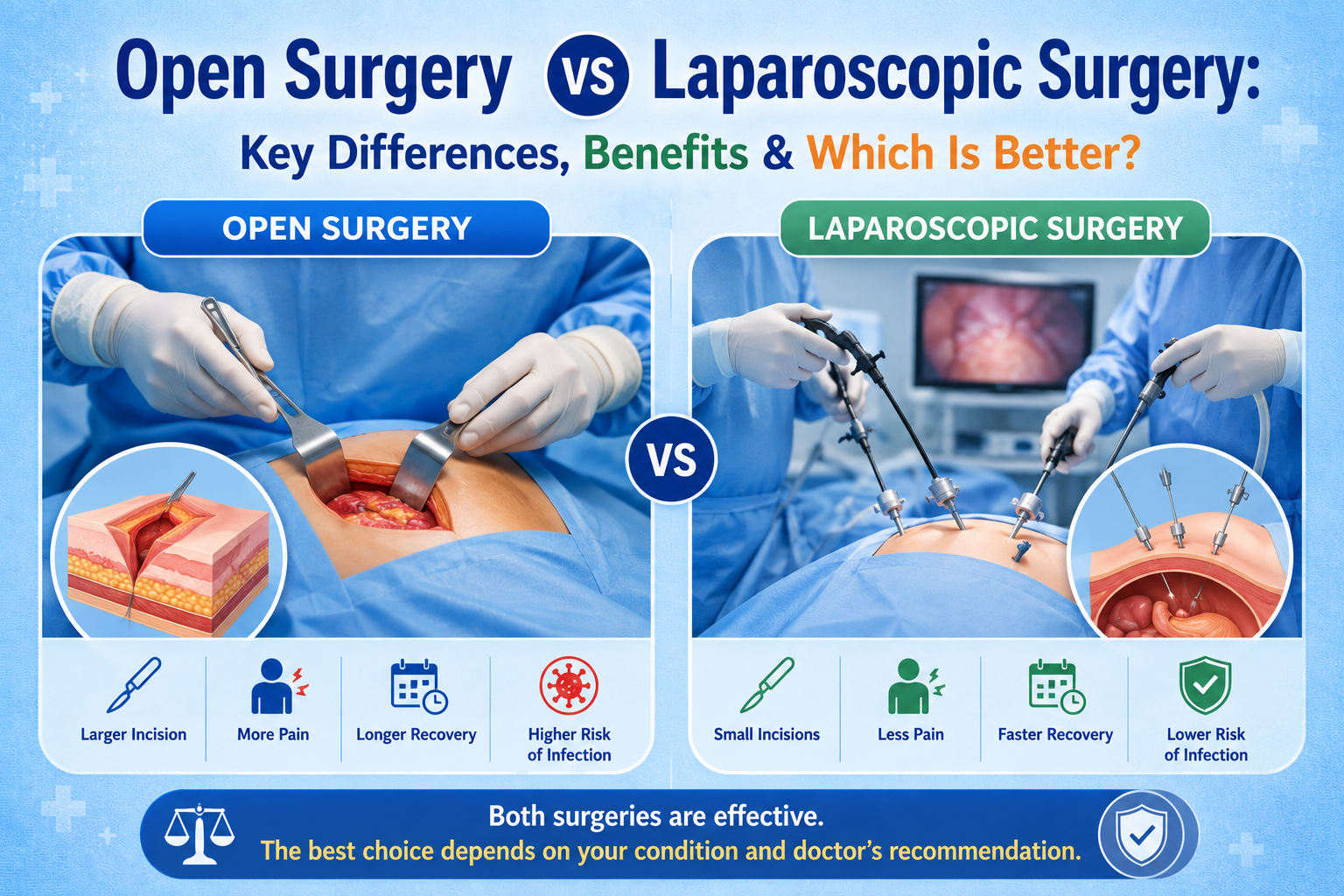
Open surgery is the traditional surgical method where the surgeon makes a larger incision to directly access the affected organ or tissue.
This technique has been used successfully for decades and is still the preferred approach for many complex or emergency procedures.
Common Conditions Treated with Open Surgery
- Large abdominal tumors
- Complex hernias
- Severe trauma
- Advanced gallbladder disease
- Certain gastrointestinal surgeries
- Emergency abdominal procedures
Although recovery may take longer, open surgery allows surgeons greater visibility and direct access during complicated operations.
What Is Laparoscopic Surgery?
Laparoscopic surgery is a minimally invasive surgical technique performed through several small incisions using a laparoscope—a thin tube fitted with a camera and light.
The camera projects high-definition images onto a monitor, allowing the surgeon to perform precise procedures with specialized instruments.
Today, laparoscopic surgery is widely used for:
- Gallbladder removal
- Hernia repair
- Appendix removal
- Gynecological procedures
- Some colorectal surgeries
- Diagnostic abdominal procedures
Because the incisions are much smaller, patients often experience less pain and recover more quickly.
If you’d like to understand how the procedure is performed, recovery time, potential risks, and expected outcomes, read our detailed guide on Laparoscopic Cholecystectomy.
Open Surgery vs Laparoscopic Surgery: Key Differences
Understanding how these two surgical approaches differ can help patients choose the most appropriate treatment.
| Feature | Open Surgery | Laparoscopic Surgery |
| Incision Size | Large incision | Small keyhole incisions |
| Pain After Surgery | Usually more | Usually less |
| Blood Loss | Higher | Lower |
| Hospital Stay | Longer | Shorter |
| Recovery Time | Slower | Faster |
| Scarring | More visible | Minimal scarring |
| Infection Risk | Higher | Lower |
| Return to Work | Longer | Earlier |
Both procedures are safe when performed by experienced surgeons, but the best option depends on the patient’s medical condition.
Benefits of Laparoscopic Surgery
Laparoscopic surgery has become the preferred approach for many planned procedures because of its numerous advantages.
1. Smaller Incisions
Small incisions reduce trauma to surrounding tissues.
2. Less Pain After Surgery
Patients usually experience less postoperative discomfort compared to traditional open surgery.
3. Faster Recovery
Many patients return to normal daily activities much sooner.
4. Shorter Hospital Stay
Patients undergoing laparoscopic surgery often go home within one or two days, depending on the procedure.
5. Reduced Blood Loss
Smaller incisions help minimize bleeding during surgery.
6. Lower Risk of Infection
Smaller wounds generally reduce the likelihood of postoperative infections.
7. Better Cosmetic Results
Minimal scarring is one of the most appreciated benefits of laparoscopic surgery.
According to a published review in PubMed Central, laparoscopic surgery is associated with reduced postoperative pain, shorter hospital stays, faster recovery, and fewer wound-related complications than open surgery for many common general surgical procedures, while maintaining comparable clinical outcomes when performed for appropriate indications.
Reference: https://pmc.ncbi.nlm.nih.gov/articles/PMC10951803/
Advantages of Open Surgery
Despite advances in minimally invasive techniques, open surgery remains the safest option for certain medical situations.
Open Surgery May Be Recommended For
Complex Medical Conditions
Some diseases require direct visualization and access.
Large Tumors
Extensive surgical removal may be easier through an open approach.
Emergency Procedures
Trauma or severe internal bleeding often requires immediate open surgery.
Extensive Scar Tissue
Previous abdominal surgeries can make laparoscopic procedures difficult.
When Is Laparoscopic Surgery the Better Choice?
Doctors often recommend laparoscopic surgery for planned procedures where minimally invasive techniques are appropriate.
Common examples include:
- Gallbladder removal
- Hernia repair
- Appendix surgery
- Certain gynecological procedures
- Diagnostic abdominal surgery
For patients with gallstones, learn more about gallbladder surgery in Hassan and when laparoscopic surgery is recommended.
Recovery After Open Surgery vs Laparoscopic Surgery
Recovery is one of the biggest differences between the two techniques.
Recovery After Laparoscopic Surgery
Most patients:
- Walk within a few hours
- Return home sooner
- Resume light activities within days
- Experience less postoperative pain
Recovery After Open Surgery
Recovery may involve:
- Longer hospitalization
- More wound care
- Gradual return to normal activities
- Extended healing time
Recovery varies depending on the patient’s health and the type of surgery performed.
Is Laparoscopic Surgery Always Better?
Not necessarily.
Although laparoscopic surgery offers many benefits, it may not be suitable for every patient.
Open surgery may be recommended when:
- The disease is advanced
- There is severe infection
- Extensive scar tissue is present
- The anatomy is complex
- Emergency surgery is required
Your surgeon will recommend the safest option after evaluating your condition.
Cost Comparison: Open Surgery vs Laparoscopic Surgery
Many patients wonder whether minimally invasive surgery is more expensive.
In general:
| Procedure Aspect | Open Surgery | Laparoscopic Surgery |
| Surgical Equipment | Lower | Higher |
| Hospital Stay | Longer | Shorter |
| Recovery Costs | Higher | Lower |
| Return to Work | Delayed | Faster |
| Overall Value | Depends on condition | Often cost-effective for suitable patients |
While laparoscopic surgery may involve advanced equipment, the shorter hospital stay and quicker recovery can offset overall treatment-related costs.
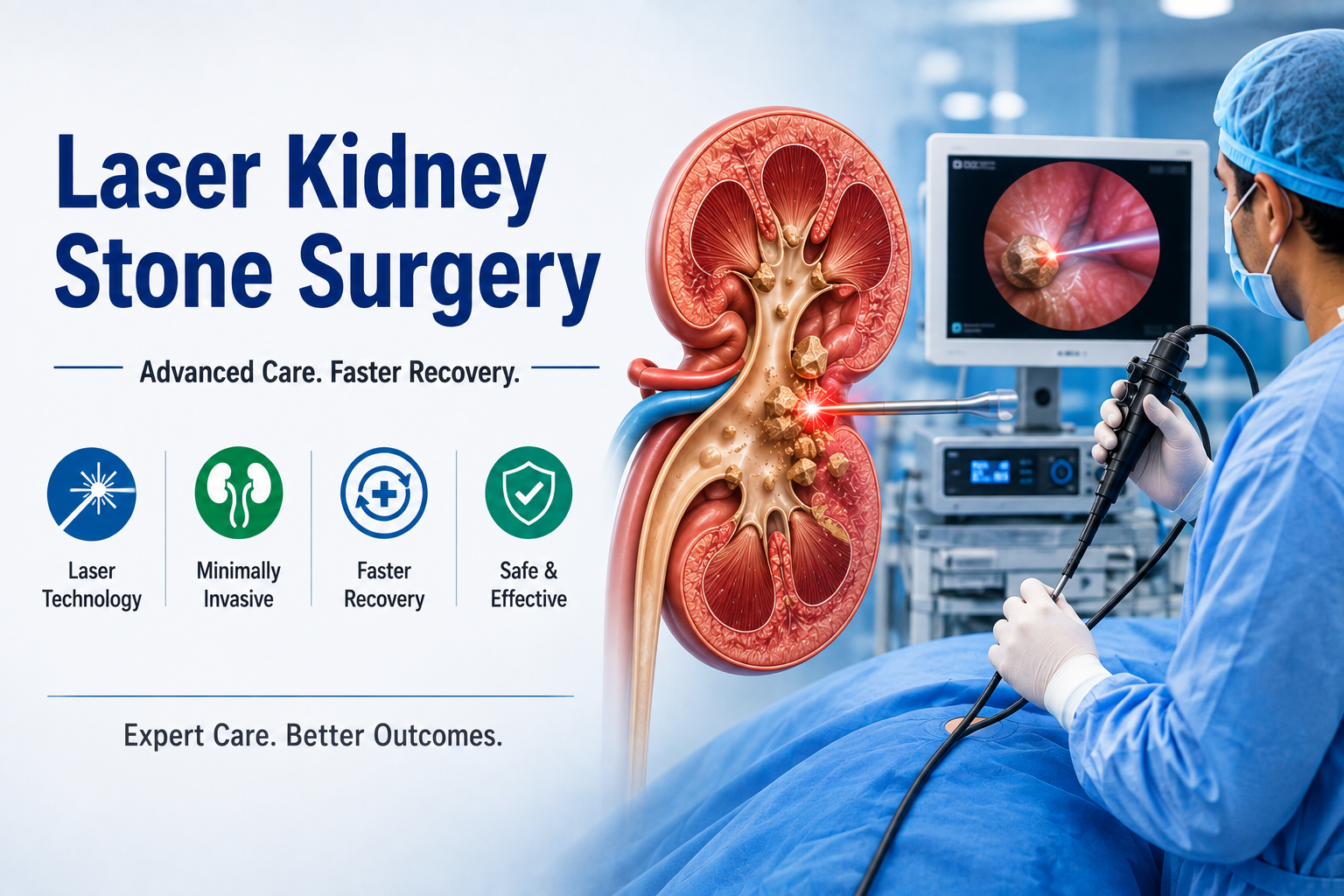
The choice of surgical technique can also affect treatment costs for other conditions. For example, if you’re considering treatment for kidney stones, explore our comparison of Kidney Stone Treatment: Laser vs Open Surgery to understand the advantages and limitations of each approach.
Learn more about gallbladder surgery cost in Hassan to understand how procedure type can influence treatment expenses.
Risks of Open Surgery and Laparoscopic Surgery
Every surgical procedure carries some risk.
Common Risks
- Bleeding
- Infection
- Blood clots
- Anesthesia-related complications
- Delayed wound healing
Choosing an experienced surgeon and following postoperative instructions significantly reduces these risks.
Which Surgery Is Right for You?
The best surgical approach depends on several factors:
- Your diagnosis
- Severity of the condition
- Previous surgeries
- Overall health
- Surgeon’s assessment
- Availability of minimally invasive techniques
Rather than choosing a procedure based solely on recovery time or cost, patients should focus on the treatment approach that offers the safest and most effective outcome.
Why Experience Matters More Than the Surgical Technique
Whether you undergo open surgery or laparoscopic surgery, the expertise of the surgical team plays a major role in treatment success.
An experienced surgeon can:
- Select the most appropriate surgical approach
- Reduce complications
- Improve recovery
- Deliver better long-term outcomes
Why Choose Karna Hospital for General Surgery?
At the best multispeciality hospital in Hassan, patients receive advanced surgical care supported by experienced specialists, modern operation theatres, and comprehensive postoperative care.
Our Surgical Services Include
- Laparoscopic gallbladder surgery
- Hernia surgery
- Appendix surgery
- Gastrointestinal procedures
- Emergency general surgery
- Advanced minimally invasive surgery
Patients benefit from personalized treatment plans designed to ensure safe surgery and faster recovery.
Conclusion
The debate between open surgery vs laparoscopic surgery does not have a single answer. While laparoscopic surgery offers advantages such as smaller incisions, faster recovery, less pain, and shorter hospital stays, open surgery remains the preferred choice for certain complex and emergency conditions.
The right treatment depends on your diagnosis, overall health, and your surgeon’s recommendation. Consulting an experienced surgical team ensures you receive the safest and most effective approach for your condition.
Whether you’re considering gallbladder surgery, hernia repair, appendix surgery, or kidney stone treatment, consulting experienced surgeons at the best multispeciality hospital in Hassan can help determine whether open surgery or laparoscopic surgery is the most suitable option for your condition.
Frequently Asked Questions (FAQ)
Which is better, open surgery or laparoscopic surgery?
Laparoscopic surgery is often preferred for suitable cases because it offers smaller incisions, faster recovery, and less postoperative pain. However, open surgery may be the safest option for complex or emergency conditions.
Is laparoscopic surgery safer than open surgery?
Both procedures are generally safe when performed by experienced surgeons. The choice depends on the patient’s condition and the complexity of the surgery.
Does laparoscopic surgery leave scars?
Yes, but the scars are usually much smaller and less noticeable than those from open surgery.
Which surgery has a faster recovery?
Laparoscopic surgery typically allows patients to recover and return to daily activities sooner than open surgery.
Can every surgery be performed laparoscopically?
No. Some complex conditions, severe infections, or emergency situations require open surgery for better access and patient safety.
Which type of surgery is best?
There is no single “best” type of surgery for every patient. The choice between open surgery and laparoscopic surgery depends on the medical condition, its severity, the patient’s overall health, and the surgeon’s recommendation. For many planned procedures such as gallbladder removal, hernia repair, and appendix surgery, laparoscopic surgery is often preferred because it involves smaller incisions, less pain, and faster recovery. However, open surgery may be the safest option for complex or emergency cases.
What are the negatives of open surgery?
Open surgery is an effective and well-established surgical technique, but it generally has some disadvantages compared to minimally invasive surgery, including:
- Larger incision and more visible scarring
- Greater postoperative pain
- Increased blood loss
- Longer hospital stay
- Higher risk of wound infection
- Longer recovery period before returning to normal activities
Despite these drawbacks, open surgery remains the preferred option for certain complex conditions where better access to the surgical area is required.
Is laparoscopic surgery less risky?
For many routine procedures, laparoscopic surgery is associated with lower risks of infection, reduced blood loss, smaller scars, and quicker recovery compared to open surgery. However, every surgical procedure carries some level of risk, and the safest approach depends on the patient’s condition, medical history, and the complexity of the surgery. Your surgeon will recommend the most appropriate option after a thorough evaluation.
What is the most failed surgery?
There is no single surgery that is considered the “most failed.” Surgical outcomes depend on factors such as the patient’s health, the severity of the condition, the surgeon’s expertise, and postoperative care. Some procedures, including certain spine, joint replacement, or hernia surgeries, may require revision surgery in some cases, but the majority of operations are successful when performed for the right indications by experienced surgeons.