
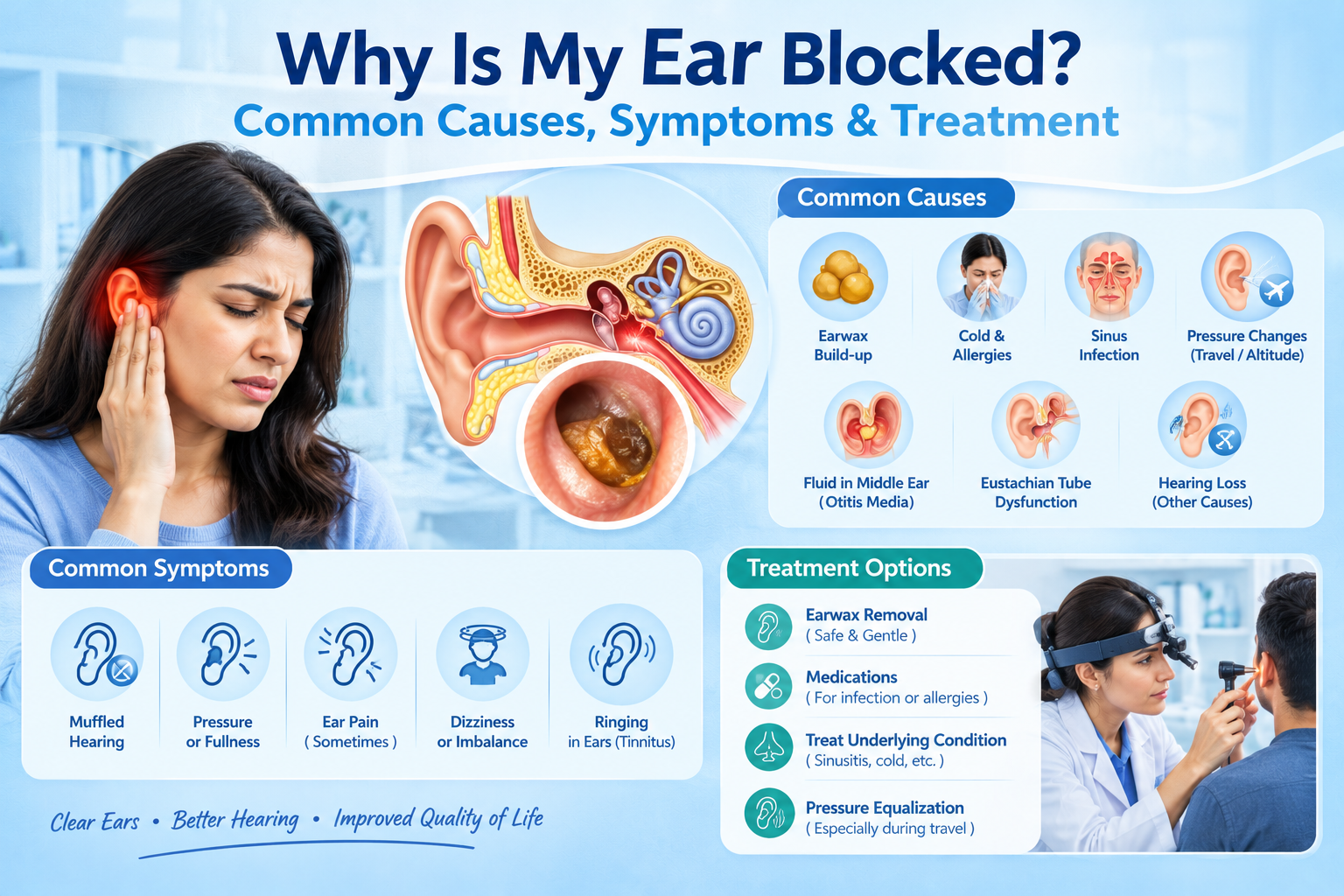
A blocked ear can be caused by earwax buildup, a cold or sinus infection, Eustachian tube dysfunction, an ear infection, allergies, changes in air pressure, or fluid behind the eardrum. The feeling may range from mild fullness or pressure to muffled hearing, pain, ringing, or dizziness. Most causes are treatable, but persistent or sudden hearing changes should be evaluated by a doctor.
If you are wondering, “Why is my ear blocked?”, the cause cannot always be identified based on symptoms alone. An examination of the ear can help determine whether the blockage is in the ear canal, behind the eardrum, or related to the hearing system.
What Does a Blocked Ear Feel Like?
A blocked or clogged ear may feel as though something is stuck inside the ear. Some people describe it as pressure, fullness, or hearing as though they are underwater.
Common symptoms associated with a blocked ear include:
- Muffled hearing
- Feeling of fullness or pressure
- Reduced hearing in one or both ears
- Ear pain or discomfort
- Ringing or buzzing in the ear
- Clicking or popping sounds
- Dizziness or balance problems
- Ear discharge in some cases
Earwax blockage, for example, can cause fullness, earache, tinnitus, hearing loss and dizziness.
Why Is My Ear Blocked? Common Causes
1. Earwax Buildup
One of the common causes of a blocked ear is excessive or impacted earwax. Earwax normally protects the ear canal, but it can accumulate and prevent sound from travelling normally through the ear.
You may have an earwax blockage if you experience:
- A feeling that your ear is full or clogged
- Muffled hearing
- Itching
- Ringing in the ear
- Ear discomfort
- Occasionally, dizziness
Using cotton swabs or other objects inside the ear can push wax deeper into the ear canal and make the blockage worse. Professional examination and removal may be recommended when wax is impacted.
2. Eustachian Tube Dysfunction
The Eustachian tubes connect the middle ear to the back of the nose and help equalise pressure. When these tubes do not open properly, you may experience Eustachian tube dysfunction, resulting in a blocked or full feeling.
Common symptoms include:
- Ear pressure or fullness
- Muffled hearing
- Clicking or popping
- Ear pain
- Tinnitus
- Dizziness or balance problems
Colds, flu, allergies and changes in altitude can contribute to Eustachian tube dysfunction.
3. Cold, Flu or Sinus Congestion
A blocked ear after a cold is relatively common. Swelling and congestion around the nose and throat can interfere with Eustachian tube function, causing pressure and muffled hearing.
A sinus infection can also contribute to ear pressure and congestion. If your blocked ear occurs along with facial pressure, nasal congestion, headache or thick nasal discharge, a sinus problem may be involved.
You can learn more about the symptoms and causes of sinus infection symptoms and treatment and how sinus-related problems can affect the ears.
4. Ear Infection
An ear infection can cause a blocked or full sensation along with pain and difficulty hearing. Middle-ear infections may occur following a cold or another upper respiratory infection.
Other symptoms may include:
- Ear pain
- Pressure or fullness
- Muffled hearing
- Fever
- Ear discharge in some cases
If your blocked ear is accompanied by significant pain, fever or discharge, medical evaluation is advisable.
For more information, read about ear infection symptoms and treatment.
5. Allergies
Allergies can cause inflammation and congestion around the nose and Eustachian tubes. This may result in pressure, fullness or a clogged ear.
People with allergic rhinitis may notice that their ear symptoms occur together with:
- Sneezing
- Runny or blocked nose
- Itchy eyes
- Nasal congestion
- Ear pressure
Treating the underlying allergy may help relieve associated ear congestion.
6. Changes in Air Pressure
Have you ever experienced a blocked ear after flying? Changes in altitude can cause a pressure difference between the middle ear and the surrounding environment.
This may happen during:
- Air travel
- Scuba diving
- Travelling through high-altitude areas
Swallowing, yawning or chewing can help the Eustachian tubes open and equalise pressure in mild cases.
7. Fluid Behind the Eardrum
Fluid can accumulate in the middle ear and create a sensation of fullness or blockage. This may affect hearing and can occur following infections or problems with Eustachian tube function.
If the sensation continues or hearing remains reduced, an ENT evaluation can help identify whether fluid is present.
8. Tinnitus or Other Hearing Problems
Sometimes a person may describe an ear as “blocked” when the main problem is actually a change in hearing or tinnitus.
Tinnitus can occur alongside conditions affecting the ear canal, middle ear or Eustachian tube. If your blocked-ear sensation is accompanied by persistent ringing or buzzing, it is worth discussing the symptoms with a healthcare professional.
You can also read about Tinnitus: Causes, Symptoms & Treatment.
Blocked Ear and Muffled Hearing: Should You Be Concerned?
A blocked ear and muffled hearing can occur with relatively simple problems such as earwax or temporary congestion. However, hearing changes should not automatically be assumed to be caused by wax.
Earwax blockage can cause hearing loss, but other conditions can produce similar symptoms. An examination can help distinguish between an ear-canal blockage and problems affecting the middle or inner ear.
Sudden hearing loss in one ear is particularly important. Sudden sensorineural hearing loss can feel like a blocked ear and may be accompanied by tinnitus, ear fullness or dizziness. It requires prompt medical assessment rather than waiting for the ear to “unblock” on its own.
How to Unblock Your Ear
The right way to unblock a blocked ear depends on the cause.
For mild pressure related to a cold or changes in altitude, you may try:
- Swallowing frequently
- Yawning
- Chewing sugar-free gum
- Drinking water
- Gently equalising pressure if appropriate
These measures may help open the Eustachian tubes in some cases.
If earwax is suspected, do not insert cotton swabs, hairpins, keys or other objects into the ear canal. These can push wax deeper or injure the ear. Professional ear examination and removal is safer when wax is impacted.
Avoid putting oils, herbal preparations or other home remedies into the ear unless a healthcare professional recommends them. Ear candling is not a recommended treatment for earwax blockage.
What Is the Treatment for a Blocked Ear?
Blocked ear treatment depends entirely on the underlying cause.
For Earwax Blockage
A healthcare professional can examine the ear and, when appropriate, remove impacted wax using suitable techniques such as specialised instruments or suction.
For Eustachian Tube Dysfunction
Treatment may focus on the underlying cause, such as a cold or allergies. Persistent symptoms may require further evaluation and treatment by an ENT specialist.
For Ear Infections
Treatment depends on the type and severity of the infection. Some infections improve without antibiotics, while others may require medication or additional treatment following medical assessment.
For Sinus or Allergy-Related Blockage
Managing the underlying nasal or sinus condition may help reduce Eustachian tube swelling and associated ear pressure.
For persistent sinus symptoms, you can also learn about chronic sinusitis treatment without surgery.
When Should You See an ENT for a Blocked Ear?
You should consider seeing an ENT specialist if:
- The blocked feeling persists or keeps returning.
- You have persistent muffled hearing.
- You have significant ear pain.
- There is discharge or bleeding from the ear.
- You experience repeated ear infections.
- You have persistent ringing or tinnitus.
- You experience dizziness or balance problems.
- Your hearing suddenly decreases.
- Symptoms do not improve after a cold or congestion resolves.
Sudden hearing loss, particularly in one ear, should be assessed promptly rather than being treated as ordinary ear blockage.
An ENT specialist can examine the ear canal and eardrum and determine whether the problem is related to wax, infection, fluid, Eustachian tube dysfunction, hearing loss or another condition.
Frequently Asked Questions
Why is my ear blocked but there is no pain?
A blocked ear without pain may be caused by earwax buildup, Eustachian tube dysfunction, congestion, allergies or fluid behind the eardrum. If hearing remains reduced or symptoms persist, an examination can identify the cause.
Why is only one ear blocked?
One-sided blockage can occur because of earwax, infection, Eustachian tube dysfunction or other ear conditions. Sudden hearing loss in one ear requires prompt medical assessment.
Why does my ear feel blocked after a cold?
A cold can cause swelling and congestion around the Eustachian tube, making it difficult to equalise pressure in the middle ear. This can create fullness, pressure and muffled hearing.
Can sinus infection cause a blocked ear?
Yes. Nasal and sinus congestion can affect Eustachian tube function and cause ear pressure or a blocked sensation. If symptoms are persistent or severe, medical evaluation may be appropriate.
How do you know if earwax is blocking your ear?
Earwax blockage may cause fullness, muffled hearing, itching, tinnitus or ear discomfort. However, these symptoms can also occur with other conditions, so an examination is the best way to confirm whether wax is responsible.
How long does a blocked ear usually last?
The duration depends on the cause. Temporary blockage related to a cold or pressure change may improve as the underlying problem resolves. Persistent symptoms should be assessed by a healthcare professional rather than left untreated.
Is a blocked ear serious?
A blocked ear is often caused by a treatable condition, but it should not always be ignored. Persistent hearing changes, severe pain, discharge, dizziness or sudden hearing loss require medical attention.
Key Takeaway
The most common causes of a blocked ear include earwax buildup, congestion from colds or sinus problems, Eustachian tube dysfunction, allergies, ear infections, fluid in the middle ear and pressure changes. Treatment depends on the underlying cause.
If your ear feels blocked for a prolonged period, your hearing is reduced, or you have pain, discharge, tinnitus or dizziness, consult an ENT specialist for an appropriate examination. Most importantly, do not assume sudden hearing loss is simply earwax or congestion, because some causes require prompt treatment.