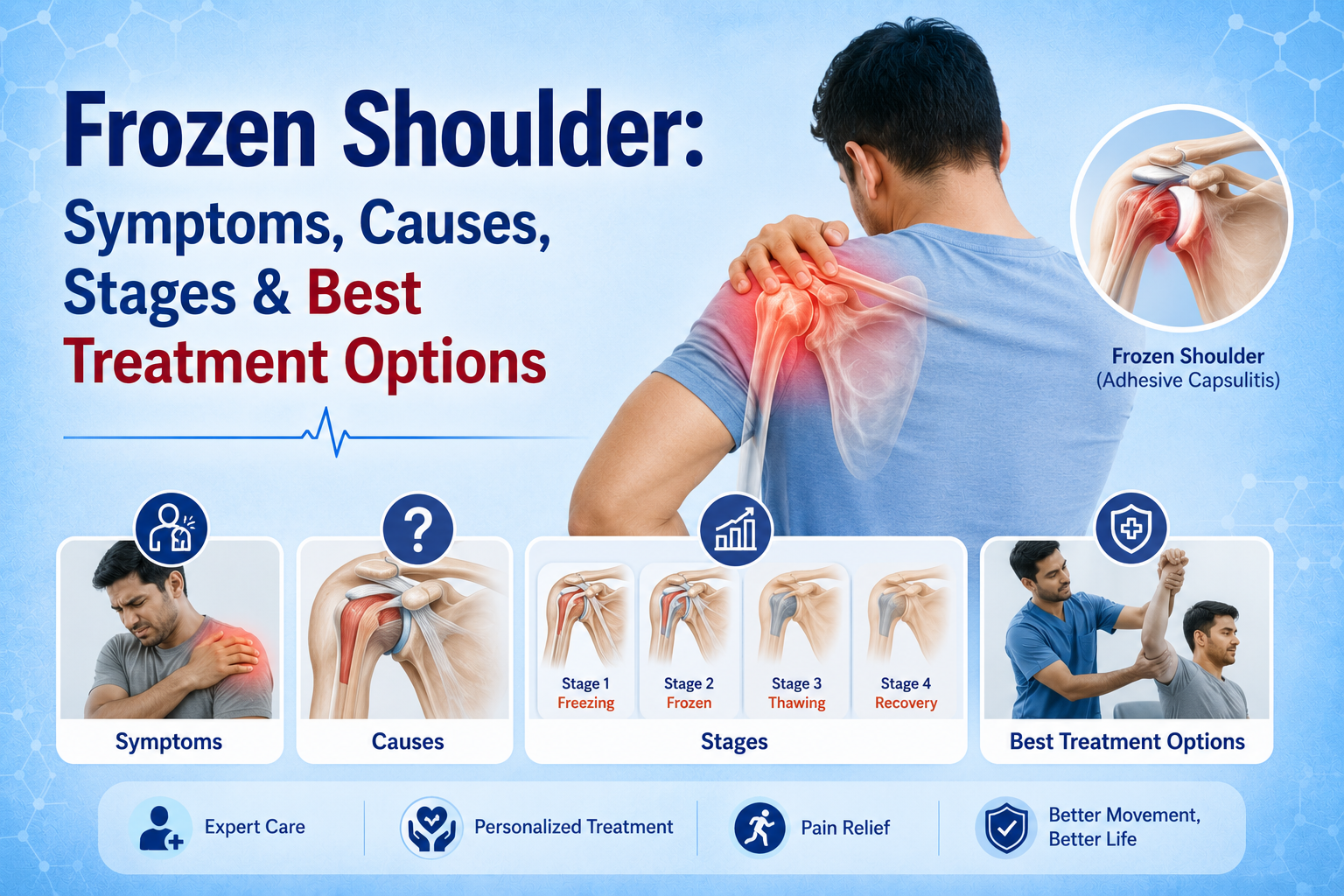
Shoulder pain is one of the most common musculoskeletal problems affecting adults, especially those between the ages of 40 and 60. While occasional shoulder discomfort may result from overuse or injury, persistent pain accompanied by stiffness and reduced mobility could indicate frozen shoulder, also known as adhesive capsulitis.
Frozen shoulder develops gradually and can make even simple daily activities—such as combing your hair, wearing clothes, or reaching overhead—extremely difficult. The condition usually progresses through different stages and may take months to recover without appropriate treatment.
This comprehensive guide explains frozen shoulder symptoms, causes, stages, diagnosis, treatment options, recovery, and prevention, helping you understand when to seek medical care and what treatment options are available.
What Is Frozen Shoulder?
Frozen shoulder (adhesive capsulitis) is a condition in which the connective tissue surrounding the shoulder joint becomes inflamed, thickened, and tight. As the joint capsule stiffens, shoulder movement becomes increasingly restricted and painful.
Unlike a shoulder injury that occurs suddenly, frozen shoulder usually develops slowly over several months.
Although the condition often improves with treatment, delayed diagnosis can prolong recovery and significantly impact daily life.
Symptoms of Frozen Shoulder
The symptoms of frozen shoulder develop gradually and worsen over time.
Common Frozen Shoulder Symptoms
Persistent Shoulder Pain
Pain is often the first symptom. It usually starts as a dull ache and gradually becomes more severe, especially during movement or at night.
Shoulder Stiffness
Progressive stiffness limits your ability to lift or rotate the arm.
Reduced Range of Motion
Simple tasks such as dressing, reaching overhead, fastening a seatbelt, or lifting objects become challenging.
Pain During Sleep
Many patients experience worsening pain while sleeping on the affected shoulder.
Difficulty Performing Daily Activities
Activities like combing hair, reaching for shelves, driving, or carrying groceries become uncomfortable.
If shoulder pain persists for more than a few weeks or limits your daily activities, consult an orthopedic specialist for evaluation.
Stages of Frozen Shoulder
Frozen shoulder typically progresses through three distinct stages.
Stage 1: Freezing Stage
Duration: 6 weeks to 9 months
Symptoms include:
- Increasing shoulder pain
- Gradual stiffness
- Pain during movement
- Difficulty sleeping
Pain is usually more noticeable than stiffness during this stage.
Stage 2: Frozen Stage
Duration: 4 to 12 months
During this stage:
- Pain may gradually decrease.
- Shoulder stiffness becomes more severe.
- Arm movement becomes significantly restricted.
- Daily activities become difficult.
Stage 3: Thawing Stage
Duration: 6 months to 2 years
During recovery:
- Shoulder movement slowly improves.
- Pain gradually subsides.
- Range of motion returns with physiotherapy and exercises.
Recovery time varies depending on the severity of the condition and treatment received.
What Causes Frozen Shoulder?
The exact cause is not always clear, but inflammation and thickening of the shoulder capsule are responsible for limiting movement.
Common Frozen Shoulder Causes
Diabetes
People with diabetes have a significantly higher risk of developing frozen shoulder.
Shoulder Injury
Fractures, dislocations, or rotator cuff injuries can lead to prolonged shoulder immobility.
Surgery
Patients recovering from shoulder, breast, or upper chest surgery may develop frozen shoulder if movement is limited.
Prolonged Immobilization
Keeping the shoulder still for several weeks after an injury increases the risk.
Age
The condition is most common between 40 and 60 years.
Hormonal Changes
Women, particularly after menopause, may be more susceptible.
Risk Factors for Frozen Shoulder
Several factors increase the likelihood of developing frozen shoulder.
These include:
- Diabetes
- Thyroid disorders
- Parkinson’s disease
- Heart disease
- Stroke
- Previous shoulder injuries
- Rotator cuff disorders
- Lack of physical activity
Early diagnosis can help prevent severe stiffness and prolonged recovery.
How Is Frozen Shoulder Diagnosed?
Doctors diagnose frozen shoulder based on symptoms, physical examination, and imaging tests.
Physical Examination
Your doctor evaluates:
- Shoulder movement
- Pain location
- Range of motion
- Muscle strength
Imaging Tests
To rule out other shoulder problems, your doctor may recommend:
- X-rays
- MRI scan
- Ultrasound (in selected cases)
Accurate diagnosis helps determine the most appropriate treatment plan.
Frozen Shoulder Treatment Options
Treatment focuses on reducing pain, restoring shoulder mobility, and preventing long-term stiffness.
Most patients improve without surgery.
1. Pain Relief Medications
Doctors may prescribe medications to reduce inflammation and improve comfort during recovery.
Always take medications only under medical supervision.
2. Physiotherapy for Frozen Shoulder
Physiotherapy is one of the most effective treatments.
A physiotherapist may recommend:
- Stretching exercises
- Joint mobilization
- Strengthening exercises
- Shoulder mobility training
Regular therapy significantly improves recovery outcomes.
3. Frozen Shoulder Exercises
Simple exercises performed consistently can improve flexibility.
Examples include:
- Pendulum exercises
- Finger walk exercise
- Cross-body shoulder stretch
- Towel stretch
- Wall climbing exercise
Exercise programs should always be performed under professional guidance.
4. Corticosteroid Injections
For severe pain and inflammation, doctors may recommend steroid injections into the shoulder joint.
These injections can provide temporary relief and improve participation in physiotherapy.
5. Arthroscopic Shoulder Surgery
If conservative treatments fail after several months, surgery may be considered.
Arthroscopic surgery involves releasing the tightened joint capsule using minimally invasive techniques.
Benefits of Arthroscopic Surgery
- Smaller incisions
- Less postoperative pain
- Faster recovery
- Improved shoulder mobility
Surgery is generally reserved for patients with persistent symptoms despite adequate non-surgical treatment.
Recovery After Frozen Shoulder Treatment
Recovery depends on:
- Stage of the condition
- Treatment received
- Physiotherapy participation
- Patient’s overall health
Recovery Timeline
| Stage | Approximate Duration |
| Freezing Stage | 6 weeks–9 months |
| Frozen Stage | 4–12 months |
| Thawing Stage | 6–24 months |
With proper treatment, most patients regain significant shoulder function.
Can Frozen Shoulder Cause Neck and Back Pain?
Frozen shoulder primarily affects the shoulder joint, but many patients also develop neck pain, upper back stiffness, and muscle tightness due to altered posture and restricted shoulder movement. As the shoulder becomes less mobile, surrounding muscles often compensate, placing additional strain on the neck and upper back.
Can Frozen Shoulder Heal Without Surgery?
Yes.
Most patients recover with:
- Physiotherapy
- Pain medications
- Shoulder exercises
- Lifestyle modifications
Surgery is only recommended when conservative treatments fail to improve symptoms after several months.
Tips to Prevent Frozen Shoulder
Although prevention is not always possible, these strategies may reduce the risk.
Stay Active
Regular shoulder movements help maintain flexibility.
Begin Rehabilitation Early
After shoulder injuries or surgery, start rehabilitation as advised by your doctor.
Manage Chronic Conditions
Controlling diabetes and thyroid disorders reduces the risk.
Maintain Good Posture
Proper posture minimizes unnecessary strain on the shoulder joint.
Avoid Prolonged Shoulder Immobilization
Move the shoulder safely whenever medically appropriate after an injury.
When Should You See an Orthopedic Specialist?
Seek medical attention if you experience:
- Shoulder pain lasting more than two weeks
- Progressive stiffness
- Difficulty lifting the arm
- Pain disturbing sleep
- Limited shoulder movement
- Difficulty performing daily activities
Early treatment often leads to faster recovery. For expert orthopedic consultation, visit our orthopedic hospital in Hassan.
Why Choose Karna Hospital for Frozen Shoulder Treatment?
At the best multispeciality hospital in Hassan, patients receive comprehensive orthopedic care for shoulder, joint, and spine disorders.
Our experienced specialists evaluate each patient carefully and create personalized treatment plans focused on pain relief, mobility restoration, and long-term recovery.
Our Orthopedic Services Include
- Comprehensive shoulder evaluation
- Digital X-ray and advanced imaging
- Physiotherapy and rehabilitation
- Arthroscopic shoulder surgery
- Joint pain management
- Personalized recovery programs
Conclusion
Frozen shoulder is a common yet treatable condition that causes pain, stiffness, and reduced shoulder movement. Although recovery may take several months, early diagnosis and appropriate treatment significantly improve outcomes.
Most patients recover successfully through physiotherapy, stretching exercises, medications, and lifestyle modifications. In severe cases, minimally invasive arthroscopic surgery may help restore shoulder mobility.
If you’re experiencing persistent shoulder pain or stiffness, don’t ignore the symptoms. Early consultation with an orthopedic specialist can prevent complications and help you return to your normal daily activities sooner.
Frequently Asked Questions (FAQ)
What are the first symptoms of frozen shoulder?
The earliest symptoms include persistent shoulder pain, stiffness, and gradually reduced range of motion.
What causes frozen shoulder?
Frozen shoulder may develop due to diabetes, shoulder injuries, prolonged immobilization, surgery, thyroid disorders, or age-related changes.
Can frozen shoulder heal without surgery?
Yes. Most patients recover with physiotherapy, exercises, medications, and regular follow-up care.
How long does frozen shoulder take to recover?
Complete recovery may take anywhere from several months to two years, depending on the stage and treatment.
When is surgery needed for frozen shoulder?
Surgery may be recommended if symptoms persist despite several months of conservative treatment and physiotherapy.