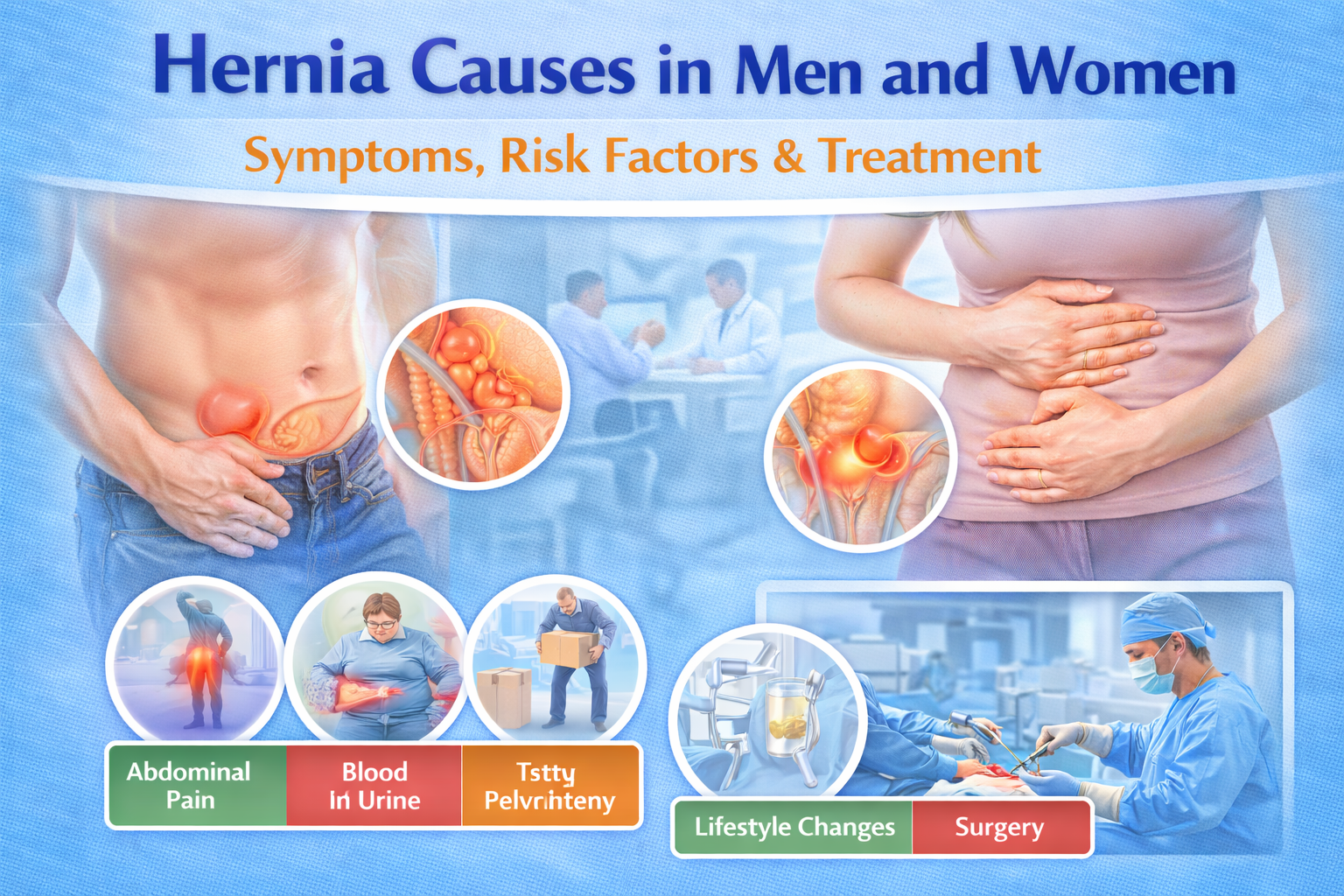
A hernia is a common medical condition that occurs when an internal organ or tissue pushes through a weak spot in the surrounding muscle or connective tissue. While hernias can affect anyone, understanding hernia causes in men and women helps in early detection and timely treatment.
This guide covers hernia symptoms, risk factors, and treatment options, helping you make informed decisions about your health.
What Is a Hernia?
A hernia develops when there is a weakness in the muscle wall, allowing internal tissues—often part of the intestine—to protrude outward. It may appear as a visible bulge, especially when coughing, bending, or lifting heavy objects.
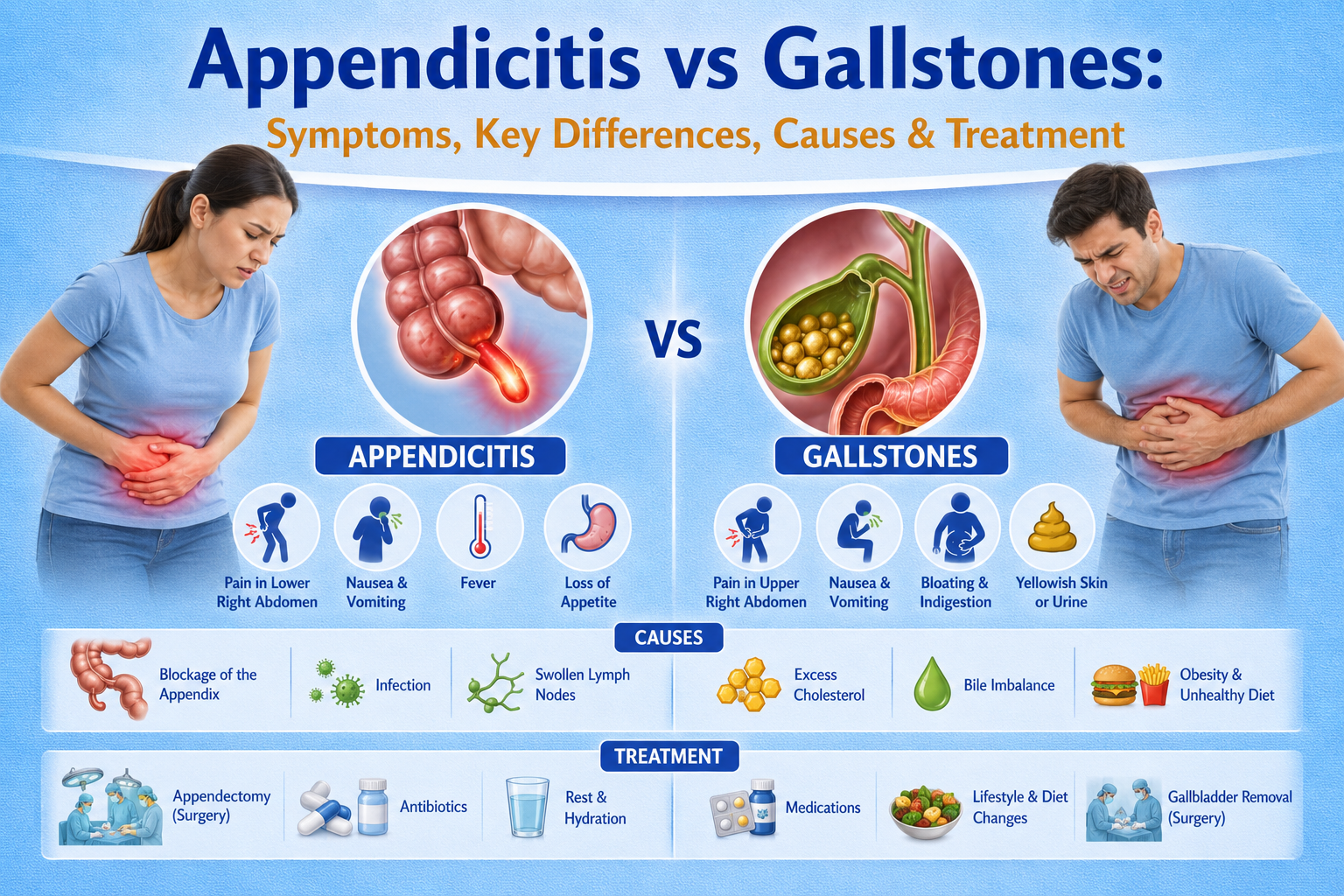
Hernias can occur in different parts of the body, most commonly in the abdomen and groin. In some cases, symptoms may overlap with other abdominal conditions such as gallstones and digestive disorders, making accurate diagnosis important.
Hernia Causes in Men and Women
Understanding hernia causes is key to prevention and early diagnosis.
1. Muscle Weakness
Some individuals are born with weak abdominal muscles.
2. Increased Abdominal Pressure
Activities that increase pressure include:
- Heavy lifting
- Chronic coughing
- Constipation
- Obesity
3. Aging
Muscle strength decreases over time.
4. Pregnancy
In women, pregnancy increases abdominal pressure.
5. Previous Surgery
Surgical scars may weaken muscles, leading to hernia.
6. Lifestyle Factors
Smoking and poor nutrition contribute to muscle weakness.
Hernia Symptoms: Early Signs You Should Not Ignore
Recognizing hernia symptoms early can prevent complications.
Common Symptoms
- Visible bulge
- Pain during activity
- Burning sensation
- Heaviness
Severe Symptoms
- Sudden intense pain
- Vomiting
- Swelling or redness
These may indicate a serious condition requiring urgent care.
Types of Hernia (Common in Men and Women)
1. Inguinal Hernia
Most common, especially in men.
2. Umbilical Hernia
Occurs near the belly button.
3. Incisional Hernia
Develops after surgery.
4. Hiatal Hernia
Affects the upper stomach.
5. Femoral Hernia
More common in women.
Hernia in Men vs Women: Key Differences
Hernia in Men
- More common
- Typically inguinal
- Linked to physical strain
Hernia in Women
- Less common but complex
- Higher risk of femoral hernia
- Pregnancy-related risk
Risk Factors for Hernia
- Chronic cough
- Obesity
- Heavy lifting
- Constipation
- Family history
Proper lifestyle management can reduce risk.
When Is Hernia Surgery Required?
Many patients ask: “When is hernia surgery required?”
Surgery is needed when:
- Pain increases
- Hernia grows
- Daily life is affected
Modern treatment often involves laparoscopic hernia surgery, which offers faster recovery and minimal discomfort.
Hernia Treatment Options
1. Lifestyle Changes
- Weight management
- Avoid heavy lifting
- Treat underlying conditions
2. Surgical Treatment
Open Surgery
Traditional approach with longer recovery.
Laparoscopic Surgery
Minimally invasive method with better outcomes.
Advanced procedures like hernia repair are similar to other laparoscopic surgery procedures, which focus on precision and faster healing.
For safe and advanced surgical care, choosing the beat multispeciality hospital in Hassan ensures access to experienced specialists and modern infrastructure.
Recovery After Hernia Surgery
After Laparoscopic Surgery
- Recovery in 1–2 weeks
- Minimal pain
After Open Surgery
- Longer recovery time
- More rest required
Care Tips
- Avoid strain
- Follow medical advice
- Maintain healthy diet
Can Hernia Be Prevented?
Prevention Tips
- Maintain healthy weight
- Exercise regularly
- Avoid lifting heavy objects incorrectly
- Eat fiber-rich foods
Preventive care reduces recurrence and complications.
Complications of Untreated Hernia
Ignoring a hernia can lead to:
- Strangulation
- Intestinal blockage
- Severe pain
These conditions require emergency treatment.
When Should You See a Doctor?
Consult a doctor if you notice:
- A visible bulge
- Persistent pain
- Sudden worsening symptoms
Early diagnosis prevents complications and ensures effective treatment.
Conclusion
Understanding hernia causes in men and women helps in early detection and proper treatment. While hernias are common, they should not be ignored, as they can lead to serious complications.
With advancements in laparoscopic hernia surgery, treatment is now safer, less painful, and allows faster recovery.
At Karna Hospital, advanced surgical procedures are performed using state-of-the-art modular OT setups, ensuring precision, safety, and high-quality patient care.
Contact Karna Hospital
For consultation or emergency support:
📞 Mobile: +91 63603 22779
📍 Address: Shankar Mutt Road, KR Puram, Hassan – 573201
🌐 Website:https://karnahospital.in/