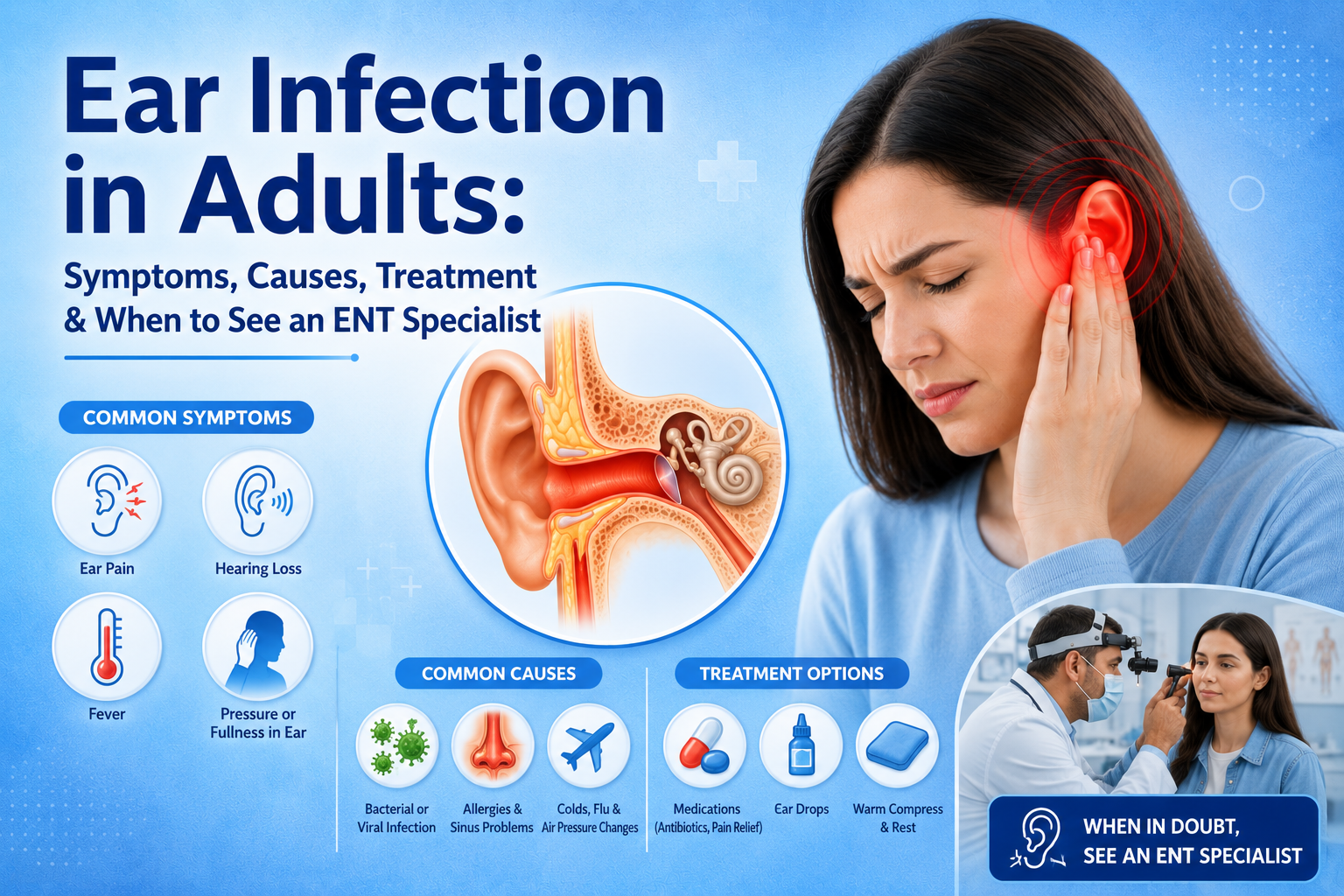
Ear infections are often associated with children, but they can also affect adults. An ear infection in adults can cause significant pain, hearing difficulties, dizziness, and discomfort that interfere with daily life. While some mild infections resolve with appropriate care, others require prompt medical attention to prevent complications such as hearing loss or the spread of infection.
Adults may develop ear infections due to bacterial or viral infections, allergies, sinus infections, or excessive moisture in the ear. Early diagnosis and timely treatment are essential to relieve symptoms and protect hearing.
This guide explains everything you need to know about ear infection in adults, including symptoms, causes, diagnosis, treatment options, prevention tips, and when to consult an ENT specialist in Hassan.
What Is an Ear Infection in Adults?
An ear infection occurs when bacteria, viruses, or fungi infect different parts of the ear, leading to inflammation, fluid buildup, and pain.
Unlike children, adults are less likely to develop ear infections, but when they do occur, they may be associated with underlying conditions such as sinus infections, allergies, or chronic ear problems.
The infection may affect:
- The outer ear
- The middle ear
- The inner ear
Each type has different causes, symptoms, and treatment approaches.
Types of Ear Infections
Understanding the type of infection helps determine the most effective treatment.
1. Outer Ear Infection (Otitis Externa)
Also known as swimmer’s ear, this infection affects the ear canal.
Common Causes
- Water trapped in the ear
- Excessive ear cleaning
- Skin injuries
- Bacterial or fungal infections
Symptoms
- Ear pain
- Itching
- Swelling
- Ear discharge
- Pain when touching the ear
2. Middle Ear Infection (Otitis Media)
A middle ear infection occurs behind the eardrum and is usually caused by bacteria or viruses following a cold or sinus infection.
Symptoms
- Severe ear pain
- Fever
- Temporary hearing loss
- Feeling of fullness in the ear
- Fluid drainage
Many middle ear infections begin after upper respiratory infections.
If you frequently experience nasal congestion or sinus problems, read our guide on sinus infection symptoms to understand how sinus infections can contribute to ear problems.
3. Inner Ear Infection (Labyrinthitis)
This condition affects the inner ear and may interfere with balance.
Symptoms
- Vertigo
- Dizziness
- Nausea
- Hearing changes
- Balance problems
Symptoms of Ear Infection in Adults
The symptoms vary depending on the location and severity of the infection.
Common Ear Infection Symptoms in Adults
Ear Pain
Persistent or severe ear pain is one of the most common symptoms.
Hearing Difficulty
Fluid buildup may temporarily reduce hearing ability.
Ear Fullness
Many patients describe a blocked or clogged sensation.
Ear Discharge
Fluid, pus, or blood may drain from the affected ear.
Fever
Some infections may cause fever, particularly middle ear infections.
Dizziness
Inner ear infections can affect balance and coordination.
Ringing in the Ear (Tinnitus)
Some adults experience ringing or buzzing sounds.
What Causes Ear Infection in Adults?
Several factors can increase the risk of developing an ear infection.
Common Causes
Bacterial Infections
Bacteria are responsible for many middle and outer ear infections.
Viral Infections
Colds and influenza may lead to ear infections.
Sinus Infections
Blocked sinuses can interfere with the normal drainage of the Eustachian tube, increasing the risk of infection.
Allergies
Allergic reactions may cause swelling that blocks normal ear drainage.
Excess Moisture
Water remaining inside the ear after swimming or bathing can encourage bacterial growth.
Smoking
Smoking and secondhand smoke increase the likelihood of ear infections by irritating the respiratory tract and Eustachian tubes.
Who Is at Higher Risk?
Some adults are more likely to develop ear infections.
Risk factors include:
- Chronic sinusitis
- Seasonal allergies
- Diabetes
- Smoking
- Frequent swimming
- Weak immune system
- Previous ear surgery
How Is an Ear Infection Diagnosed?
Early diagnosis helps prevent complications.
An ENT specialist may perform:
Medical History
Your doctor will ask about symptoms and previous ear problems.
Physical Examination
An otoscope is used to examine the ear canal and eardrum.
Hearing Test
If hearing loss is present, additional hearing assessments may be recommended.
Imaging Tests
CT or MRI scans may be required for severe or recurrent infections.
Ear Infection Treatment
Treatment depends on the type and severity of the infection.
Medications
Doctors may prescribe:
- Antibiotics for bacterial infections
- Antifungal medication for fungal infections
- Pain relievers
- Anti-inflammatory medications
Patients should complete the full course of prescribed medication even if symptoms improve.
Ear Drops
Medicated ear drops are commonly used for outer ear infections.
Drainage Procedures
If fluid persists behind the eardrum, minor procedures may be recommended to relieve pressure.
Surgery
Although uncommon, surgery may be necessary for chronic infections or complications.
In selected cases, ENT surgeons may recommend procedures to improve drainage or treat underlying sinus disease.
Learn when endoscopic sinus surgery may be recommended for chronic sinus conditions contributing to recurrent ear infections.
Can an Ear Infection Heal Without Antibiotics?
Some viral ear infections improve with:
- Rest
- Hydration
- Pain management
- Observation
However, bacterial infections often require antibiotics.
Self-medicating without professional advice is not recommended.
Possible Complications of Untreated Ear Infections
Ignoring symptoms may lead to serious complications.
Hearing Loss
Temporary hearing loss is common, but untreated infections may occasionally cause permanent damage.
Ruptured Eardrum
Pressure from infection may cause the eardrum to tear.
Chronic Ear Infection
Repeated infections may become difficult to treat.
Spread of Infection
In rare cases, infection may spread to nearby structures.
Prompt medical attention significantly reduces these risks.
How to Prevent Ear Infections
Simple preventive measures can reduce your risk.
Prevention Tips
Keep Ears Dry
Dry your ears thoroughly after swimming or bathing.
Avoid Inserting Objects
Do not use cotton buds or sharp objects inside the ear canal.
Manage Allergies and Sinus Problems
Treating underlying allergies and sinus infections reduces ear infection risk.
Quit Smoking
Smoking damages the respiratory tract and increases susceptibility to infections.
Maintain Good Hygiene
Frequent handwashing helps prevent viral infections that may lead to ear problems.
When Should You See an ENT Specialist?
Consult an ENT specialist in Hassan if you experience:
- Severe ear pain
- Hearing loss
- Ear discharge
- Fever
- Dizziness
- Symptoms lasting longer than two days
- Recurrent ear infections
Early diagnosis prevents long-term complications and ensures appropriate treatment.
Book a consultation with an experienced ENT specialist in Hassan for expert evaluation and personalized treatment.
Why Choose Karna Hospital for Ear Infection Treatment?
At the best multispeciality hospital in Hassan, patients receive comprehensive ENT care using modern diagnostic and treatment techniques.
Why Choose Karna Hospital?
- Experienced ENT specialists
- Advanced diagnostic equipment
- Personalized treatment plans
- Medical and surgical ENT care
- Comprehensive hearing evaluations
- Multidisciplinary healthcare support
Whether you’re experiencing an acute ear infection or recurrent ENT problems, Karna Hospital provides expert care focused on long-term ear health and hearing preservation.
Conclusion
An ear infection in adults should never be ignored. While many infections respond well to medication, delayed treatment can increase the risk of hearing loss, chronic infections, and other complications.
Recognizing symptoms early, seeking timely medical attention, and following the recommended treatment plan are essential for a full recovery.
If you experience persistent ear pain, hearing changes, or recurring infections, consult an experienced ENT specialist for accurate diagnosis and effective treatment.
Frequently Asked Questions (FAQ)
What are the symptoms of an ear infection in adults?
Common symptoms include ear pain, hearing loss, ear fullness, discharge, dizziness, fever, and ringing in the ears.
Can an ear infection go away on its own?
Some viral ear infections may resolve without antibiotics, but bacterial infections often require medical treatment.
How long does an ear infection last in adults?
Most uncomplicated ear infections improve within 7–10 days with appropriate treatment.
When should I see an ENT specialist?
Seek medical attention if symptoms are severe, persist beyond two days, or are accompanied by hearing loss, fever, or ear discharge.
Can ear infections affect hearing?
Yes. Ear infections can cause temporary hearing loss, and untreated infections may lead to permanent hearing damage in rare cases.