Many people experience pain, bleeding, or discomfort during bowel movements but are often unsure whether the problem is piles, an anal fissure, or an anal fistula. Although these conditions affect the anal region and may share similar symptoms, they are entirely different disorders with distinct causes, treatments, and potential complications.
Understanding the difference between piles, fissure, and fistula is essential because early diagnosis can prevent complications and improve treatment outcomes. While piles and fissures may often respond to lifestyle changes or medications, fistulas usually require surgical intervention.
In this guide, we’ll explain piles vs fissure vs fistula, their symptoms, causes, diagnosis, treatment options, and when you should consult a doctor.
What Are Piles?
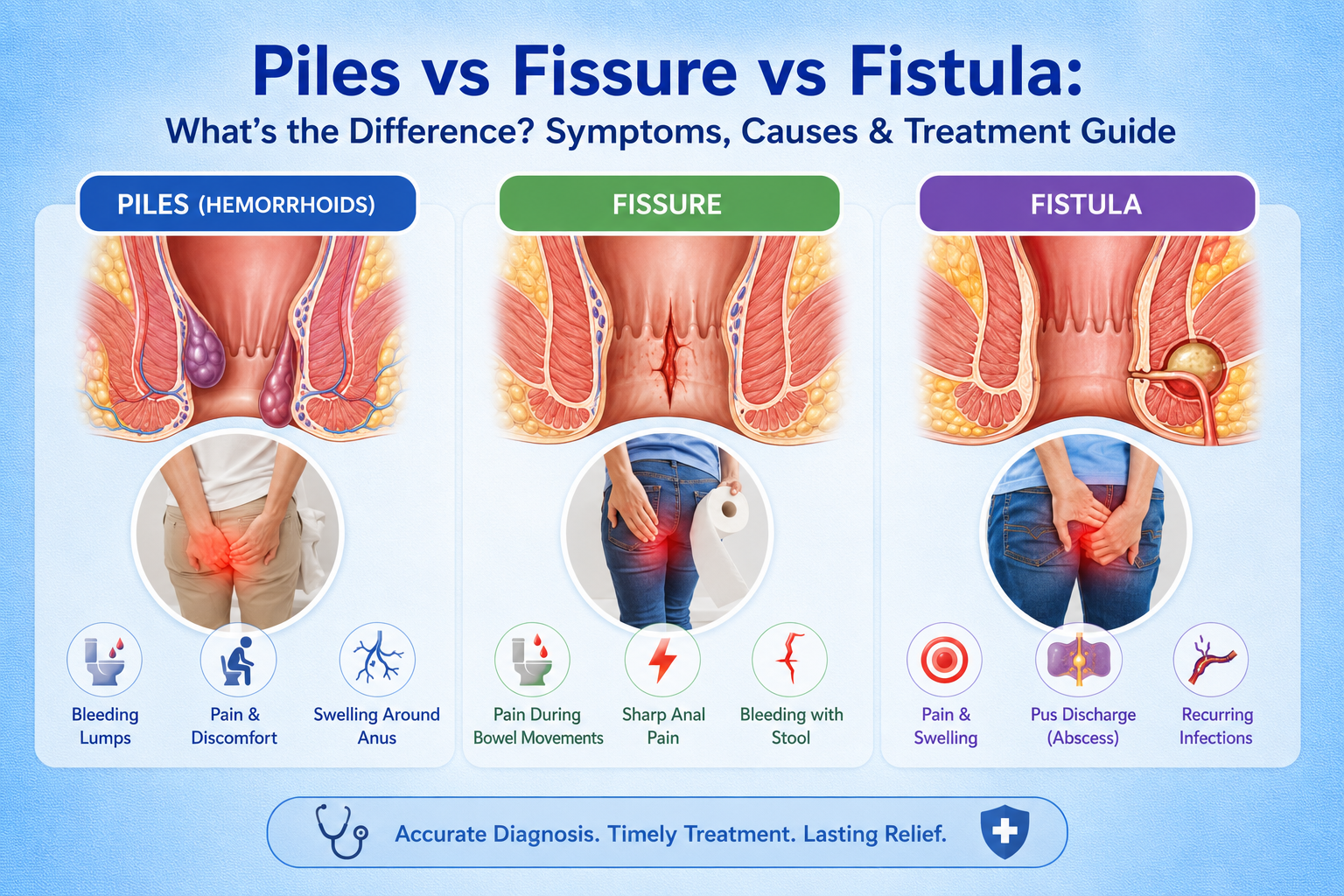
Piles, also called hemorrhoids, are swollen and enlarged veins in the lower rectum or anus. They develop due to increased pressure in the anal region and are one of the most common anorectal conditions.
Piles can be:
- Internal Piles: Located inside the rectum and often painless.
- External Piles: Develop under the skin around the anus and can cause pain, itching, and swelling.
Common Symptoms of Piles
- Bright red bleeding during bowel movements
- Itching around the anus
- Pain while sitting
- Swelling near the anal opening
- A lump around the anus
- Mucus discharge in some cases
What Is an Anal Fissure?
An anal fissure is a small tear or cut in the lining of the anal canal. It usually develops due to trauma caused by passing hard stools or repeated constipation.
Unlike piles, fissures are generally associated with intense pain during bowel movements.
Symptoms of Anal Fissure
- Sharp pain during and after passing stools
- Burning sensation around the anus
- Bright red blood on toilet paper
- Visible crack near the anal opening
- Muscle spasms in the anal region
Acute fissures often heal with conservative treatment, while chronic fissures may require surgical intervention.
What Is an Anal Fistula?
An anal fistula is an abnormal tunnel that develops between the anal canal and the skin surrounding the anus. It usually forms after an anal abscess becomes infected.
Unlike piles and fissures, fistulas rarely heal without surgery.
Symptoms of Anal Fistula
- Persistent pain around the anus
- Swelling and redness
- Pus or foul-smelling discharge
- Recurrent anal abscesses
- Fever (in severe infections)
- Pain while sitting or walking
Because fistulas involve infection, prompt medical treatment is important.
Piles vs Fissure vs Fistula: Key Differences
Although these conditions affect the same area, their causes and treatments are very different.
| Feature | Piles | Anal Fissure | Anal Fistula |
| Cause | Swollen veins | Tear in anal lining | Infection leading to a tunnel |
| Pain | Mild to moderate | Severe during bowel movements | Persistent, throbbing pain |
| Bleeding | Common | Common | Less common |
| Discharge | Rare | No | Pus or foul-smelling discharge |
| Swelling | Yes | Minimal | Common |
| Infection | Rare | Rare | Common |
| Treatment | Medicines, lifestyle changes, surgery if needed | Medicines or surgery | Usually surgery |
This comparison helps patients identify symptoms but should not replace a professional medical evaluation.
Causes of Piles, Fissure, and Fistula
Although different conditions, they share some common risk factors.
Causes of Piles
- Chronic constipation
- Straining during bowel movements
- Pregnancy
- Obesity
- Prolonged sitting
- Low-fiber diet
Causes of Anal Fissure
- Passing hard stools
- Chronic constipation
- Severe diarrhea
- Childbirth
- Repeated trauma to the anal canal
Causes of Anal Fistula
- Anal abscess
- Bacterial infections
- Crohn’s disease
- Tuberculosis (rare cases)
- Previous anal surgery
How Are These Conditions Diagnosed?
Doctors diagnose anorectal conditions through a combination of medical history, physical examination, and specialized investigations when necessary.
Diagnostic Methods
- Physical examination
- Digital rectal examination
- Proctoscopy
- Anoscopy
- Colonoscopy (if required)
- MRI or ultrasound for complex fistulas
Early diagnosis helps prevent complications and ensures appropriate treatment.
Treatment Options for Piles, Fissure, and Fistula
Treatment depends on the underlying condition and its severity.
Piles Treatment
Mild piles often improve with:
- High-fiber diet
- Increased water intake
- Stool softeners
- Sitz baths
- Medications
Advanced cases may require:
- Rubber band ligation
- Laser treatment
- Stapled hemorrhoidectomy
- Surgical hemorrhoidectomy
Anal Fissure Treatment
Most acute fissures heal without surgery.
Treatment may include:
- Fiber-rich diet
- Stool softeners
- Topical medications
- Warm sitz baths
Chronic fissures that fail to heal may require lateral internal sphincterotomy, a minor surgical procedure.
Anal Fistula Treatment
Unlike piles and fissures, fistulas usually require surgery because they rarely heal on their own.
Common surgical procedures include:
- Fistulotomy
- Seton placement
- Advancement flap surgery
- LIFT procedure
- Laser fistula treatment (selected cases)
Early treatment helps prevent recurrent infections and complications.
Can Piles Turn Into a Fistula?
This is one of the most frequently asked questions.
No. Piles do not turn into fistulas.
Although both conditions affect the anal region, they develop through completely different mechanisms.
However, patients may occasionally have more than one anorectal condition at the same time, making professional diagnosis essential.
When Should You See a Doctor?
Do not ignore persistent anal pain or rectal bleeding.
Seek medical attention if you experience:
- Rectal bleeding
- Severe pain during bowel movements
- Persistent itching
- Swelling around the anus
- Pus discharge
- Fever with anal swelling
- Symptoms lasting more than one week
Early treatment usually leads to faster recovery and better outcomes.
Can These Conditions Be Prevented?
While prevention is not always possible, healthy lifestyle habits can significantly reduce the risk.
Prevention Tips
- Eat a high-fiber diet
- Drink plenty of water
- Avoid prolonged sitting
- Exercise regularly
- Avoid excessive straining during bowel movements
- Treat constipation early
- Maintain good anal hygiene
These habits support long-term digestive and colorectal health.
Why Choose Karna Hospital for General Surgical Care?
At the best multispeciality hospital in Hassan, patients receive expert diagnosis and treatment for a wide range of anorectal and gastrointestinal conditions.
Why Patients Trust Karna Hospital
- Experienced general surgeons
- Advanced diagnostic facilities
- Modern minimally invasive surgical techniques
- Personalized treatment plans
- Comprehensive postoperative care
- Multispecialty support under one roof
Whether you need medical management for piles or surgery for an anal fistula, timely care from experienced specialists can improve recovery and reduce complications.
Related Surgical Conditions
Many patients with anorectal disorders may also require evaluation for other surgical conditions.
Learn more about common surgical conditions and treatments to understand when surgery may be recommended.
Patients considering minimally invasive procedures can also explore the benefits of advanced minimally invasive surgery for faster recovery and reduced postoperative discomfort.
If you’re experiencing digestive symptoms related to the gallbladder, read our guide on conditions that may require surgery to learn about gallstone treatment options.
Conclusion
Understanding the difference between piles, fissure, and fistula is essential for receiving the right treatment at the right time. While these conditions share some symptoms, their causes, severity, and management differ significantly.
Persistent pain, rectal bleeding, swelling, or discharge should never be ignored. Early consultation with an experienced surgeon can help prevent complications and ensure effective treatment.
If you are experiencing symptoms suggestive of piles, fissure, or fistula, seek medical advice promptly to receive an accurate diagnosis and personalized treatment plan.
Frequently Asked Questions (FAQ)
What is the difference between piles, fissure, and fistula?
Piles are swollen veins, fissures are tears in the anal lining, and fistulas are abnormal tunnels caused by infection. Although they affect the same region, they have different causes and treatments.
Which is more painful: piles or fissure?
Anal fissures often cause more severe pain during bowel movements, whereas piles usually cause discomfort, itching, and bleeding.
Can piles become a fistula?
No. Piles and fistulas are separate conditions with different causes.
Does an anal fistula always require surgery?
In most cases, yes. Anal fistulas rarely heal on their own and generally require surgical treatment to prevent recurrent infections.
When should I consult a doctor for rectal bleeding?
Seek medical evaluation if bleeding is persistent, associated with severe pain, swelling, discharge, or changes in bowel habits.