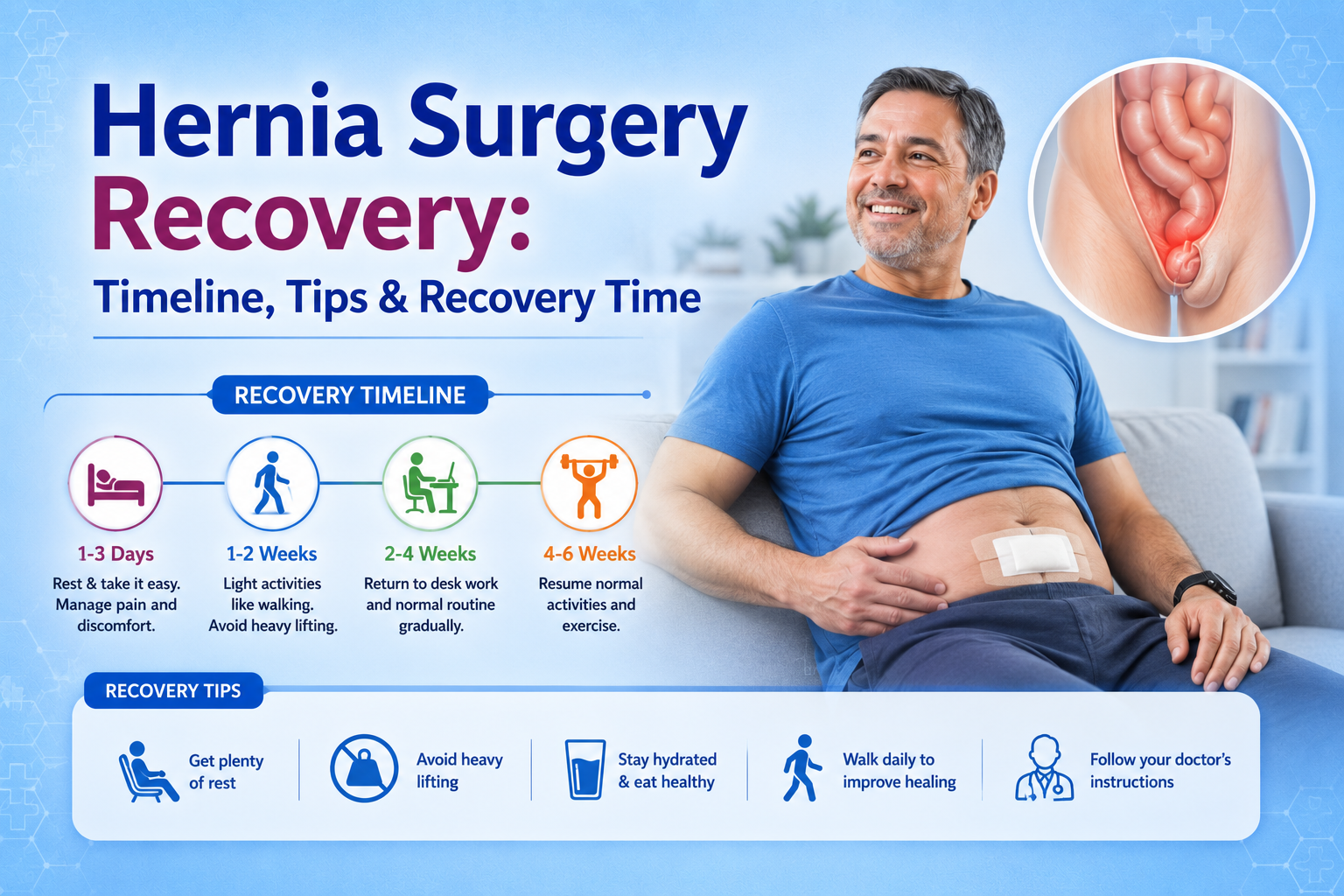
Hernia surgery is one of the most commonly performed general surgical procedures worldwide. Whether you undergo laparoscopic hernia surgery or open hernia surgery, understanding the hernia surgery recovery process can help you prepare physically and mentally for a smoother recovery.
One of the most common questions patients ask is, “How long does hernia surgery recovery take?” The answer depends on several factors, including the type of hernia, the surgical technique used, your overall health, and how closely you follow your surgeon’s postoperative instructions.
This guide explains the hernia surgery recovery timeline, factors affecting healing, recovery tips, activity restrictions, warning signs, and when you can safely return to work and exercise.
What Is Hernia Surgery?
A hernia occurs when an internal organ or tissue pushes through a weak area in the surrounding muscle or connective tissue. Surgery is the most effective treatment for repairing the weakness and preventing complications such as incarceration or strangulation.
The two most common surgical approaches are:
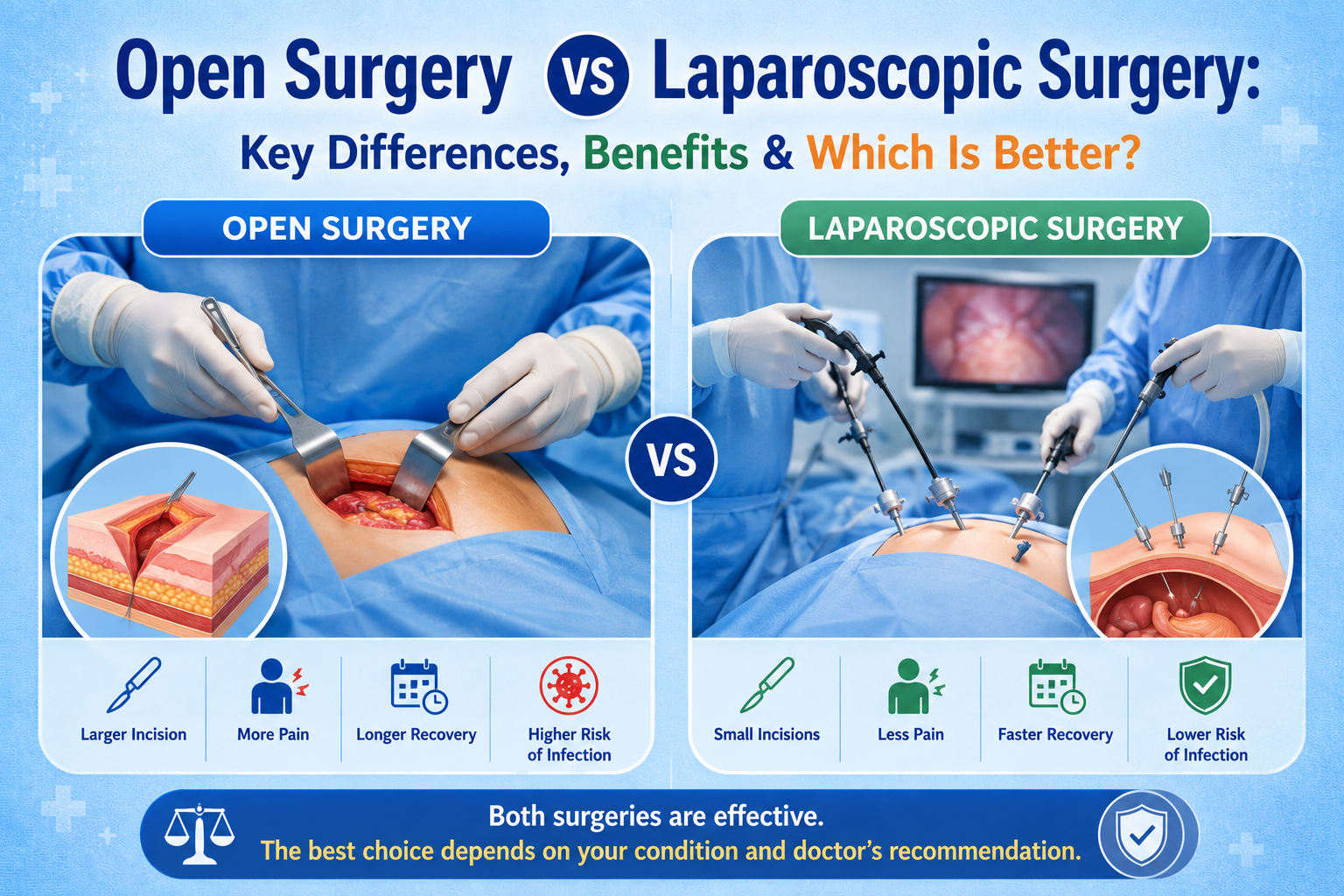
- Laparoscopic Hernia Surgery – A minimally invasive procedure performed through small incisions using a camera and specialized instruments.
- Open Hernia Surgery – A traditional procedure performed through a larger incision, often recommended for complex or large hernias.
Before considering surgery, understand the hernia causes, symptoms, and treatment options to know when medical attention is necessary.
How Long Does Hernia Surgery Recovery Take?
Recovery varies from one patient to another. Most people can resume light daily activities within a few days, while complete healing may take several weeks.
Typical Hernia Surgery Recovery Timeline
| Recovery Stage | What to Expect |
| Day 1–2 | Mild pain, swelling, walking encouraged |
| Week 1 | Light household activities, gradual improvement |
| Weeks 2–4 | Return to desk work (depending on your job) |
| Weeks 4–6 | Resume light exercise with medical approval |
| 6–8 Weeks | Most patients return to normal activities, including heavier physical work if cleared by their surgeon |
Factors Affecting Hernia Surgery Recovery
Several factors influence how quickly you heal after surgery.
1. Type of Hernia Surgery
Patients undergoing laparoscopic hernia surgery often experience:
- Smaller incisions
- Less pain
- Reduced blood loss
- Shorter hospital stay
- Faster return to daily activities
Open hernia surgery may require a slightly longer recovery, especially for large or complicated hernias.
2. Type and Size of Hernia
Recovery depends on whether the hernia is:
- Inguinal hernia
- Umbilical hernia
- Femoral hernia
- Incisional hernia
- Hiatal hernia
Larger or recurrent hernias may require more extensive repair and longer healing.
3. Overall Health
People with diabetes, obesity, smoking habits, or chronic illnesses may heal more slowly and have a higher risk of complications.
4. Following Postoperative Instructions
Patients who follow their surgeon’s advice regarding wound care, medications, lifting restrictions, and follow-up visits often recover more smoothly.
Recovery After Laparoscopic Hernia Surgery
Laparoscopic surgery has become the preferred treatment for many hernia cases because it is minimally invasive.
Benefits of Laparoscopic Hernia Surgery Recovery
- Less postoperative pain
- Smaller scars
- Reduced risk of infection
- Shorter hospital stay
- Faster return to work
- Quicker recovery
Modern laparoscopic and GI surgery in Hassan offers smaller incisions, reduced pain, and faster recovery compared to traditional open surgery.
Recovery After Open Hernia Surgery
Open surgery is still an effective option for many patients, particularly those with large, strangulated, or recurrent hernias.
Recovery may involve:
- Slightly more discomfort during the first week
- Longer activity restrictions
- Gradual return to normal routines
Your surgeon will provide personalized recovery instructions based on your condition.
What to Expect During Hernia Surgery Recovery
First 24 Hours
Most patients:
- Begin walking within a few hours
- Experience mild pain or discomfort
- Receive pain medication if needed
Walking early helps improve circulation and reduces the risk of blood clots.
First Week
During the first week:
- Mild swelling and bruising are normal.
- Keep the surgical site clean and dry.
- Avoid strenuous activity.
- Eat a balanced, fiber-rich diet to prevent constipation.
Weeks 2–4
Most patients notice significant improvement during this stage.
You may:
- Return to office-based work
- Drive if approved by your doctor
- Resume light household activities
Heavy lifting should still be avoided.
Weeks 4–8
By this stage:
- Pain has usually resolved.
- Surgical wounds are well healed.
- Light exercise can gradually resume.
Patients involved in physically demanding jobs may require additional recovery time.
When Can You Return to Work?
The timing depends on your occupation.
| Job Type | Estimated Return to Work |
| Desk Job | 1–2 weeks |
| Light Physical Work | 2–4 weeks |
| Heavy Manual Labor | 6–8 weeks (or as advised by your surgeon) |
Exercise After Hernia Surgery
Physical activity is important, but it should be introduced gradually.
Safe Activities
- Walking
- Gentle stretching
- Light household activities
Activities to Avoid
- Heavy lifting
- Weight training
- Running
- High-impact sports
- Intense abdominal exercises
Follow your surgeon’s recommendations regarding exercise progression.
Diet After Hernia Surgery
Nutrition plays an important role in healing.
Eat More Of:
- Fruits and vegetables
- Whole grains
- Lean proteins
- Plenty of water
Limit:
- Processed foods
- Fried foods
- Excess sugar
- Alcohol during early recovery
A high-fiber diet helps prevent constipation, reducing strain on the surgical repair.
Warning Signs During Recovery
While mild discomfort is expected, contact your doctor immediately if you experience:
- High fever
- Increasing redness around the wound
- Pus or foul-smelling discharge
- Persistent vomiting
- Severe abdominal pain
- Difficulty urinating
- Recurrence of the bulge
Early medical attention can prevent serious complications.
Tips for Faster Hernia Surgery Recovery
Following these practical tips can support healing:
- Walk regularly as advised.
- Avoid smoking and alcohol.
- Maintain a healthy diet.
- Take medications as prescribed.
- Attend all follow-up appointments.
- Avoid lifting heavy objects until cleared by your surgeon.
- Stay hydrated and manage constipation.
Recovery is usually smoother when patients actively participate in their postoperative care.
Can a Hernia Come Back After Surgery?
Although modern surgical techniques significantly reduce recurrence rates, a hernia can return if the repaired area is placed under excessive strain.
To reduce the risk of recurrence:
- Maintain a healthy weight.
- Avoid smoking.
- Strengthen core muscles after recovery.
- Use proper lifting techniques.
- Treat chronic cough or constipation promptly.
Understanding the different types of hernia surgery can help patients make informed treatment decisions and reduce the risk of recurrence.
Why Choose Expert Hernia Care?
Choosing an experienced surgical team can improve outcomes and shorten recovery.
If you are considering hernia surgery in Hassan, selecting a hospital with advanced laparoscopic facilities, experienced surgeons, and comprehensive postoperative care can make a significant difference in your recovery experience.
Why Choose Karna Hospital?
At the best multispeciality hospital in Hassan, patients receive comprehensive diagnosis, minimally invasive surgical treatment, and personalized postoperative care for all types of hernias.
Why Patients Trust Karna Hospital
- Experienced general surgeons
- Advanced laparoscopic surgery
- Modern operation theatres
- Personalized treatment plans
- Comprehensive recovery support
- Multidisciplinary care under one roof
The hospital is committed to helping patients recover safely and return to their normal lives as quickly as possible.
Conclusion
Hernia surgery recovery is generally straightforward when patients follow medical advice and allow their bodies adequate time to heal. Most people return to light activities within a few days, while complete recovery typically takes 4–8 weeks, depending on the procedure and individual health.
Early mobilization, proper nutrition, wound care, and regular follow-up appointments all contribute to a successful recovery. If you notice warning signs such as severe pain, fever, or wound infection, seek medical attention promptly.
Whether you need laparoscopic or open hernia repair, choosing experienced surgeons and a trusted healthcare facility can help ensure the best possible outcomes and a faster return to your daily routine.
Frequently Asked Questions (FAQ)
How long does hernia surgery recovery take?
Most patients recover sufficiently to resume normal daily activities within 4–8 weeks, although light activities usually begin within a few days.
Is laparoscopic hernia surgery recovery faster?
Yes. Laparoscopic hernia surgery generally involves smaller incisions, less pain, shorter hospital stays, and quicker recovery compared to open surgery.
When can I return to work after hernia surgery?
Desk jobs may be resumed within 1–2 weeks, while physically demanding work may require 6–8 weeks or longer, depending on your surgeon’s advice.
Can I walk after hernia surgery?
Yes. Walking is encouraged soon after surgery because it improves circulation and supports recovery.
What should I avoid after hernia surgery?
Avoid heavy lifting, strenuous exercise, smoking, and activities that strain the abdominal muscles until your surgeon confirms it is safe.