
How Long Does Tonsillectomy Recovery Take? Day-by-Day Healing Timeline & Tips
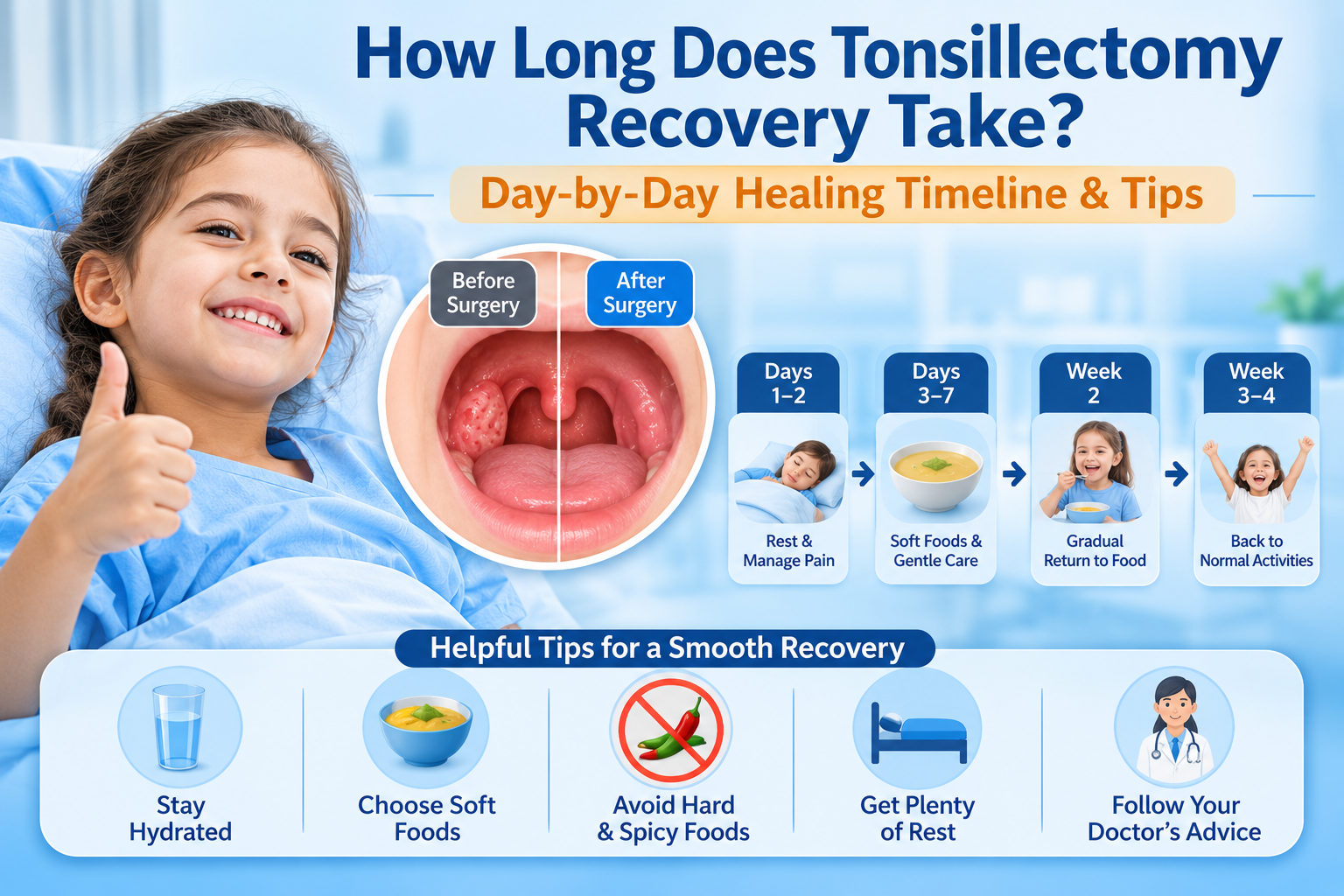
A tonsillectomy is a surgical procedure to remove the tonsils, usually recommended for people experiencing recurrent tonsillitis, enlarged tonsils or certain sleep-related breathing problems. Although the procedure is common, recovery can involve throat pain, difficulty swallowing and temporary changes in eating and sleeping.
Tonsillectomy recovery usually takes around 10–14 days, although the healing period can vary depending on age, general health and individual recovery. Pain may become worse around days 3–7 before gradually improving.
Understanding the tonsillectomy recovery time, expected healing stages, suitable foods and warning signs can help patients and caregivers prepare for a smoother recovery.
How Long Does Tonsillectomy Recovery Take?
Most patients need approximately two weeks to recover from tonsil removal surgery. During this period, the throat gradually heals, swallowing becomes easier and discomfort generally reduces.
Recovery may differ between adults and children. Adults can sometimes experience more intense or prolonged discomfort, while children may return to their usual activities at different rates.
Recovery Stage | What to Expect |
Days 1–2 | Throat pain, tiredness and difficulty swallowing |
Days 3–5 | Pain may increase; ear pain can also occur |
Days 6–7 | Pain may continue, with gradual changes in healing |
Days 8–10 | Scabs begin to separate; discomfort may fluctuate |
Days 11–14 | Pain generally improves and normal activities gradually resume |
This is a general guide, not a guaranteed recovery schedule. Always follow the instructions provided by your ENT surgeon.
Tonsillectomy Recovery Day by Day
Day 1–2: Initial Healing
During the first two days after tonsil surgery, patients commonly experience:
Sore throat and discomfort while swallowing
Mild swelling around the throat
Tiredness following general anaesthesia
Reduced appetite
Pain that may extend towards the ears
Rest is important during this stage. Drink fluids regularly and follow the prescribed pain-relief schedule. Start eating and drinking according to your surgeon's instructions.
Day 3–5: Pain May Increase
Many patients expect their pain to improve immediately after surgery. However, tonsillectomy pain can become more noticeable around days 3–5.
Common symptoms include:
Increased throat pain
Earache or referred ear pain
Difficulty swallowing food
Bad breath
White or yellowish patches at the back of the throat
White patches are generally part of the normal healing process and do not necessarily indicate an infection.
Continue taking prescribed medication as directed and maintain adequate fluid intake.
Day 6–7: Continued Healing
During the first week, discomfort may fluctuate. Some patients begin feeling better, while others continue experiencing significant throat pain.
You may notice:
Persistent soreness while swallowing
Ear discomfort
Changes in appetite
White or grey areas around the surgical site
Temporary bad breath
Continue following your surgeon's instructions about food, hydration, medication and activity.
Day 8–10: Scab Formation and Healing
As the surgical area heals, scabs or healing tissue may begin to separate.
Some patients notice changes in throat discomfort during this stage. However, the risk of postoperative bleeding remains important, particularly when the healing tissue separates.
Do not attempt to remove or scrape white patches or scabs. Seek urgent medical attention if you notice fresh bleeding.
Day 11–14: Recovery Progress
By the second week, many patients experience noticeable improvement in throat pain and swallowing.
You may gradually return to normal activities when your surgeon confirms it is appropriate. Avoid strenuous exercise, heavy lifting and contact sports until you have completed the recommended recovery period.
Some patients may need additional time to feel completely comfortable.
What Are the Common Symptoms After Tonsillectomy?
Experiencing some discomfort after tonsil removal is expected. Common symptoms include:
Throat pain: Discomfort can last for approximately 10–14 days.
Ear pain: Pain may be felt in the ears because of shared nerve pathways.
Difficulty swallowing: Swallowing food and liquids may be uncomfortable.
White patches: These commonly appear at the surgical site during healing.
Bad breath: Temporary unpleasant breath can occur during recovery.
Mild temperature changes: Follow your surgeon's advice about fever and when to seek assessment.
However, fresh bleeding, breathing difficulty or signs of significant dehydration should never be ignored.
What Foods Should You Eat After Tonsillectomy?
Your diet plays an important role in maintaining hydration and supporting recovery.
Depending on your surgeon's instructions, suitable foods may include:
Curd and yoghurt
Soft rice or porridge
Mashed potatoes
Scrambled eggs
Custard and pudding
Soft-cooked vegetables
Cool, non-acidic drinks
Soups served at a comfortable temperature
Drink water regularly throughout the day. If swallowing is painful, try small, frequent sips.
Foods to Avoid After Tonsil Removal
Some foods can irritate the healing throat. Depending on your surgeon's advice, avoid:
Very spicy foods
Extremely hot foods and drinks
Chips and crunchy snacks
Hard toast and crackers
Foods with sharp edges
Acidic foods and drinks if they cause discomfort
Diet instructions can vary between hospitals and surgical techniques. Follow the specific dietary advice given by your treating surgeon rather than relying on a general food list.
Tonsillectomy Recovery in Adults vs Children
Recovery can differ depending on the patient's age.
Adults: Adult tonsillectomy recovery may involve significant throat pain, earache and difficulty swallowing. Some adults need the full two weeks or longer before returning comfortably to their usual routine.
Children: Children also experience throat pain and swallowing difficulties. Parents should monitor fluid intake, urination, medication schedules and general behaviour. The return-to-school timeline should follow the surgeon's recommendations.
Both adults and children need appropriate pain management, hydration and monitoring for postoperative complications.
Tips to Recover Faster After Tonsillectomy
Although healing takes time, following appropriate aftercare instructions can make recovery more manageable.
Stay hydrated: Drink fluids regularly to reduce the risk of dehydration.
Follow prescribed medication: Take pain relief exactly as instructed by your surgeon.
Eat as advised: Follow the recommended diet and gradually resume foods as directed.
Get enough rest: Avoid overexertion during the initial recovery period.
Avoid strenuous activities: Do not resume gym workouts, heavy lifting or contact sports until cleared.
Maintain oral hygiene: Brush your teeth gently and follow your surgeon's instructions for mouth care.
Attend follow-up appointments: Report persistent pain, fever or other concerning symptoms.
Do not take additional medicines or change prescribed doses without consulting your healthcare professional.
When Should You Contact a Doctor After Tonsillectomy?
Some discomfort is expected, but certain symptoms require urgent medical attention.
Contact your surgeon or seek emergency care if you experience:
Fresh red blood from the mouth or throat
Coughing up or vomiting blood
Difficulty breathing
Inability to drink enough fluids
Signs of dehydration, such as very little urine, dizziness or a dry mouth
Persistent or high fever
Severe pain that is not controlled with prescribed medication
Important: Any fresh bleeding after tonsillectomy should be treated as an emergency. Do not wait for it to stop on its own.
When Can You Return to Work, School or Normal Activities?
Most patients are advised to take around 10–14 days away from work or school after tonsillectomy.
The exact timeline depends on recovery progress, the patient's age, the nature of their work and the surgeon's advice.
Avoid strenuous exercise and contact sports during the recommended recovery period, even if you start feeling better earlier.
Tonsillectomy and ENT Care in Hassan
If you or your child experiences recurrent tonsillitis, enlarged tonsils, difficulty swallowing or sleep-related breathing problems, an ENT evaluation can help determine whether tonsillectomy is appropriate.
Patients looking for an ENT specialist in Hassan can consult Karna Hospital for evaluation of ear, nose and throat concerns.
You can also learn more about related conditions, including ear infection in adults and sinusitis treatment.
Conclusion
Tonsillectomy recovery usually takes around 10–14 days, with throat pain often becoming more noticeable during the first week before gradually improving. Following your surgeon's instructions, maintaining hydration, eating appropriately and getting enough rest can help support healing.
Whether you are an adult or caring for a child after tonsil removal, monitor symptoms carefully and seek urgent medical attention for fresh bleeding or breathing difficulties.
For persistent tonsil problems or concerns about recovery, consult an ENT specialist for appropriate evaluation and guidance.
Disclaimer: This article is for general educational purposes only. Recovery experiences and aftercare instructions vary. Always follow the advice of your treating ENT surgeon.
Frequently Asked Questions
1. How long does tonsillectomy recovery take?
Tonsillectomy recovery generally takes around 10–14 days. Some patients, particularly adults, may need additional time depending on their healing progress.
2. Which days are the most painful after tonsillectomy?
Pain commonly becomes worse around days 3–7 after surgery. It may gradually improve during the second week.
3. When do scabs fall off after tonsillectomy?
Healing tissue and scabs may begin separating during the first and second weeks. This process varies between patients and can be associated with an increased risk of bleeding.
4. What foods can I eat after tonsil removal?
Depending on your surgeon's instructions, you may be advised to eat foods that are easy to swallow, such as yoghurt, porridge, mashed potatoes and soft-cooked foods. Maintain adequate fluid intake.
5. Is ear pain normal after tonsillectomy?
Yes. Ear pain can occur after tonsil removal because of shared nerve pathways between the throat and ears. However, severe or worsening pain should be discussed with your surgeon.
6. When can I return to work after tonsillectomy?
Many patients need approximately 10–14 days away from work. Your return should depend on your recovery and your surgeon's advice.
7. Is white coating in the throat normal after tonsil surgery?
Yes. White or yellowish patches commonly appear where the tonsils were removed and are generally part of normal healing. Do not scrape or remove them.
8. Is bleeding normal after tonsillectomy?
Fresh bleeding is not considered a normal part of recovery and requires immediate medical assessment. Go to the nearest emergency department if you notice fresh blood.