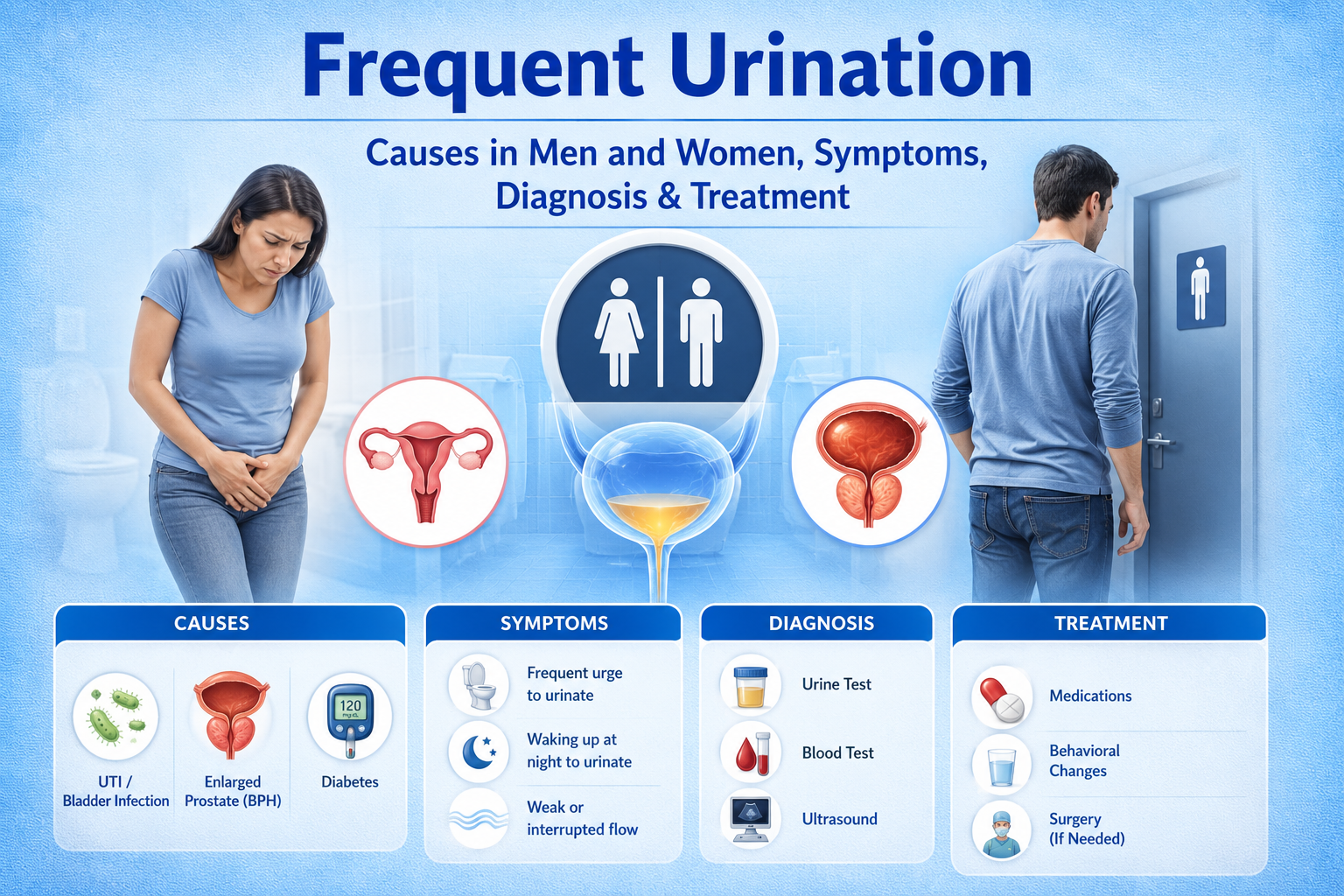
Frequent urination is a common health concern that affects people of all ages. While occasional increases in urination may be related to fluid intake, caffeine consumption, or certain medications, persistent urinary frequency can sometimes indicate an underlying medical condition that requires attention.
Many people wonder, “Why am I urinating so often?” The answer can vary depending on age, gender, lifestyle habits, and overall health. Conditions such as urinary tract infections (UTIs), diabetes, overactive bladder, pregnancy, and prostate enlargement are among the most common causes of frequent urination. Understanding the causes of frequent urination can help identify when symptoms are harmless and when consultation with a specialist at a urology hospital in Hassan is necessary.
What Is Frequent Urination?
Frequent urination refers to the need to urinate more often than usual. Most adults typically urinate between 6 and 8 times per day, although this can vary based on fluid intake and individual health factors.
Frequent urination may involve:
- Needing to urinate multiple times during the day
- Waking up several times at night to urinate (nocturia)
- Feeling a constant urge to urinate
- Passing small amounts of urine frequently
- Sudden urgency to reach a restroom
While frequent urination itself is not a disease, it is often a symptom of an underlying condition.
Common Causes of Frequent Urination
Several medical and lifestyle factors can contribute to urinary frequency.
1. Urinary Tract Infections (UTIs)
A urinary tract infection is one of the most common causes of frequent urination, particularly in women.
UTIs occur when bacteria enter the urinary tract and cause infection.
Common symptoms include:
- Frequent urge to urinate
- Burning sensation while urinating
- Cloudy urine
- Pelvic discomfort
- Lower abdominal pain
Prompt treatment can help prevent complications and relieve symptoms quickly.
2. Diabetes
Frequent urination can be an early sign of diabetes.
When blood sugar levels become elevated, the kidneys work harder to remove excess glucose from the bloodstream. This process causes increased urine production.
Other symptoms may include:
- Increased thirst
- Unexplained weight loss
- Fatigue
- Blurred vision
If frequent urination is accompanied by these symptoms, medical evaluation is recommended.
3. Overactive Bladder
An overactive bladder occurs when the bladder muscles contract involuntarily, creating a sudden and frequent urge to urinate.
Symptoms include:
- Frequent urination
- Urgency
- Urge incontinence
- Nighttime urination
This condition can affect both men and women and may significantly impact quality of life.
4. Excessive Fluid or Caffeine Intake
Consuming large amounts of fluids, coffee, tea, energy drinks, or alcohol can temporarily increase urine production.
Reducing caffeine intake often helps improve symptoms.
5. Certain Medications
Some medications can increase urination frequency.
Examples include:
- Diuretics
- Blood pressure medications
- Certain psychiatric medications
Always consult your doctor before stopping any prescribed medication.
Causes of Frequent Urination in Men
Certain conditions specifically affect male urinary health.
Enlarged Prostate (Benign Prostatic Hyperplasia – BPH)
One of the leading causes of frequent urination in older men is an enlarged prostate.
As the prostate enlarges, it can place pressure on the urethra and bladder, causing:
- Frequent urination
- Weak urine stream
- Difficulty starting urination
- Feeling that the bladder is not completely empty
- Frequent nighttime urination
Men experiencing these symptoms should seek evaluation for enlarged prostate (BPH) and appropriate treatment options.
Prostatitis
Inflammation of the prostate gland can also lead to:
- Urinary frequency
- Pelvic pain
- Painful urination
- Difficulty urinating
Prompt diagnosis helps prevent chronic symptoms.
Causes of Frequent Urination in Women
Women may experience frequent urination due to several unique factors.
Pregnancy
Frequent urination is extremely common during pregnancy.
Hormonal changes and pressure from the growing uterus on the bladder contribute to increased urinary frequency.
Urinary Tract Infections
Women are more prone to UTIs because of their shorter urethra.
Recurring infections can lead to repeated episodes of urinary urgency and frequency.
Pelvic Floor Disorders
Weak pelvic floor muscles may contribute to bladder control issues and frequent urination.
Pelvic floor exercises can often improve symptoms.
Menopause
Hormonal changes after menopause can affect bladder function and contribute to urinary symptoms.
What Causes Frequent Urination at Night?
Frequent nighttime urination, known as nocturia, can interfere with sleep and overall health.
Common causes include:
- Enlarged prostate
- Diabetes
- Overactive bladder
- Excessive evening fluid intake
- Sleep disorders
- Kidney conditions
- Certain medications
Persistent nocturia should be evaluated by a healthcare professional.
When Should You Be Concerned About Frequent Urination?
Occasional increases in urination are usually not serious.
You should seek medical attention if frequent urination occurs along with:
- Blood in urine
- Burning during urination
- Fever
- Severe abdominal pain
- Back pain
- Sudden changes in urinary habits
The presence of blood in urine should never be ignored, as it may indicate infection, kidney stones, urinary tract disorders, or other underlying conditions. Learn more about the common blood in urine symptoms and treatment options.
How Is Frequent Urination Diagnosed?
A comprehensive evaluation by a specialist at a urology hospital may include urine tests, blood tests, ultrasound scans, and physical examinations to identify the root cause of urinary frequency and recommend the most effective treatment.
Your doctor may recommend:
Medical History Review
Information about symptoms, medications, lifestyle habits, and medical conditions helps identify possible causes.
Physical Examination
A physical examination may include evaluation of the abdomen, bladder, and prostate in men.
Urine Testing
Urinalysis can identify:
- Infection
- Blood in urine
- Glucose levels
- Kidney problems
Blood Tests
Blood tests may help diagnose diabetes, kidney disease, or other medical conditions.
Ultrasound Imaging
Imaging studies may be used to evaluate the kidneys, bladder, and prostate.
Treatment for Frequent Urination
Treatment depends on the underlying cause.
Treating Urinary Tract Infections
UTIs are typically treated with antibiotics and increased fluid intake.
Managing Diabetes
Controlling blood sugar levels often reduces urinary frequency associated with diabetes.
Overactive Bladder Treatment
Treatment options may include:
- Lifestyle modifications
- Bladder training
- Pelvic floor exercises
- Medications
Enlarged Prostate Treatment
Men diagnosed with BPH may benefit from medications or advanced treatment options depending on symptom severity.
Lifestyle Changes
Simple lifestyle adjustments can help improve urinary symptoms:
- Reduce caffeine intake
- Limit alcohol consumption
- Avoid excessive fluid intake before bedtime
- Maintain a healthy weight
- Practice bladder training exercises
Can Frequent Urination Be Prevented?
While not all causes are preventable, several strategies can reduce the risk of urinary problems.
Stay Hydrated
Proper hydration supports urinary tract health without overloading the bladder.
Maintain Good Bladder Habits
Avoid delaying urination for long periods.
Manage Chronic Conditions
Proper management of diabetes and other chronic diseases helps prevent urinary complications.
Practice Pelvic Floor Exercises
Strengthening pelvic floor muscles can improve bladder control.
Seek Early Medical Care
Early diagnosis often prevents complications and improves treatment outcomes.
Related Conditions That May Require Medical Evaluation
Sometimes, symptoms such as abdominal discomfort, pelvic pressure, or swelling may occur alongside urinary problems. In certain cases, conditions like hernia causes and symptoms in men and women can contribute to discomfort and require medical assessment.
Certain kidney disorders can also affect urinary patterns. One such condition is Hydronephrosis: Symptoms and Causes, where urine backs up into the kidneys due to an obstruction in the urinary tract. This can lead to urinary frequency, pain, and potential kidney damage if left untreated.
Frequently Asked Questions
Why Am I Urinating So Often?
Frequent urination may be caused by UTIs, diabetes, overactive bladder, pregnancy, enlarged prostate, medications, or excessive fluid intake.
Is Frequent Urination a Sign of Diabetes?
Yes. Frequent urination is often one of the earliest symptoms of diabetes, especially when accompanied by increased thirst and fatigue.
Can Stress Cause Frequent Urination?
Stress and anxiety can increase bladder sensitivity and contribute to temporary urinary frequency.
Is Frequent Urination Normal During Pregnancy?
Yes. Hormonal changes and pressure on the bladder commonly cause increased urination during pregnancy.
When Should I See a Doctor?
You should seek medical evaluation if urinary frequency is persistent, worsening, or accompanied by pain, fever, blood in urine, or other concerning symptoms.
Conclusion
Persistent frequent urination should not be ignored, especially when accompanied by symptoms such as pain, blood in urine, or difficulty emptying the bladder. Seeking timely care from an experienced urology hospital in Hassan can help identify the underlying cause and prevent complications. Whether the issue is related to an enlarged prostate, urinary tract infection, kidney condition, or another urological disorder, early diagnosis and treatment can significantly improve quality of life.