Chronic sinusitis is a common condition that affects millions of people worldwide. Unlike an occasional sinus infection that resolves within a few weeks, chronic sinusitis can persist for months, causing ongoing nasal congestion, facial pressure, headaches, and difficulty breathing.
Many patients worry that chronic sinusitis automatically requires surgery. Fortunately, in many cases, chronic sinusitis treatment without surgery can effectively control symptoms, improve quality of life, and reduce recurring infections.
This guide explains the symptoms, causes, non-surgical treatment options, medications, lifestyle changes, and when it may be time to consult an ENT specialist.
What Is Chronic Sinusitis?
Chronic sinusitis, also called chronic rhinosinusitis, occurs when the sinuses remain inflamed and swollen for 12 weeks or longer, despite treatment attempts.
The sinuses are air-filled cavities located behind the forehead, cheeks, and nose. When inflammation blocks normal drainage, mucus accumulates and creates an environment where infections and irritation can persist.
Unlike acute sinusitis, which usually develops after a cold or infection, chronic sinusitis is often linked to allergies, nasal polyps, structural issues, or long-term inflammation.
Symptoms of Chronic Sinusitis
Recognizing symptoms early can help prevent complications and improve treatment outcomes.
Common Chronic Sinusitis Symptoms
Persistent Nasal Congestion
Blocked nasal passages make breathing difficult and may affect sleep quality.
Facial Pain and Pressure
Many patients experience pressure around the eyes, cheeks, forehead, and nose.
Thick Nasal Discharge
Yellow or green mucus may drain from the nose or down the throat.
Postnasal Drip
Mucus dripping into the throat often causes irritation and coughing.
Reduced Sense of Smell and Taste
Inflammation can affect the ability to smell and taste normally.
Headaches
Chronic sinus inflammation may contribute to recurring headaches.
Fatigue
Poor sleep and ongoing inflammation can lead to tiredness and reduced energy levels.
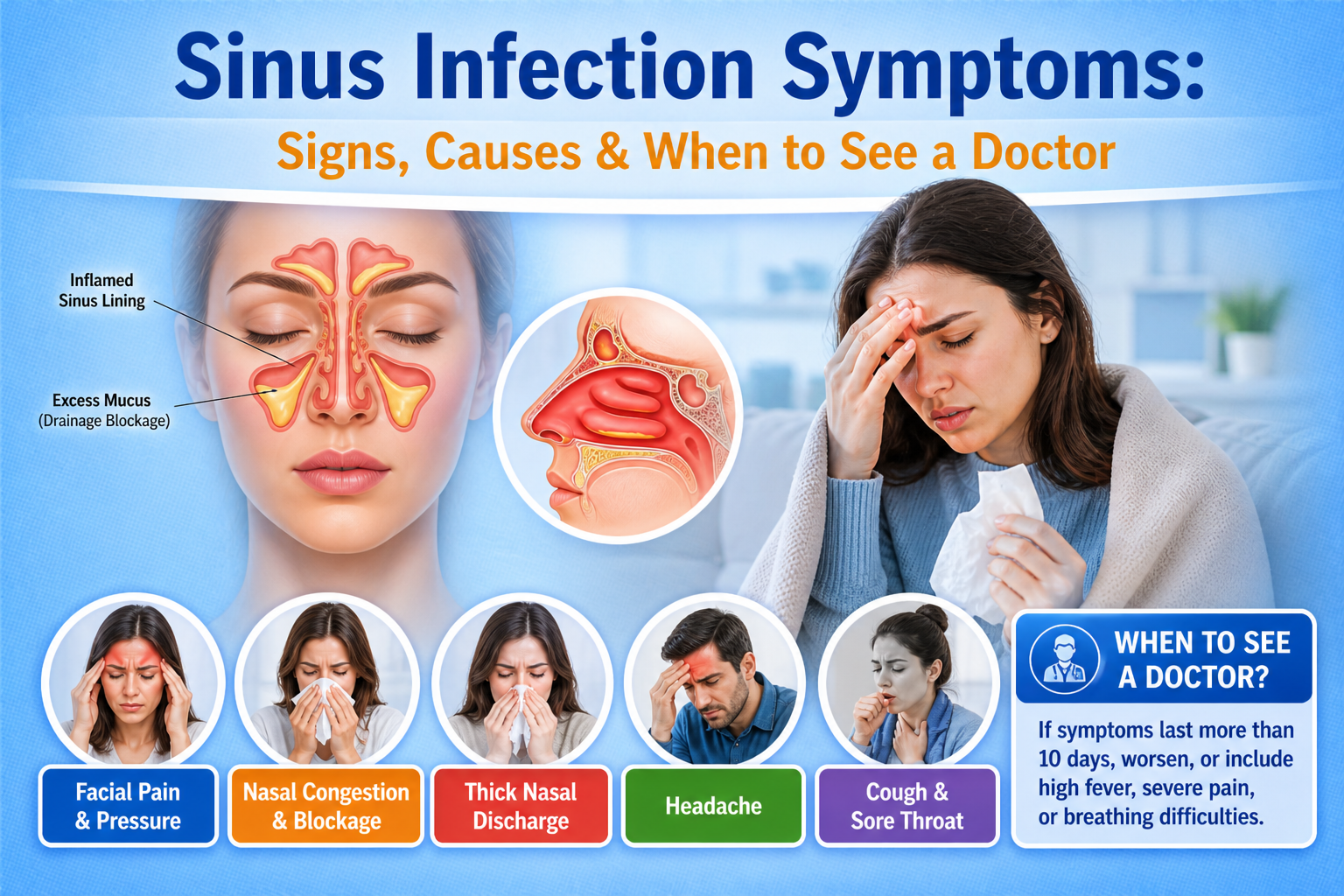
Learn more about sinus infection symptoms and causes and when medical evaluation becomes necessary.
What Causes Chronic Sinusitis?
Several factors can contribute to long-term sinus inflammation.
Allergies
Allergic reactions to dust, pollen, pet dander, and mold can trigger chronic sinus problems.
Nasal Polyps
Non-cancerous growths inside the nasal passages may block sinus drainage.
Recurrent Infections
Repeated bacterial, viral, or fungal infections can cause ongoing inflammation.
Deviated Nasal Septum
A structural abnormality in the nasal passage may obstruct airflow and drainage.
Environmental Irritants
Exposure to smoke, pollution, and chemical irritants can worsen symptoms.
Weakened Immune System
Individuals with immune disorders may be more prone to chronic sinus infections.
Can Chronic Sinusitis Be Treated Without Surgery?
Yes. In many cases, chronic sinusitis treatment without surgery is highly effective.
Most ENT specialists initially recommend non-surgical approaches to reduce inflammation, improve drainage, and manage symptoms.
The goal is to restore normal sinus function and prevent recurring infections without invasive procedures.
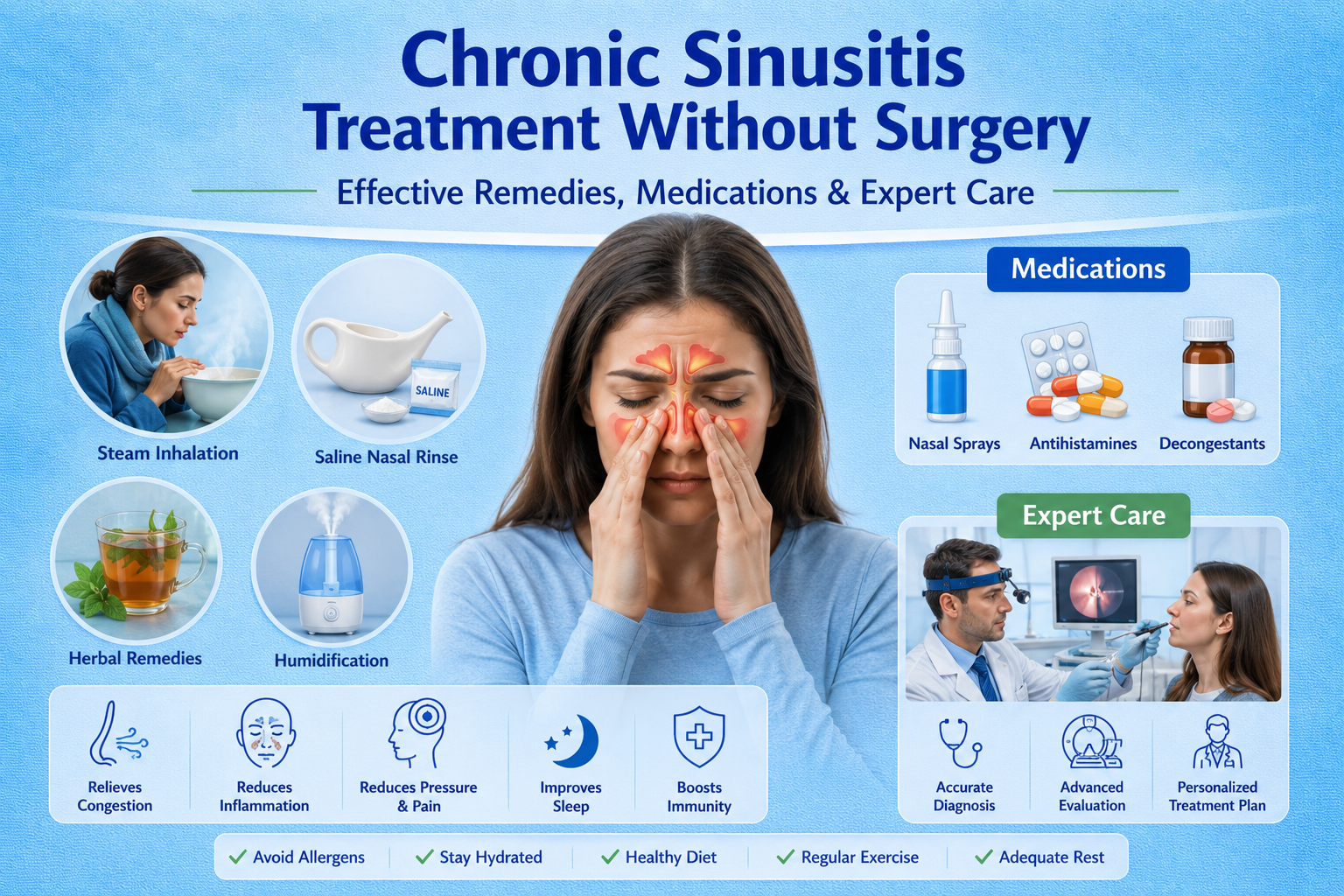
Chronic Sinusitis Treatment Without Surgery
Several treatment options can help manage chronic sinusitis effectively.
1. Nasal Saline Irrigation
One of the simplest and most effective treatments is saline nasal irrigation.
Using a saline solution helps:
- Flush out mucus
- Remove allergens
- Reduce nasal congestion
- Improve sinus drainage
Regular nasal rinsing can significantly reduce symptom severity.
2. Nasal Corticosteroid Sprays
Doctors often prescribe steroid nasal sprays to reduce inflammation.
Benefits
- Decreases swelling
- Improves airflow
- Reduces mucus production
- Helps prevent sinus flare-ups
These medications are commonly used for long-term symptom control.
3. Medications for Chronic Sinusitis
Depending on the underlying cause, various medications may be recommended.
Antihistamines
Useful for patients whose symptoms are triggered by allergies.
Examples
- Cetirizine
- Loratadine
- Fexofenadine
Decongestants
Temporary relief from nasal blockage may be achieved with decongestants.
However, prolonged use of nasal decongestant sprays should be avoided unless advised by a doctor.
Antibiotics
If bacterial infection is confirmed, antibiotics may be prescribed.
Not all chronic sinusitis cases require antibiotics, particularly when inflammation is caused by allergies or structural issues.
4. Allergy Management
For many individuals, allergies are the root cause of chronic sinusitis.
Allergy Control Measures
- Avoid dust exposure
- Use air purifiers
- Wash bedding regularly
- Reduce mold exposure
- Identify allergy triggers
Managing allergies often leads to significant symptom improvement.
5. Steam Inhalation
Steam inhalation remains a popular home remedy.
Benefits of Steam Therapy
- Moisturizes nasal passages
- Loosens thick mucus
- Reduces congestion
- Improves breathing comfort
Although steam does not cure sinusitis, it can provide temporary symptom relief.
6. Hydration and Nutrition
Drinking adequate fluids helps thin mucus and promote sinus drainage.
Recommended Choices
- Water
- Herbal teas
- Clear soups
A healthy diet rich in fruits and vegetables supports immune function and recovery.
Lifestyle Changes That Support Sinus Health
Simple lifestyle adjustments can help reduce symptom recurrence.
Maintain Indoor Air Quality
Using humidifiers can prevent excessive dryness in nasal passages.
Avoid Smoking
Tobacco smoke irritates the sinus lining and worsens inflammation.
Manage Allergies Effectively
Controlling allergy triggers can significantly reduce chronic sinus symptoms.
Practice Good Hygiene
Regular handwashing helps reduce the risk of infections.
How Effective Is Non-Surgical Treatment?
Many patients experience substantial improvement with conservative treatment.
Research suggests that a combination of:
- Nasal irrigation
- Steroid nasal sprays
- Allergy management
- Lifestyle modifications
can successfully control symptoms in a large percentage of chronic sinusitis cases.
The effectiveness depends on identifying and treating the underlying cause.
When Is Surgery Needed for Chronic Sinusitis?
While many patients respond well to medical treatment, surgery may be considered in certain situations.
Surgery May Be Recommended If:
Symptoms Persist Despite Treatment
Persistent symptoms despite months of therapy may require further evaluation.
Nasal Polyps Cause Blockage
Large polyps may obstruct sinus drainage.
Structural Problems Exist
A deviated septum or anatomical obstruction may require correction.
Frequent Recurring Infections
Repeated infections that do not respond to treatment may benefit from surgical intervention.
Read our detailed guide on when sinus surgery is needed to understand the role of endoscopic sinus surgery.
Benefits of Early ENT Consultation
Many people ignore sinus symptoms for months, assuming they will resolve on their own.
Seeking medical advice early can help:
- Prevent complications
- Improve breathing
- Reduce infection frequency
- Avoid long-term inflammation
- Enhance quality of life
An ENT specialist can determine the most appropriate treatment approach based on your symptoms and examination findings.
Consult an experienced ENT specialist in Hassan for personalized sinus evaluation and treatment.
Chronic Sinusitis vs Acute Sinusitis
| Feature | Acute Sinusitis | Chronic Sinusitis |
| Duration | Less than 4 weeks | More than 12 weeks |
| Cause | Usually infection | Inflammation, allergies, structural issues |
| Symptoms | Sudden onset | Persistent symptoms |
| Treatment | Short-term medications | Long-term management |
| Surgery Requirement | Rare | Sometimes required |
Understanding the difference helps patients seek appropriate treatment at the right time.
Why Choose Karna Hospital for Sinus Treatment?
At the best multispeciality hospital in Hassan, patients receive comprehensive ENT care for sinus infections, allergies, nasal obstruction, and chronic sinusitis.
Advantages of Choosing Karna Hospital
- Experienced ENT specialists
- Advanced diagnostic facilities
- Personalized treatment plans
- Medical and surgical sinus care
- Endoscopic sinus evaluation
- Comprehensive follow-up support
The hospital focuses on helping patients achieve lasting symptom relief and improved respiratory health.
Conclusion
Chronic sinusitis treatment without surgery is possible for many patients through a combination of medications, nasal irrigation, allergy management, and lifestyle modifications.
Early diagnosis and appropriate treatment can reduce inflammation, improve sinus drainage, and prevent recurrent infections. While surgery may be necessary for certain cases involving structural problems or persistent symptoms, most patients benefit from conservative treatment approaches.
If you have ongoing nasal congestion, facial pressure, or recurring sinus infections, consulting an ENT specialist can help you find the most effective treatment plan and improve your quality of life.
Frequently Asked Questions (FAQ)
Can chronic sinusitis be cured without surgery?
Yes. Many patients achieve significant symptom relief through medications, nasal irrigation, allergy management, and lifestyle changes.
What is the best treatment for chronic sinusitis?
Treatment depends on the cause but commonly includes saline irrigation, steroid nasal sprays, allergy control, and prescribed medications.
How long does chronic sinusitis last?
Chronic sinusitis is diagnosed when symptoms persist for 12 weeks or longer.
Which medicines are used for chronic sinusitis?
Doctors may prescribe nasal corticosteroids, antihistamines, decongestants, or antibiotics depending on the underlying cause.
When should I see an ENT specialist?
Seek medical evaluation if symptoms last more than 12 weeks, recur frequently, or significantly affect your daily activities.