
What Causes Kidney Stones in Women? Common Risk Factors & Prevention Tips
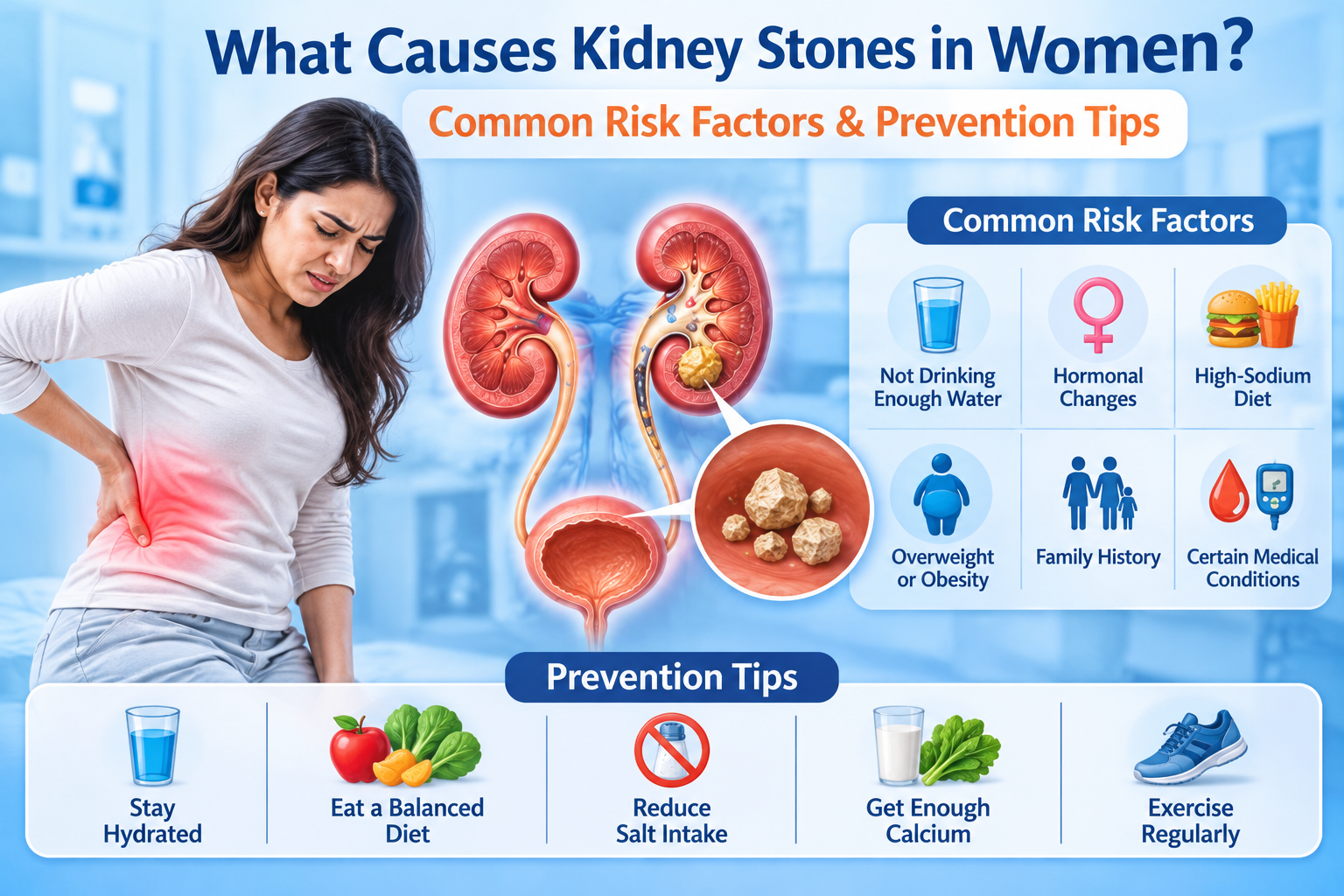
Kidney stones in women develop when minerals and salts in urine become concentrated and form hard deposits inside the kidneys. These stones may cause severe back or abdominal pain, painful urination, nausea and blood in the urine. Dehydration, dietary habits, urinary infections, family history and certain medical conditions can increase the risk of kidney stone formation.
Although kidney stones are often associated with men, women can also develop them at any age. Understanding the causes of kidney stones in women, recognising early symptoms and following appropriate prevention measures can help reduce the risk of recurrence and protect kidney health.
What Causes Kidney Stones in Women?
Kidney stones form when urine contains high concentrations of stone-forming substances such as calcium, oxalate and uric acid. When there is not enough fluid or natural substances to prevent crystal formation, these minerals can combine and gradually develop into stones.
Common causes and risk factors include:
1. Dehydration and Low Water Intake
Not drinking enough water is one of the major risk factors for kidney stone formation. When the body is dehydrated, urine becomes more concentrated, allowing minerals to form crystals.
Women who drink less water, sweat excessively or experience fluid loss due to vomiting or diarrhoea may have an increased risk.
Maintaining adequate hydration helps dilute urine and reduce the concentration of stone-forming substances.
2. Dietary Habits
Certain dietary habits can increase the risk of kidney stones in females.
These include:
Consuming excessive salt.
Eating large amounts of animal protein.
Frequently consuming foods high in oxalates, when prone to calcium oxalate stones.
Drinking insufficient water.
Consuming excessive amounts of sugary drinks.
Foods such as spinach, beetroot, nuts and chocolate contain oxalates. However, women should not automatically eliminate all these foods. Dietary recommendations should depend on the type of kidney stone and individual risk.
Read more about foods that increase kidney stone risk to understand how dietary choices can influence stone formation.
3. Hormonal and Metabolic Factors
Hormonal and metabolic changes may influence kidney stone risk in some women. Conditions that affect calcium levels, urine composition or metabolism can contribute to stone formation.
For example, hyperparathyroidism can increase calcium levels in the blood and urine, potentially increasing the risk of certain kidney stones.
Pregnancy can also change urinary composition and increase the risk of urinary stasis in some circumstances. However, pregnancy does not automatically cause kidney stones.
4. Urinary Tract Infections (UTIs)
Certain urinary tract infections can contribute to the formation of struvite kidney stones. These stones are associated with specific bacteria that produce an enzyme called urease.
Women are more likely to experience UTIs because of anatomical differences in the urinary tract. Recurrent or complicated urinary infections should be medically evaluated, particularly when accompanied by fever, flank pain or urinary changes.
5. Family History and Genetic Factors
Women with a family history of kidney stones may have a higher risk of developing them.
Genetic conditions and inherited metabolic abnormalities can also affect how the kidneys process minerals and other substances.
If kidney stones run in your family, discuss preventive screening and appropriate evaluation with your doctor.
6. Obesity and Lifestyle Factors
Excess body weight, physical inactivity and certain metabolic conditions can increase the risk of kidney stones.
Obesity and metabolic syndrome may influence urine composition, making stone formation more likely in some individuals.
Maintaining a healthy weight, exercising regularly and following a balanced diet can support overall kidney health.
What Are the Symptoms of Kidney Stones in Women?
Kidney stone symptoms in women can vary depending on the size, location and movement of the stone. Small stones may pass without causing noticeable symptoms, while larger stones can cause significant discomfort.
Common early signs of kidney stones in women include:
Sharp pain in the lower back or side.
Pain that spreads towards the lower abdomen or groin.
Blood in the urine, making it pink, red or brown.
Burning or pain during urination.
Frequent urge to urinate.
Nausea and vomiting.
Cloudy or foul-smelling urine.
Some symptoms may resemble a urinary tract infection. However, kidney stones can also occur alongside an infection, so persistent urinary symptoms should not be ignored.
You can learn more about kidney stone pain symptoms to understand how stone-related pain may present.
Important: Fever, chills, severe pain or difficulty passing urine can indicate a serious complication, particularly when a kidney stone blocks urine flow. Seek urgent medical attention.
Are Kidney Stones Different in Women?
The basic process of kidney stone formation is similar in men and women. However, individual risk factors, hormonal changes, pregnancy-related considerations and urinary infection history may influence the risk and management of kidney stones.
Women may also mistake kidney stone symptoms for menstrual cramps, pelvic pain or urinary infections.
Persistent or severe abdominal, back or urinary pain should therefore be evaluated by a healthcare professional rather than assumed to be related to menstruation or a UTI.
How Can Women Prevent Kidney Stones Naturally?
Kidney stone prevention in women involves maintaining adequate hydration, making appropriate dietary changes and managing underlying medical conditions.
Here are some practical prevention tips.
1. Drink Enough Water
Adequate fluid intake helps dilute urine and reduce the concentration of minerals that can form kidney stones.
Your doctor may recommend a fluid intake that produces approximately 2–2.5 litres of urine daily, depending on your health, climate and activity level.
Women with medical conditions that require fluid restriction should follow their doctor's advice.
2. Reduce Excess Salt
High sodium intake can increase the amount of calcium passed into urine, potentially increasing the risk of calcium-containing kidney stones.
To reduce sodium intake:
Limit packaged and processed foods.
Avoid adding excessive salt to meals.
Reduce frequent consumption of salty snacks.
Choose fresh, home-cooked meals where possible.
3. Follow a Balanced Diet
A balanced diet can support kidney health and reduce the risk of certain kidney stones.
Include fruits, vegetables, whole grains and appropriate protein sources in your daily meals.
Do not unnecessarily eliminate calcium-rich foods. Normal dietary calcium can help bind oxalate in the digestive tract and may reduce the risk of calcium oxalate stones.
4. Maintain a Healthy Weight
Regular physical activity and a balanced diet can help manage body weight and metabolic health.
Avoid crash diets or extreme dietary restrictions without professional guidance.
5. Manage Recurrent Urinary Infections
Women who experience repeated UTIs should consult a doctor to identify the underlying cause and receive appropriate treatment.
Recurrent infections caused by certain bacteria can increase the risk of infection-related kidney stones.
6. Follow a Prevention Plan After Kidney Stone Treatment
If you have previously developed kidney stones, your risk of recurrence may be higher.
Your doctor may recommend stone analysis, blood investigations and a 24-hour urine test to identify the factors responsible for stone formation.
For more practical guidance, read how to prevent kidney stones naturally.
How Are Kidney Stones Diagnosed and Treated in Women?
If kidney stones are suspected, a doctor may recommend investigations based on your symptoms and medical history.
Common diagnostic tests include:
Urine examination: Helps identify blood, infection and other abnormalities.
Blood tests: May assess kidney function, calcium and other relevant markers.
Ultrasound: Helps identify stones and possible urinary obstruction.
CT scan: A non-contrast CT scan may be recommended when more detailed imaging is needed.
During pregnancy, ultrasound is generally preferred as the initial imaging investigation. Further imaging decisions require careful medical assessment.
Treatment depends on the stone's size, location, composition, symptoms and whether it is causing obstruction or infection.
Possible treatment options include:
Observation and medical management for selected small stones.
Medicines to help stone passage in suitable cases.
Extracorporeal shock wave lithotripsy (ESWL) for selected stones.
Ureteroscopy and laser treatment.
Percutaneous nephrolithotomy (PCNL) for selected larger or complex stones.
For suitable patients, laser kidney stone surgery in Hassan may be considered after specialist evaluation.
An infected obstructed kidney requires urgent medical treatment and drainage; definitive stone removal may be performed after the infection is controlled.
When Should Women See a Urologist for Kidney Stones?
Consult a urologist if you experience persistent back or side pain, blood in your urine, repeated urinary infections or symptoms suggesting kidney stones.
Seek urgent medical attention if you experience:
Severe or uncontrolled abdominal or back pain.
Fever and chills with suspected kidney stones.
Persistent vomiting.
Difficulty or inability to pass urine.
Severe pain during pregnancy.
Early diagnosis can help identify the size and location of the stone and determine the most appropriate treatment.
Kidney Stone Treatment in Hassan
Women experiencing kidney stone symptoms can seek medical evaluation to identify the underlying cause and determine suitable treatment.
Karna Hospital in Hassan provides multispeciality healthcare services, including urology care. Patients can consult a specialist for kidney stone evaluation and discuss appropriate treatment options based on their condition.
For information about available care, visit the kidney stone treatment in Hassan page.
Frequently Asked Questions
1. What causes kidney stones in women?
Common causes include dehydration, concentrated urine, dietary habits, metabolic conditions, family history and certain urinary tract infections. Individual risk depends on overall health and the type of stone.
2. What are the first signs of kidney stones in females?
Early symptoms may include pain in the lower back or side, blood in the urine, painful urination, frequent urination and nausea. Some small stones may not cause symptoms.
3. Can hormonal changes cause kidney stones in women?
Hormonal and metabolic changes may influence urinary mineral levels and stone risk in some women. However, kidney stones usually develop due to a combination of factors rather than one hormonal change alone.
4. Can women prevent kidney stones naturally?
Adequate hydration, reducing excess salt, maintaining a balanced diet and managing underlying medical conditions can help lower kidney stone risk. Prevention should also consider the type of stone previously formed.
5. Are kidney stones dangerous during pregnancy?
Kidney stones during pregnancy require careful medical evaluation because pain, urinary obstruction and infection can affect maternal health. Ultrasound is generally used as the initial imaging test.
6. Can kidney stones come back after treatment?
Yes. Kidney stones can recur even after successful treatment. Identifying the stone type and following a personalised prevention plan can help reduce the risk of recurrence.
Conclusion
Kidney stones in women can develop due to dehydration, dietary habits, metabolic conditions, urinary infections and genetic factors. Recognising early symptoms and understanding individual risk factors are important steps towards protecting kidney health.
Drinking adequate water, limiting excess salt, following a balanced diet and seeking medical advice for recurring urinary symptoms can help prevent certain types of kidney stones.
If you experience severe back pain, blood in your urine or repeated urinary infections, consult a healthcare professional for proper evaluation and treatment.
Medical disclaimer: This article is for general educational purposes only. It does not replace professional medical advice, diagnosis or treatment. Consult a qualified healthcare professional for individual recommendations.