
Knee Swelling Without Injury: Causes, Symptoms & Treatment
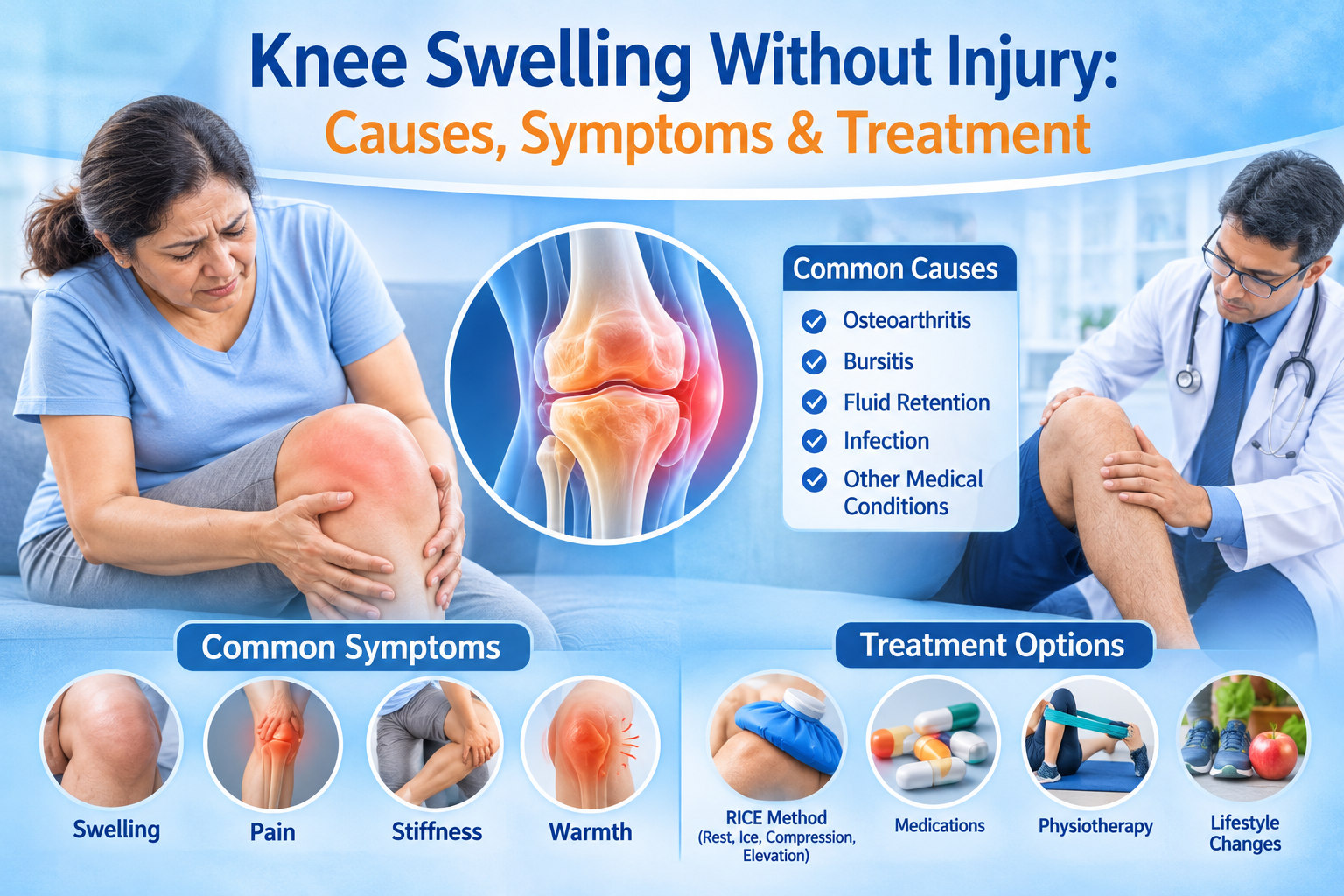
Have you noticed swelling in your knee even though you have not fallen, twisted your leg, or experienced an obvious injury? Knee swelling without injury can occur for several reasons, including arthritis, inflammation, fluid buildup, gout, bursitis, or an underlying joint infection.
A swollen knee may feel stiff, warm, painful, or difficult to bend. Sometimes, swelling develops without pain, making it easy to overlook. Identifying the underlying cause is important because treatment depends on the condition responsible for the swelling.
If your knee becomes suddenly hot, red, severely painful, or swollen with fever, seek urgent medical assessment. These symptoms can indicate a joint infection or another serious condition.
What Causes Knee Swelling Without Injury?
Knee swelling occurs when excess fluid accumulates in or around the joint. This is sometimes called a knee effusion. The swelling may develop gradually or appear suddenly, depending on the cause.
Common causes include the following.
1. Osteoarthritis
Osteoarthritis is a joint condition involving changes to the cartilage and other structures within the knee. It becomes more common with age and may cause pain, stiffness, reduced movement, and swelling.
Symptoms may become more noticeable after walking, climbing stairs, standing for long periods, or being physically active. Some people also experience stiffness after resting.
Treatment depends on symptom severity and may include appropriate exercise, physiotherapy, weight management when needed, pain management, and other medical options.
2. Rheumatoid Arthritis
Rheumatoid arthritis is an autoimmune condition that causes inflammation in the joints. It can affect one or both knees and may cause swelling, warmth, pain, and morning stiffness.
Other joints may also be affected. Persistent joint swelling, especially when accompanied by prolonged morning stiffness or symptoms in several joints, requires medical evaluation.
Early diagnosis and appropriate treatment can help control inflammation and reduce the risk of joint damage.
3. Gout or Other Crystal-Related Arthritis
Gout occurs when uric acid crystals accumulate in a joint. It can cause a sudden episode of intense pain, redness, warmth, and swelling. The knee can be affected even when there has been no injury.
A similar condition, called calcium pyrophosphate deposition disease or pseudogout, can also cause acute joint inflammation.
A doctor may recommend joint fluid analysis or other investigations to establish the diagnosis. Do not assume that a swollen knee is caused by gout solely because your uric acid level is high.
4. Fluid Buildup in the Knee
Excess fluid can accumulate in the knee because of inflammation, arthritis, infection, or other joint problems. This is commonly described as fluid on the knee.
Symptoms may include:
Visible swelling around the kneecap
Tightness or a feeling of fullness
Difficulty bending or straightening the knee
Stiffness during movement
Discomfort when walking
Treatment depends on why the fluid has accumulated. In selected cases, a doctor may recommend removing some fluid using a procedure called joint aspiration, which can also help identify the cause.
5. Bursitis
Bursae are small, fluid-filled sacs that reduce friction around joints. Inflammation of a bursa near the knee can cause localized swelling, tenderness, and discomfort.
Knee bursitis may develop due to repeated kneeling, prolonged pressure, overuse, or certain medical conditions. It can occur without a single identifiable injury.
Treatment may involve avoiding activities that aggravate the area, appropriate supportive care, and medical treatment when necessary. Redness, warmth, or fever should prompt urgent evaluation because an infected bursa is possible.
6. Baker's Cyst
A Baker's cyst is a fluid-filled swelling that develops behind the knee. It is often associated with an underlying knee problem, such as osteoarthritis or inflammation.
It may cause tightness behind the knee, discomfort when bending it, or a noticeable lump.
A Baker's cyst can sometimes rupture and cause pain and swelling in the calf. Because these symptoms can resemble a blood clot, sudden calf swelling or pain requires prompt medical assessment.
7. Joint Infection
A joint infection is a serious possible cause of a swollen knee, even when there has been no injury.
Warning signs may include:
Sudden or severe joint pain
A hot, red, or swollen knee
Fever or chills
Difficulty moving the joint
Inability to bear weight comfortably
Seek urgent medical care if these symptoms occur. A joint infection can damage cartilage quickly and may require hospital treatment. Do not wait for the swelling to resolve at home.
Can Your Knee Be Swollen Without Pain?
Yes. Knee swelling without pain can occur, particularly in some chronic joint conditions or when fluid accumulates gradually. However, the absence of pain does not always mean the problem is harmless.
Pay attention to whether the swelling persists, increases, returns repeatedly, or affects your ability to move the knee normally.
Arrange a medical assessment if the swelling has no clear explanation, does not improve, or keeps coming back.
How Is Knee Swelling Diagnosed?
A doctor will assess your symptoms, medical history, and knee movement to help determine the cause.
Depending on the findings, investigations may include:
Physical examination: Checks swelling, warmth, tenderness, movement, and joint stability.
X-ray: May help identify osteoarthritis or other bone and joint changes.
Ultrasound: Can help assess fluid buildup, bursitis, or a Baker's cyst.
MRI: May be recommended when further evaluation of soft tissues or internal joint structures is needed.
Blood tests: May help investigate inflammation, gout-related concerns, or possible infection.
Joint fluid analysis: May be needed to investigate infection or crystal-related arthritis.
Not everyone needs every test. The appropriate investigations depend on the suspected cause and clinical findings.
How Is Knee Swelling Without Injury Treated?
There is no single treatment for every swollen knee. The right approach depends on the underlying condition.
Home Care for Mild Swelling
If the swelling is mild, there are no warning signs, and you can move and bear weight comfortably, temporary supportive measures may help while you arrange appropriate advice.
Rest: Reduce activities that increase pain or swelling.
Ice: Apply an ice pack wrapped in a towel for around 15–20 minutes at a time.
Elevation: Raise your leg when resting to help manage swelling.
Avoid aggravating activities: Temporarily limit prolonged standing, strenuous exercise, or repeated kneeling.
Avoid placing ice directly on the skin. Do not forcefully massage a hot or swollen knee, and do not begin strenuous exercises until the cause is clearer.
Seek medical advice if the swelling persists, worsens, or returns.
Medical Treatment
Depending on the diagnosis, treatment may include medication, physiotherapy, activity modification, or management of an underlying condition such as arthritis or gout.
A doctor may recommend joint aspiration when appropriate, particularly if significant fluid buildup needs investigation or relief.
Surgery is not necessary for most cases of knee swelling. It may be considered in selected conditions when conservative treatment is insufficient or when a specific problem requires a procedure.
For related information, read about knee pain treatment in Hassan.
When Should You See an Orthopedic Doctor?
Arrange a medical evaluation if you experience:
Persistent or unexplained knee swelling
Repeated episodes of swelling
Reduced knee movement
Difficulty walking or climbing stairs
Swelling associated with ongoing pain or stiffness
A noticeable lump behind the knee
Seek urgent medical attention if your knee is suddenly very swollen, hot, red, or severely painful, particularly if you have a fever. Sudden calf swelling or pain also needs prompt assessment.
An orthopedic doctor can evaluate many structural and degenerative knee problems. Depending on the suspected cause, you may also need assessment by another specialist.
Knee Swelling Treatment in Hassan
If you are looking for knee swelling treatment in Hassan, consider a medical assessment rather than relying on symptoms alone to identify the cause.
Karna Hospital provides multispeciality healthcare services in Hassan. Patients with persistent knee swelling can seek medical evaluation to determine whether further investigations, orthopedic care, or another specialist's input is appropriate.
Explore orthopedic care at the hospital.
Conclusion
Knee swelling without injury can result from arthritis, gout, bursitis, fluid accumulation, a Baker's cyst, or other medical conditions. Although some mild cases improve with supportive care, persistent or unexplained swelling should not be ignored.
The most effective treatment is the one that addresses the underlying cause. Seek professional assessment to understand why your knee is swollen and which treatment is appropriate for you.
This article is for general educational purposes only and does not replace professional medical advice, diagnosis, or treatment.
Frequently Asked Questions
Why is my knee swollen if I have not injured it?
Possible causes include osteoarthritis, rheumatoid arthritis, gout, bursitis, a Baker's cyst, fluid buildup, or joint infection. A medical assessment can help establish the cause.
Is knee swelling without injury serious?
It can be mild, but it can also indicate a condition requiring treatment. Sudden swelling, severe pain, fever, redness, or warmth requires urgent medical evaluation.
How can I reduce knee swelling at home?
For mild swelling without warning signs, rest, wrapped ice packs, elevation, and avoiding aggravating activities may help. Persistent or unexplained swelling should be assessed by a healthcare professional.
Can arthritis cause knee swelling without pain?
Yes. Some people with arthritis experience swelling or stiffness with relatively little pain. Persistent swelling still deserves assessment.
Does fluid in the knee require surgery?
Not necessarily. Treatment depends on the cause and severity. Many cases can be managed without surgery, while selected conditions may require a procedure.
When should I see a doctor for a swollen knee?
Seek assessment for unexplained, persistent, worsening, or recurrent swelling. A hot, red, severely painful knee or swelling accompanied by fever requires urgent medical care.