Back pain affects millions of adults, but when the discomfort starts radiating into the legs or arms, it could indicate a slipped disc. Also known as a herniated or prolapsed disc, this spinal condition can significantly interfere with daily life.
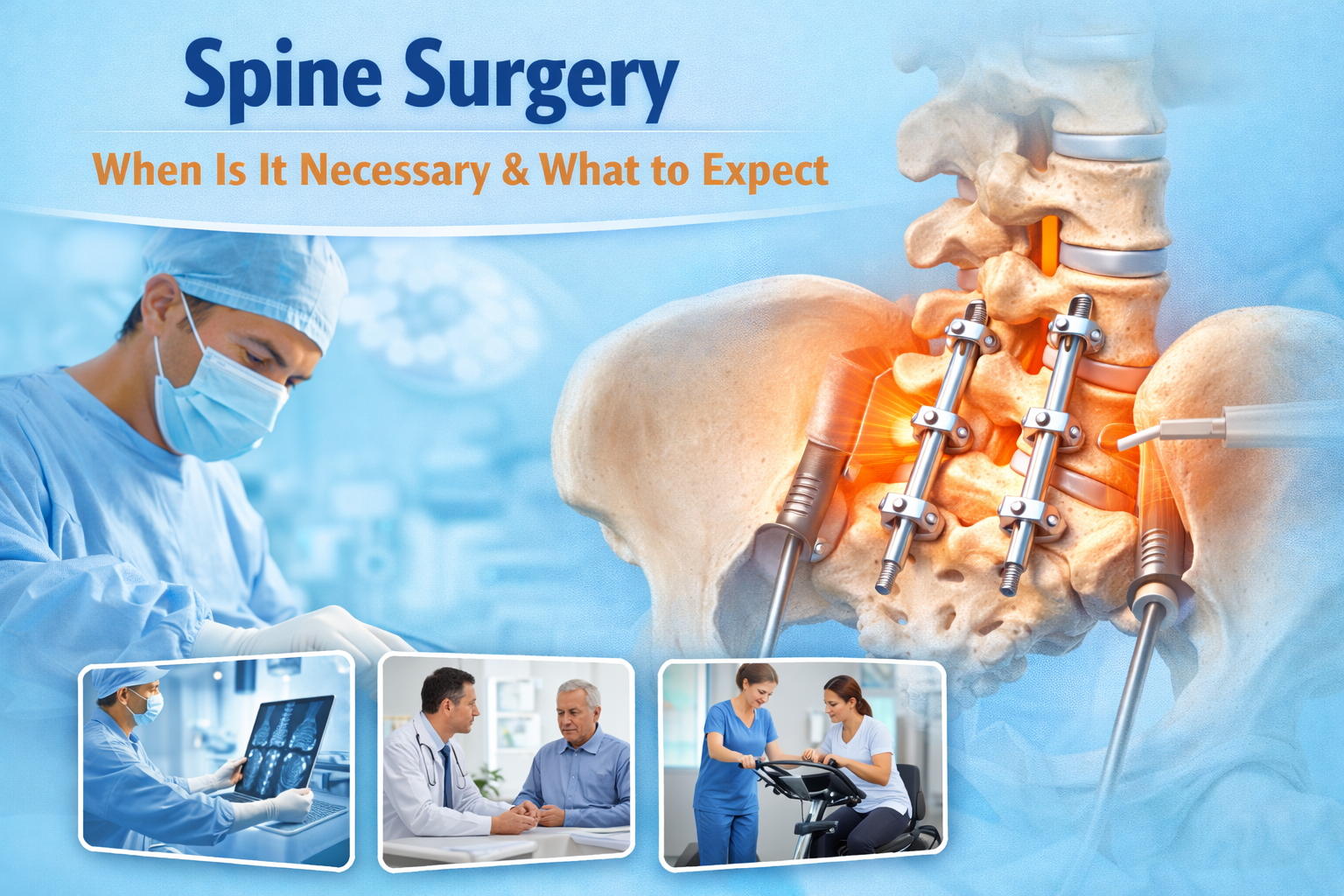
Although many patients recover with medication and physiotherapy, certain cases require surgical intervention. Understanding when spine surgery becomes necessary helps patients make informed and timely decisions. For a broader understanding of surgical indications and recovery expectations, you can also read our detailed guide on Spine Surgery: When Is It Necessary & What to Expect?
What Exactly Is a Slipped Disc?
The human spine is composed of vertebrae stacked one over another. Between these bones lie flexible, gel-like cushions called intervertebral discs. These discs absorb shock and allow smooth spinal movement.
A slipped disc occurs when the inner gel-like core pushes outward through a tear in the outer covering. When this protrusion compresses nearby nerves, it causes pain, inflammation, and neurological symptoms.
This condition most commonly affects:
- The lumbar spine (lower back)
- The cervical spine (neck region)
Symptoms of a Herniated Disc
The symptoms depend on the affected spinal level and the degree of nerve compression. Common warning signs include:
- Continuous lower back or neck pain
- Shooting pain down the leg (sciatica)
- Pain radiating to shoulders or arms
- Tingling or burning sensations
- Muscle weakness in limbs
- Difficulty standing, walking, or sitting for long durations
⚠️ Emergency Warning Sign:
Loss of bladder or bowel control may indicate cauda equina syndrome — a rare but serious condition that requires immediate surgical care.
Why Does a Slipped Disc Occur?
Several contributing factors increase the risk:
- Natural age-related disc degeneration
- Poor posture and improper lifting techniques
- Sudden trauma or injury
- Obesity or excess body weight
- Sedentary lifestyle
- Repetitive spinal strain
As discs lose hydration and elasticity over time, they become more prone to bulging or rupture.
Non-Surgical Slipped Disc Treatment Options
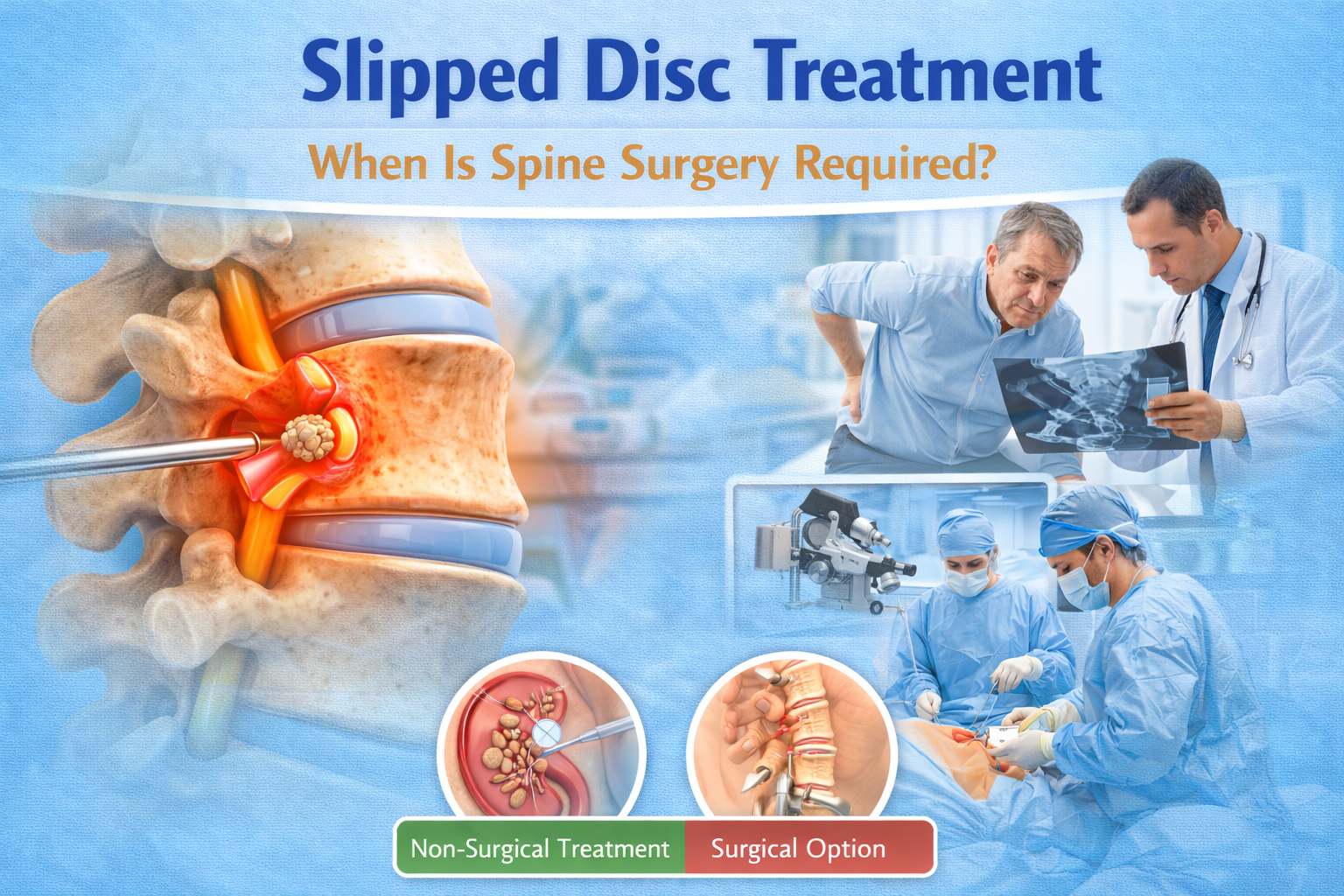
In most cases, doctors recommend conservative treatment for 6–8 weeks before considering surgery.
1. Medication
Anti-inflammatory drugs, muscle relaxants, and nerve pain medications help reduce inflammation and discomfort.
2. Physiotherapy
Structured physical therapy strengthens core muscles, improves posture, and relieves nerve compression.
3. Activity Modification
Short periods of rest combined with controlled mobility promote healing without worsening stiffness.
4. Epidural Steroid Injections
In selected cases, steroid injections reduce nerve inflammation and provide temporary symptom relief.
Many patients experience gradual improvement with these methods.
When Is Spine Surgery Necessary?
Surgery is not the first choice — it becomes necessary under specific conditions.
1. Persistent Severe Pain
If symptoms continue beyond 6–8 weeks despite adequate treatment, surgical removal of the compressed disc portion may be advised.
2. Progressive Nerve Weakness
Increasing numbness, worsening muscle weakness, or difficulty walking suggests ongoing nerve damage that requires prompt intervention.
3. Loss of Bladder or Bowel Control
This is a surgical emergency and must be treated immediately to prevent permanent neurological damage.
4. Major Lifestyle Limitation
If pain severely disrupts sleep, work, or basic daily activities, surgery may significantly improve quality of life.
Types of Spine Surgery for Slipped Disc
The choice of procedure depends on severity, spinal level, and overall spinal stability.
Microdiscectomy
A minimally invasive surgery where only the herniated portion pressing on the nerve is removed. This is one of the most successful procedures for lumbar disc herniation.
Laminectomy
Part of the bone covering the spinal canal is removed to relieve pressure on compressed nerves.
Spinal Fusion
In cases involving spinal instability, two adjacent vertebrae are permanently joined to restore alignment and stability.
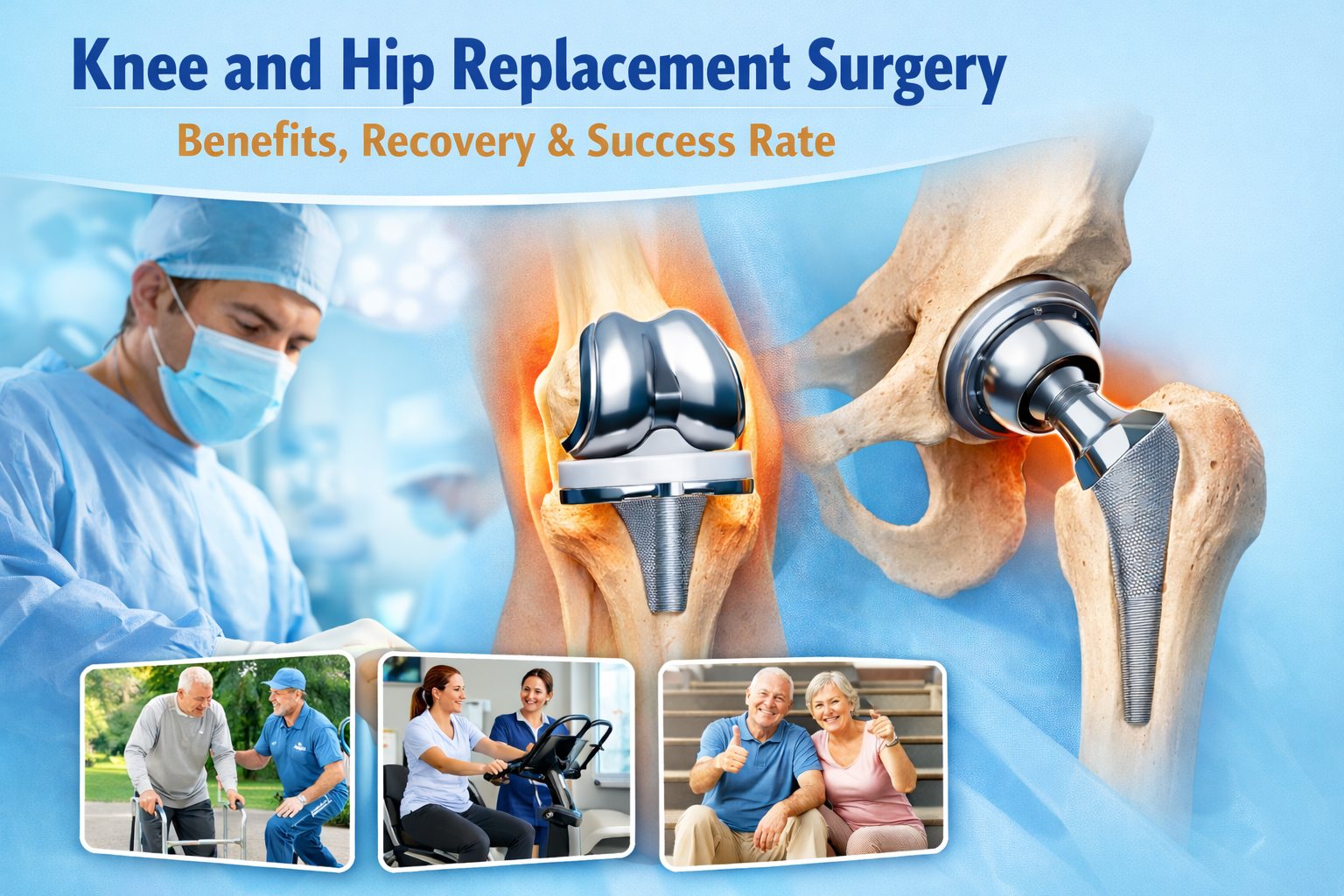
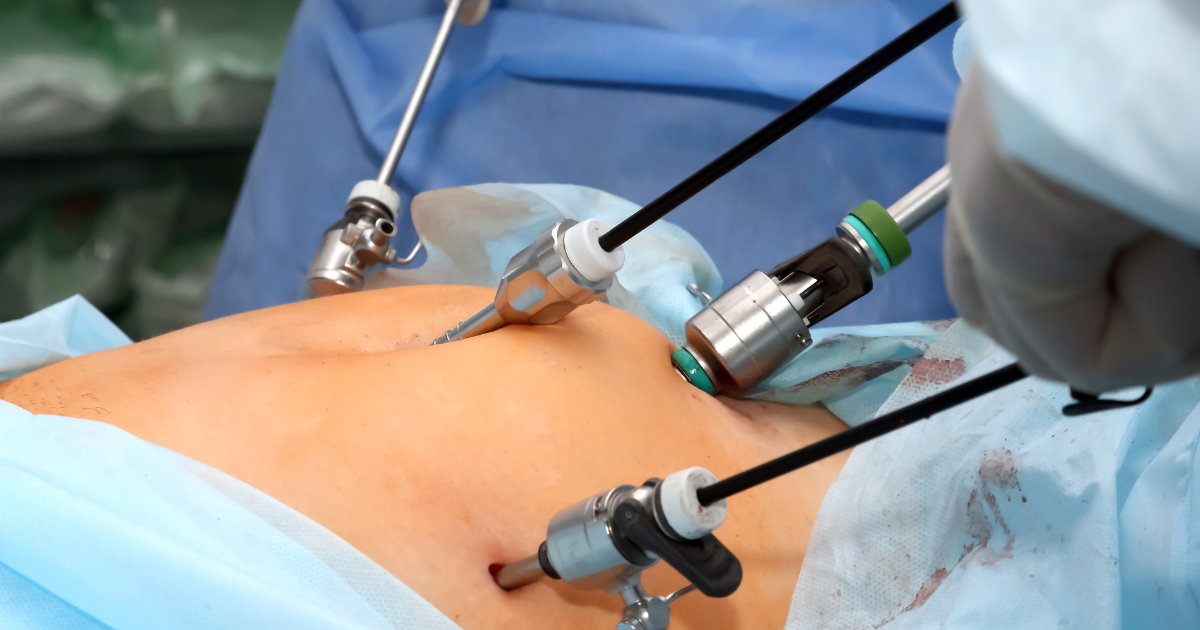
Modern spine surgeries today are performed using advanced technology in a Modular Operation Theatre (OT) setup, ensuring high precision and safety. To understand more about advanced orthopedic procedures and recovery expectations, you may also explore our article on Knee and Hip Replacement Surgery: Benefits, Recovery & Success Rate, which highlights how modern surgical techniques improve patient outcomes.
What to Expect During the Surgical Journey
Before Surgery
- Detailed clinical examination
- MRI or CT imaging
- Pre-operative investigations
- Anesthesia evaluation
- Explanation of risks and benefits
After Surgery
- Early mobilization within 24 hours (in most cases)
- Controlled pain management
- Guided physiotherapy
- Gradual return to routine activities
Most patients experience rapid relief from radiating leg pain. Complete recovery may take several weeks depending on individual healing.
Potential Risks of Spine Surgery
Although generally safe when performed by experienced specialists, possible risks include:
- Infection
- Bleeding
- Nerve injury
- Recurrence of disc herniation
Choosing a hospital with experienced spine surgeons and advanced infrastructure significantly minimizes complications.
Can a Slipped Disc Be Prevented?
While not always preventable, risk can be reduced by:
- Maintaining correct posture
- Strengthening core muscles
- Regular exercise
- Avoiding sudden heavy lifting
- Maintaining a healthy weight
Long-term spinal care plays a vital role in preventing recurrence.
Conclusion
A slipped disc can be extremely painful, but surgery is only required in specific cases. Most patients respond well to conservative treatment. However, when nerve compression persists or worsens, timely spine surgery offers lasting relief and restores mobility.
Early evaluation by a spine specialist ensures accurate diagnosis and the right treatment approach.
At Karna Hospital, advanced spine procedures are performed in a state-of-the-art Modular OT setup, ensuring the highest standards of surgical safety, precision, and patient care.
Contact Karna Hospital
For immediate consultation or emergency support:
📞 Mobile: +91 63603 22779
📍 Address: Shankar Mutt Road, KR Puram, Hassan – 573201
🌐 Website: https://karnahospital.in/