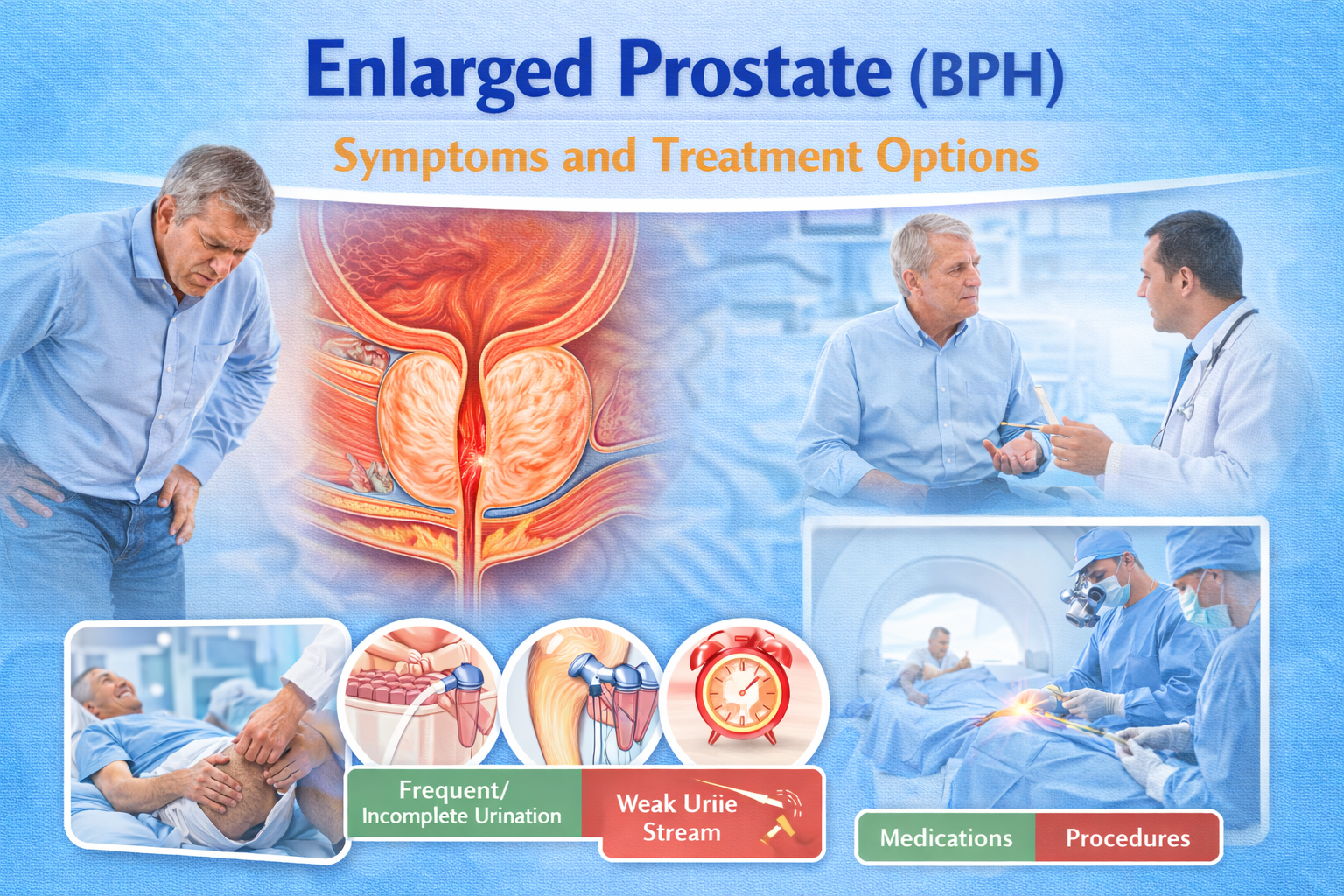
As men age, certain health conditions become more common, and one of the most frequent is Benign Prostatic Hyperplasia (BPH), also known as an enlarged prostate. While BPH is not cancerous, it can significantly affect urinary function and quality of life if left untreated.
Many men initially ignore the symptoms because they develop gradually. However, early diagnosis and appropriate treatment can effectively manage the condition and prevent complications. Understanding the symptoms, causes, and treatment options for an enlarged prostate helps patients seek timely medical care.
What Is an Enlarged Prostate (BPH)?
The prostate is a small gland located below the bladder and in front of the rectum. It surrounds the urethra—the tube that carries urine from the bladder out of the body.
In men with Benign Prostatic Hyperplasia, the prostate gland becomes enlarged due to increased growth of prostate cells. As the gland grows, it presses against the urethra and bladder, restricting urine flow.
Although BPH is a non-cancerous condition, it can cause uncomfortable urinary symptoms and may interfere with daily activities if untreated.
Common Symptoms of BPH
Symptoms of an enlarged prostate usually appear gradually and tend to worsen over time. These symptoms are primarily related to difficulties with urination.
Common signs include:
- Frequent urge to urinate, especially at night (nocturia)
- Difficulty starting urination
- Weak or interrupted urine stream
- Feeling that the bladder is not completely empty
- Dribbling at the end of urination
- Sudden, urgent need to urinate
- Straining while urinating
In severe cases, patients may experience complete urinary blockage, which requires immediate medical attention.
Causes and Risk Factors
The exact cause of prostate enlargement is not fully understood, but several factors contribute to its development.
1. Aging
BPH is strongly associated with aging. The condition is rare in men under 40 but becomes increasingly common after the age of 50.
2. Hormonal Changes
Changes in male hormones such as testosterone and dihydrotestosterone (DHT) may stimulate prostate cell growth.
3. Family History
Men with a family history of prostate problems may have a higher risk of developing BPH.
4. Lifestyle Factors
Obesity, lack of physical activity, and certain metabolic conditions may increase the likelihood of prostate enlargement.
When Should You See a Doctor?
Many men tolerate mild urinary symptoms for years without seeking treatment. However, medical evaluation becomes necessary if:
- Urination becomes painful or difficult
- Blood appears in urine
- Frequent nighttime urination disrupts sleep
- Urinary retention occurs
- Symptoms affect daily activities
Early consultation helps prevent complications such as bladder damage, infections, or kidney problems.
How Is BPH Diagnosed?
A urologist performs several tests to diagnose enlarged prostate and rule out other conditions.
Medical History and Physical Examination
The doctor will discuss symptoms and perform a Digital Rectal Examination (DRE) to assess prostate size.
Urine Tests
Urinalysis helps detect infection or blood in the urine.
PSA Blood Test
A Prostate-Specific Antigen (PSA) test helps evaluate prostate health and rule out prostate cancer.
Imaging Tests
Ultrasound or other imaging studies may be used to examine the prostate and bladder.
These diagnostic tests help determine the severity of the condition and guide treatment decisions.
Treatment Options for Enlarged Prostate
Treatment depends on the severity of symptoms, prostate size, and the patient’s overall health. In many cases, BPH can be managed effectively without surgery.
1. Lifestyle Modifications
For mild symptoms, doctors may recommend lifestyle changes such as:
- Reducing caffeine and alcohol intake
- Limiting fluid intake before bedtime
- Maintaining a healthy weight
- Practicing bladder training techniques
These changes can reduce urinary frequency and improve comfort.
2. Medications
Medications are often the first line of treatment for moderate symptoms.
Common medications include:
Alpha-blockers
These relax prostate and bladder muscles, making urination easier.
5-alpha reductase inhibitors
These medications help shrink the prostate by reducing hormone levels responsible for prostate growth.
Medication therapy can significantly relieve symptoms in many patients.
3. Minimally Invasive Procedures
When medications are not effective, minimally invasive procedures may be recommended. These treatments improve urine flow by reducing prostate tissue that blocks the urethra.
Common procedures include:
- Transurethral Resection of the Prostate (TURP)
- Laser prostate surgery
- Prostatic urethral lift procedures
Modern hospitals also perform several advanced minimally invasive surgeries such as laparoscopic gallbladder surgery, which use small incisions and specialized instruments to improve surgical precision and reduce recovery time.
4. Surgical Treatment
Surgery may be required in severe cases where:
- Medications do not relieve symptoms
- Recurrent urinary infections occur
- Bladder stones develop
- Kidney damage is suspected
- Urinary retention becomes severe
In many hospitals, minimally invasive surgical techniques are also used for other abdominal conditions, such as hernia surgery with laparoscopic options, which helps reduce recovery time and improve patient outcomes.
Surgical treatment for BPH focuses on removing or reducing excess prostate tissue to restore normal urine flow.
Possible Complications of Untreated BPH
If left untreated, enlarged prostate can lead to several complications:
- Urinary retention
- Bladder damage
- Recurrent urinary tract infections
- Kidney damage
- Bladder stones
Early treatment helps prevent these serious health problems.
Can BPH Be Prevented?
While prostate enlargement cannot always be prevented, healthy lifestyle habits can reduce risk and improve urinary health.
Helpful measures include:
- Regular exercise
- Maintaining a healthy weight
- Eating a balanced diet rich in vegetables and fruits
- Limiting caffeine and alcohol
- Attending regular health checkups after age 50
Regular screening allows early detection and better management.
Conclusion
Benign Prostatic Hyperplasia (BPH) is a common condition affecting many men as they age. Although it is not cancerous, an enlarged prostate can cause significant discomfort and urinary difficulties if untreated.
Fortunately, modern medical care offers several effective treatments—from lifestyle changes and medications to minimally invasive procedures and surgery. Early diagnosis and timely treatment can significantly improve quality of life and prevent complications.
If you or a loved one is experiencing persistent urinary symptoms, consulting a qualified urologist in Hassan is the best step toward effective treatment and long-term prostate health.
Contact Karna Hospital
For immediate consultation or emergency support, contact Karna Hospital:
📞 Mobile: +91 63603 22779
📍 Address: Shankar Mutt Road, KR Puram, Hassan – 573201
🌐 Website: https://karnahospital.in/