Urinary Tract Infections (UTIs) are among the most common infections affecting the urinary system. They occur when bacteria enter the urinary tract and multiply, causing inflammation and discomfort. UTIs can affect anyone, but they are more common in women due to anatomical differences.
Although many urinary infections can be treated easily with medications, ignoring symptoms may lead to complications such as kidney infections. Understanding the causes, symptoms, and treatment options for UTIs helps individuals seek timely medical care and prevent recurring infections.
What Is a Urinary Tract Infection?
A urinary tract infection occurs when bacteria infect any part of the urinary system, including the:
- Kidneys
- Ureters
- Bladder
- Urethra
Most UTIs affect the bladder and urethra, which are part of the lower urinary tract. When the infection spreads to the kidneys, it becomes more serious and requires immediate medical attention.
UTIs are usually caused by bacteria entering the urinary tract through the urethra and multiplying in the bladder.
Common Causes of UTIs
Several factors can increase the risk of developing a urinary tract infection.
Bacterial Infection
Most UTIs are caused by Escherichia coli (E. coli) bacteria, which normally live in the digestive tract but can enter the urinary system.
Poor Hygiene
Improper hygiene practices may allow bacteria to enter the urethra and cause infection.
Holding Urine for Long Periods
Delaying urination frequently can allow bacteria to multiply inside the bladder.
Dehydration
Insufficient water intake may reduce urine flow, preventing bacteria from being flushed out.
Urinary Stones or Blockages
Conditions such as kidney stones may obstruct urine flow and increase the risk of infection. In such cases, patients may require advanced procedures such as kidney stone treatment using laser surgery to remove the obstruction and restore normal urine flow.
Weakened Immune System
People with diabetes or weakened immunity may be more susceptible to infections.
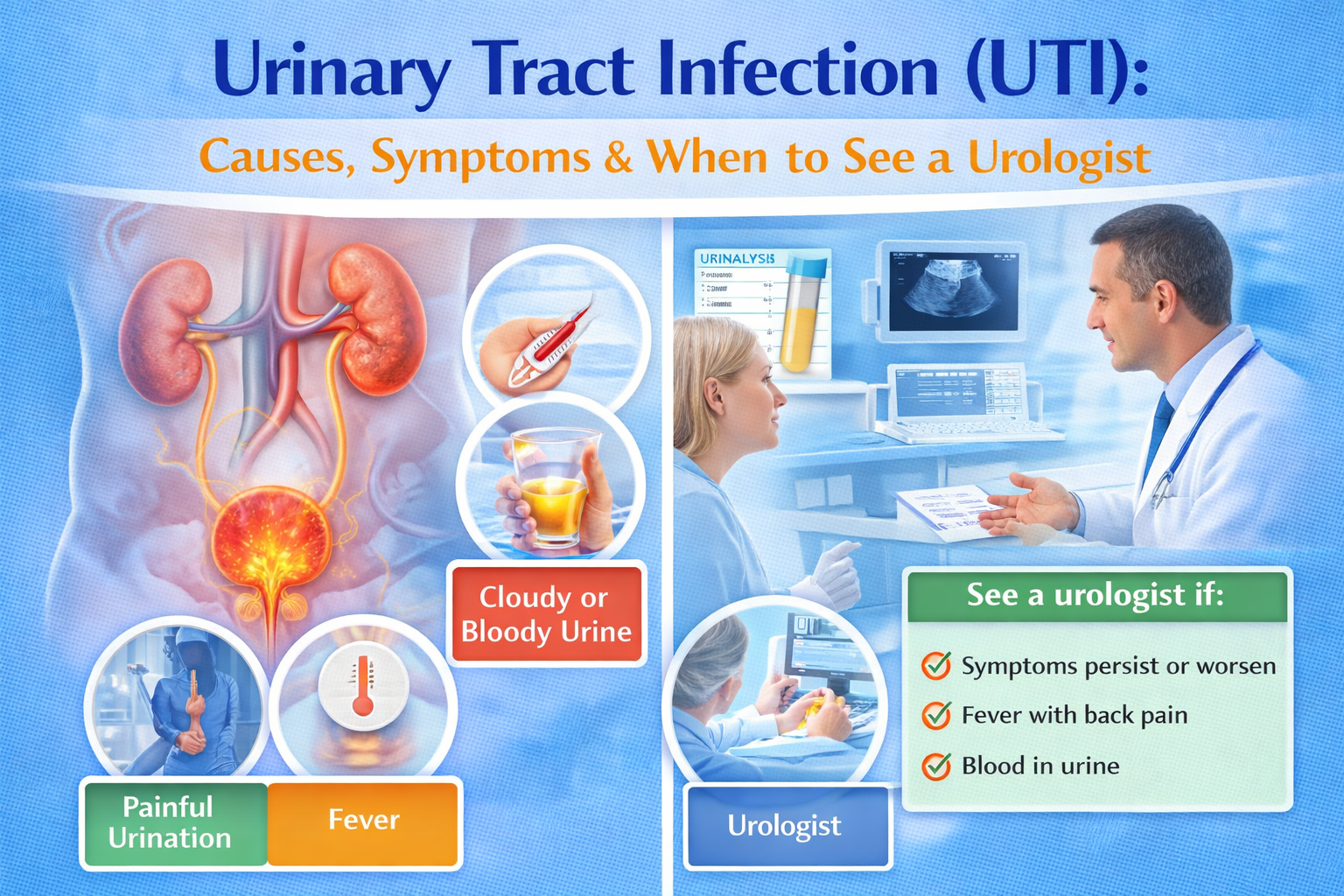
Symptoms of a Urinary Tract Infection
UTI symptoms may vary depending on the severity and the part of the urinary tract affected.
Common symptoms include:
- Burning sensation during urination
- Frequent urge to urinate
- Passing small amounts of urine frequently
- Cloudy or strong-smelling urine
- Blood in the urine
- Pelvic pain or lower abdominal discomfort
- Fever or chills (in severe infections)
When the infection spreads to the kidneys, additional symptoms may appear such as:
- Severe back or side pain
- High fever
- Nausea or vomiting
These symptoms indicate a more serious infection and require immediate medical care.
Who Is at Higher Risk of UTIs?
Certain individuals are more likely to develop urinary tract infections.
Women
Women are more prone to UTIs due to a shorter urethra, which allows bacteria to reach the bladder more easily.
Older Adults
Age-related changes in immunity and bladder function can increase the risk of infection.
People with Kidney Stones
Urinary stones can block urine flow and increase bacterial growth. Following kidney stone prevention tips such as staying hydrated and maintaining a balanced diet may help reduce the risk of both kidney stones and urinary infections.
Pregnant Women
Hormonal changes during pregnancy can affect urinary tract function.
Individuals with Diabetes
High blood sugar levels may weaken the immune system and increase infection risk.
Recognizing these risk factors helps in early prevention and timely treatment.
How Are UTIs Diagnosed?
Doctors diagnose urinary tract infections through a combination of medical history, physical examination, and laboratory tests.
Urine Analysis
A urine test is commonly performed to detect bacteria, white blood cells, and other signs of infection.
Urine Culture
A urine culture identifies the specific bacteria responsible for the infection and helps determine the most effective antibiotic treatment.
Imaging Tests
In cases of recurrent infections or complications, doctors may recommend ultrasound or CT scans to check for abnormalities such as kidney stones or structural issues.
Early diagnosis ensures effective treatment and prevents the infection from spreading.
Treatment Options for UTIs
UTIs are usually treated with medications and supportive care.
Antibiotic Therapy
Antibiotics are the primary treatment for bacterial UTIs. The type and duration of antibiotics depend on the severity of the infection.
Pain Relief Medications
Doctors may prescribe medications to relieve burning and discomfort during urination.
Increased Fluid Intake
Drinking plenty of water helps flush bacteria out of the urinary tract.
Treatment of Underlying Conditions
If urinary symptoms are related to other urological conditions, they must be treated accordingly. For example, in men, urinary difficulties may sometimes be associated with enlarged prostate (BPH), which can obstruct normal urine flow.
Persistent urinary symptoms should always be evaluated by a specialist to rule out serious conditions such as prostate cancer symptoms.
Preventing Urinary Tract Infections
Adopting simple lifestyle habits can help reduce the risk of UTIs.
Preventive measures include:
- Drinking plenty of water daily
- Avoiding holding urine for long periods
- Maintaining proper personal hygiene
- Urinating after sexual activity
- Wearing breathable cotton underwear
- Managing underlying health conditions such as diabetes
These habits help maintain a healthy urinary system and reduce infection risk.
When Should You See a Urologist?
While mild UTIs may resolve with treatment, medical evaluation is important if:
- Symptoms persist for more than two days
- Fever or severe pain develops
- Blood appears in urine
- UTIs occur frequently
- Symptoms worsen despite medication
Consulting a urologist ensures proper diagnosis and treatment of underlying urinary problems.
Conclusion
Urinary tract infections are common but should never be ignored. Early recognition of symptoms and timely treatment can prevent complications such as kidney infections or recurring UTIs.
Maintaining good hygiene, staying hydrated, and seeking medical advice when symptoms appear are key to protecting urinary health.
At Karna Hospital, patients receive expert evaluation and treatment for urinary tract infections and other urological conditions using advanced diagnostic techniques and modern medical care.
Contact Karna Hospital
For immediate consultation or emergency support, contact Karna Hospital:
📞 Mobile: +91 63603 22779
📍 Address: Shankar Mutt Road, KR Puram, Hassan – 573201
🌐 Website: https://karnahospital.in/