Kidney stones are one of the most painful urological conditions affecting people of all ages. The sharp, cramping pain caused by a stone moving through the urinary tract can be unbearable and often requires immediate medical attention. While small stones may pass naturally, larger or obstructive stones need surgical treatment.
Today, patients commonly ask: Is laser surgery better than open surgery for kidney stones? Understanding the differences between these two treatment approaches can help you make an informed decision.
Understanding Kidney Stones
Kidney stones are hard mineral deposits that form inside the kidneys due to dehydration, dietary factors, metabolic disorders, or urinary tract infections. When they grow large or block urine flow, they can cause:
- Severe flank or lower back pain
- Burning sensation during urination
- Blood in urine
- Nausea and vomiting
- Frequent urge to urinate
If untreated, stones can lead to infections, kidney damage, or persistent discomfort.
To reduce your risk of developing stones again, it’s important to follow proper dietary and hydration guidelines. You can read our detailed guide on Simple and Effective Kidney Stone Prevention Tips to understand long-term prevention strategies.
When Is Surgery Required for Kidney Stones?
Surgical treatment is recommended when:
- The stone is too large to pass naturally
- Severe pain does not improve with medication
- There is blockage in urine flow
- Recurrent infections occur
- Kidney function is at risk
Depending on the size, location, and complexity of the stone, your urologist may recommend laser surgery (minimally invasive) or open surgery (traditional method).
Laser Surgery for Kidney Stones
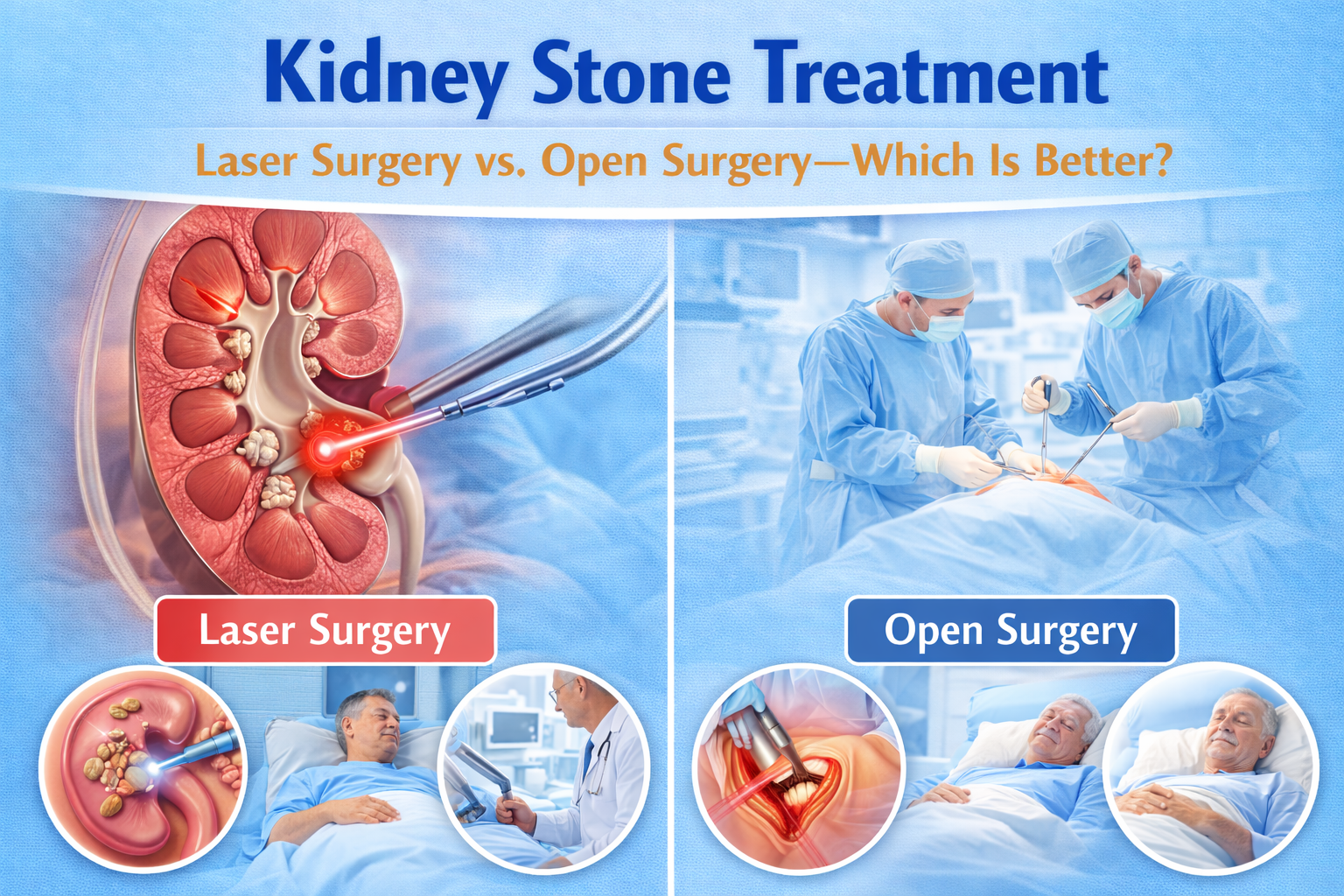
Laser surgery, also known as laser lithotripsy, is one of the most advanced and commonly preferred methods for treating kidney stones today.
How It Works
A thin flexible scope is passed through the urinary tract (without any external incision). A high-energy laser is used to break the stone into tiny fragments, which are either removed or allowed to pass naturally through urine.
Advantages of Laser Surgery
- Minimally invasive (no large cuts)
- Less pain after surgery
- Minimal blood loss
- Short hospital stay (often 1–2 days)
- Faster recovery time
- Lower risk of infection
- High success rate
Recovery After Laser Surgery
Most patients can return to light activities within a few days. Mild discomfort or burning during urination may occur temporarily. Full recovery is usually quicker compared to traditional surgery.
Laser surgery is especially effective for medium to large stones located in the kidney or ureter.
Open Surgery for Kidney Stones
Open surgery is the traditional approach and involves making an incision in the abdomen or back to directly remove the kidney stone.
When Is Open Surgery Recommended?
Open surgery is rarely performed today but may be considered in cases where:
- The stone is extremely large
- There are anatomical abnormalities
- Other minimally invasive methods have failed
- Complex kidney damage is present
Disadvantages of Open Surgery
- Larger incision
- Higher pain levels after surgery
- Longer hospital stay
- Greater risk of infection
- Longer recovery period (several weeks)
- Visible surgical scar
Because of these factors, open surgery is now reserved for complicated or rare cases.
Laser Surgery vs. Open Surgery: A Comparison
| Feature | Laser Surgery | Open Surgery |
|---|---|---|
| Incision | No large incision | Large incision required |
| Pain Level | Minimal to moderate | Moderate to severe |
| Hospital Stay | 1–2 days | 5–7 days |
| Recovery Time | Faster (few days to weeks) | Slower (several weeks) |
| Risk of Infection | Lower | Higher |
| Cosmetic Outcome | No visible scar | Visible scar |
From this comparison, it is clear that laser surgery is generally safer, less painful, and allows quicker recovery for most patients.
Which Treatment Is Better?
For the majority of patients, laser surgery is the preferred option because it is minimally invasive, highly effective, and associated with fewer complications.
However, the “best” treatment depends on:
- Size and location of the stone
- Patient’s overall health
- Presence of infection
- Previous surgical history
- Kidney function status
An experienced urologist will recommend the most suitable treatment after proper imaging tests such as ultrasound, CT scan, or X-ray.
What to Expect Before and After Surgery
Before Surgery
- Detailed evaluation and imaging
- Blood and urine tests
- Discussion about anesthesia and procedure
- Fasting instructions before surgery
After Surgery
- Monitoring in recovery room
- Pain management
- Hydration advice
- Possible temporary stent placement (in laser surgery)
Follow-up visits ensure that all stone fragments are cleared and kidney function is normal.
Preventing Kidney Stones in the Future
Even after successful treatment, recurrence is possible. Preventive steps include:
- Drinking 2.5–3 liters of water daily
- Reducing salt intake
- Limiting excessive consumption of oxalate-rich foods
- Maintaining a balanced diet
- Managing underlying metabolic conditions
For a complete prevention guide, read our article on Simple and Effective Kidney Stone Prevention Tips.
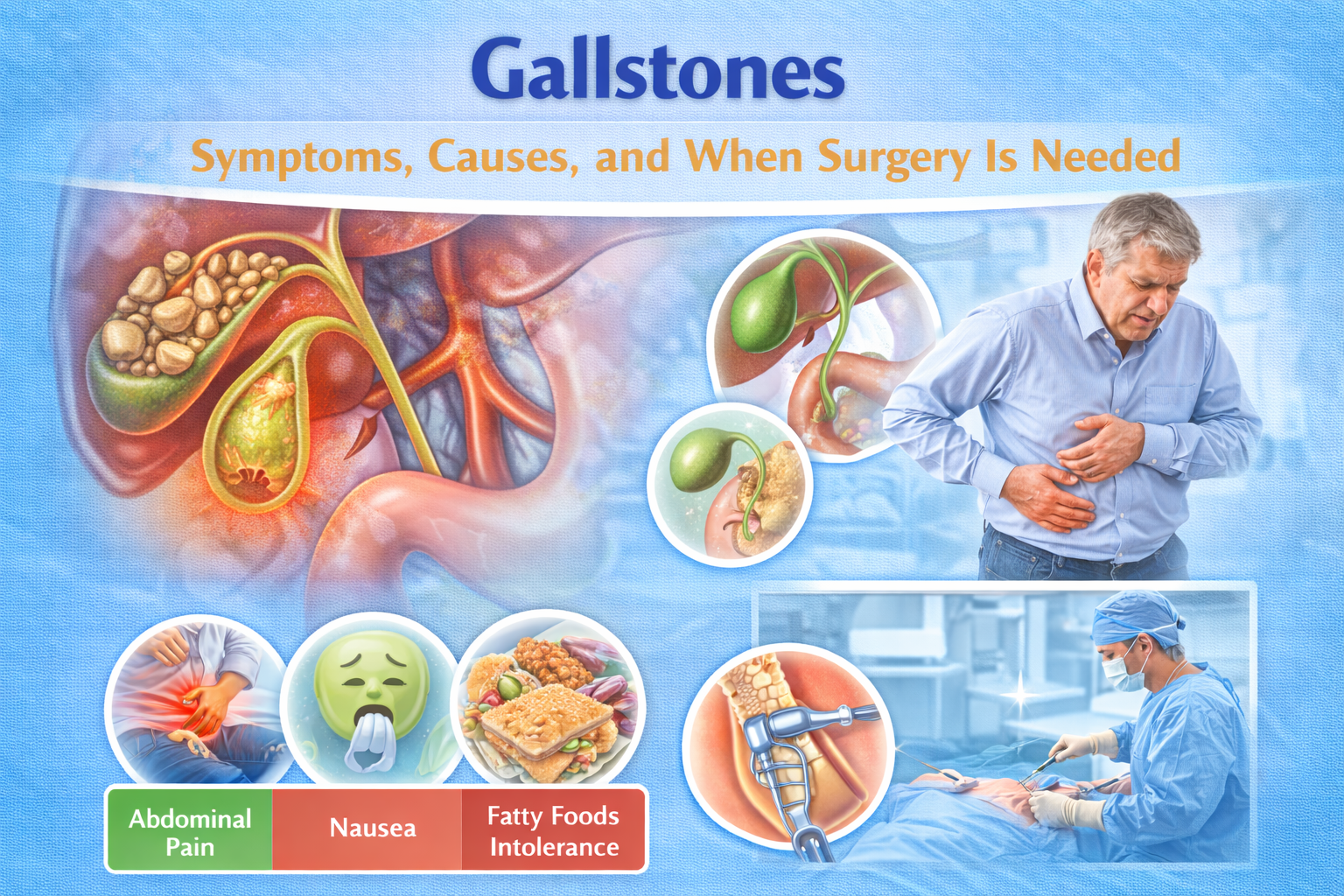
Patients with gallstones sometimes confuse symptoms with kidney stones, especially when abdominal pain is involved. If you are experiencing upper abdominal pain related to gallbladder issues, you may find helpful information in our guide on Laparoscopic Cholecystectomy: An Overview of the Procedure, Recovery Time, Cost & Risks.
Lifestyle modification plays a major role in long-term kidney health.
Conclusion
When comparing laser surgery vs. open surgery for kidney stones, laser treatment is generally the better choice for most patients due to its minimally invasive nature, faster recovery, and lower risk of complications.
Open surgery remains an option only in complex or rare cases where minimally invasive techniques are not suitable.
If you are experiencing severe kidney stone pain or recurrent urinary problems, timely consultation with a specialist can prevent complications and ensure safe treatment.
Contact Karna Hospital
For immediate consultation or emergency support, contact Karna Hospital:
📞 Mobile: +91 63603 22779
📍 Address: Shankar Mutt Road, KR Puram, Hassan – 573201
🌐 Website: https://karnahospital.in/